Acer Bets Big on Large-Format Android with Iconia Duo Refresh at Computex
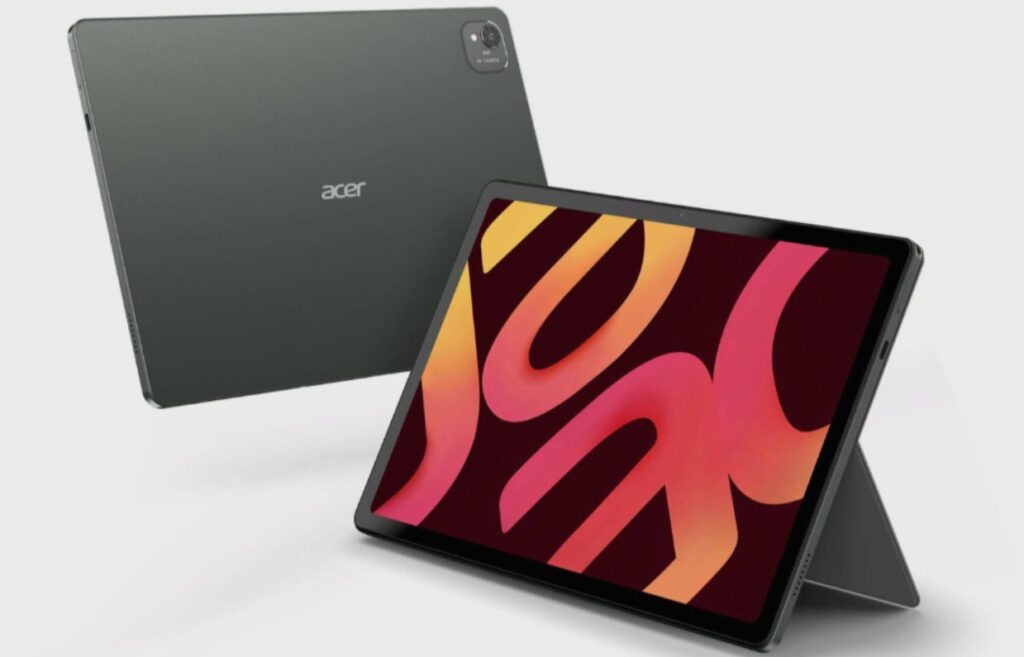
Table of Contents
A Return to the Large-Screen Ambition
For a few years, the tablet market seemed settled into two extremes: the ultra-portable small slate and the laptop-replacement powerhouse. At Computex 2026, Acer is attempting to carve out a middle ground with the revival of its Iconia Duo branding. The company unveiled three new models—the S14, S12, and D12—signaling a strategic shift toward larger, OLED-driven displays designed to bridge the gap between casual media consumption and dedicated productivity.
The centerpiece of the announcement is the Iconia Duo S14. In an era where 11-inch screens are the industry standard, Acer is pushing the envelope with a 14.2-inch OLED panel. The choice of a 3:2 aspect ratio is a clear nod toward productivity; it provides more vertical breathing room for documents and web browsing than the cinematic 16:9 or the square-ish 4:3 ratios common in competing slates. With a resolution of 2880 x 1840 and a 120Hz refresh rate, the S14 is clearly positioned as a professional-grade canvas, particularly for creators who require 100% DCI-P3 color accuracy.
Hardware Trade-offs and the MediaTek Pivot
Under the hood, Acer has pivoted away from Qualcomm, opting instead for MediaTek’s silicon across the entire lineup. The S14 utilizes the Dimensity 8300, a chip that balances efficiency with high-end performance, though it lacks the raw ceiling of the Snapdragon 8-series found in Samsung’s top-tier Tab S line. This suggests Acer is targeting the “prosumer” who values screen real estate and color fidelity over peak gaming benchmarks.
The S14 is backed by 8GB of RAM and 256GB of storage, paired with a massive 10,000 mAh battery to keep the thirsty OLED panel illuminated. The inclusion of dual USB-C ports is a rare but welcome addition, allowing users to charge the device while maintaining a high-speed data connection to external peripherals or displays.
Scaling Down: The S12 and D12
Not everyone needs a screen that rivals a laptop. The Iconia Duo S12 serves as a more portable sibling to the S14. It retains the OLED quality with a 12.2-inch display and a higher peak brightness of 600 nits—making it a better choice for outdoor use or bright office environments. However, it steps down in processing power, utilizing the Dimensity 7400. While it maintains the same 8GB/256GB configuration and a 13MP rear camera, the battery is trimmed to 8,000 mAh.
Then there is the Iconia Duo D12, which represents the entry point into the new ecosystem. The D12 strips away the OLED in favor of a more traditional panel with a 2400 x 1600 resolution and a 90Hz refresh rate. Powering this model is the MediaTek Helio G99, a reliable but aging chipset that places the D12 firmly in the category of “everyday computing.” Weighing in at just 620 grams, it is the most ergonomic of the trio, though it sacrifices camera quality (dropping to a 5MP front shooter) and display vibrancy to hit a lower price point.
The Productivity Play
The success of these devices will likely depend on the software ecosystem Acer builds around them. With stylus support confirmed for the S-series and the massive 14.2-inch footprint of the S14, Acer is positioning itself against the likes of the iPad Pro and the Samsung Galaxy Tab Ultra. By focusing on the 3:2 aspect ratio and OLED fidelity, they are betting that there is still a hungry market for tablets that feel like digital drafting tables rather than oversized smartphones.
While Acer has yet to announce official pricing or regional availability, the staggered spec sheets suggest a three-tier pricing strategy designed to capture everything from the student market to the creative professional. If they can price the D12 aggressively, it may find a home as a secondary device for home automation or basic media, while the S14 aims for the desktop-replacement crown.


