A Breach in the Fortress: How a Rare Bombing in Monaco Exposes the Limits of Hyper-Surveillance
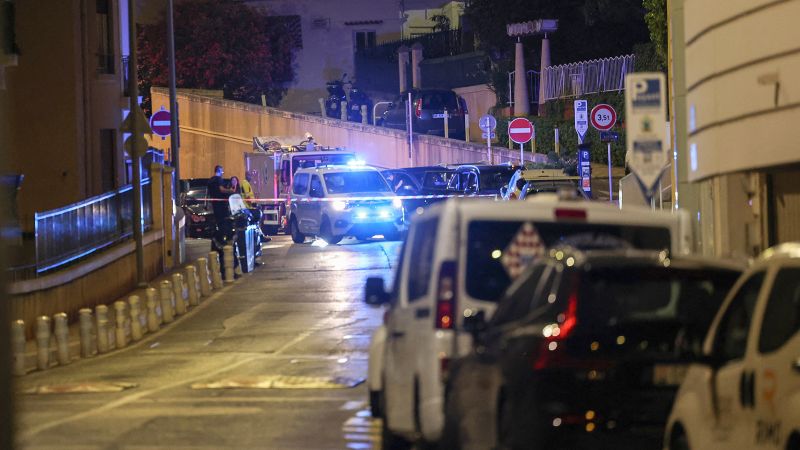
Table of Contents
The Illusion of the Invisible Wall
For decades, the Principality of Monaco has marketed itself not just as a tax haven for the global elite, but as a sanctuary of absolute security. With a police-to-citizen ratio that dwarfs almost any other urban center on earth, the tiny state has operated as a living laboratory for hyper-surveillance. However, a targeted bombing on the evening of June 29 has punctured that narrative, demonstrating that even the most dense technological dragnet has blind spots.
The explosion occurred at the entrance of the Sun Palace, a luxury residential building on Rue Révérend-Père-Louis-Frolla. The target was Vadym Yermolaiev, a 58-year-old Ukrainian-born oligarch. The blast seriously injured Yermolaiev, a woman, and a 13-year-old child, marking the first recorded assassination attempt of this nature in the principality’s history. For a state that recorded zero homicides in the previous calendar year, the event is more than a criminal act; it is a systemic failure of a security apparatus designed to be infallible.
Engineering a Panopticon
Monaco’s approach to safety is rooted in sheer saturation. In a territory roughly half the size of New York’s Central Park, the state deploys 556 police officers—roughly one officer for every 70 residents. To put this in perspective, the most heavily policed city in the U.S., Washington D.C., maintains a ratio of approximately one officer per 185 people. This human presence is augmented by the Compagnie des Carabiniers du Prince, an elite force of 125 military officers dedicated to the royal family.
Beyond the boots on the ground, the state has invested heavily in a digital panopticon. The principality is blanketed by 1,387 CCTV and facial recognition cameras, all feeding into a 24-hour operational command and supervision center. The strategy is simple: eliminate anonymity. When combined with 134,000 random identity checks performed last year, the environment is designed to make the prospect of a premeditated attack virtually impossible.
The Border Paradox
Despite the internal saturation of sensors and officers, the bombing reveals a critical vulnerability: the border. Monaco shares a porous northern boundary with the French town of Beausoleil. In many areas, the transition from Monegasque to French jurisdiction is invisible, characterized by a lack of physical barriers.
CCTV footage of the attack showed a chillingly methodical approach. The suspect was captured on camera scouting the area several times before the explosion, effectively testing the response times of the surveillance state. Following the blast, the perpetrator simply walked across the street and disappeared into France. While the Monegasque government is spending millions to enhance border security, the incident highlights the inherent flaw in localized hyper-surveillance; a system can be absolute within its borders, but it remains dependent on the cooperation and permeability of its neighbors.
The Cost of Absolute Safety
This level of security is a primary driver for Monaco’s real estate market, where apartments are marketed at upwards of $100,000 per square meter. For residents like Formula One drivers Lewis Hamilton and Max Verstappen, the ability to walk the streets without bodyguards is a luxury as valuable as the tax-free status of their income. However, as the state continues to reclaim land from the sea to house more millionaires, the challenge of maintaining this “unique level of public safety” grows.
The investigation into the “attempted premeditated murder” is ongoing, with French and Monegasque authorities coordinating a manhunt. For now, the incident serves as a reminder that no amount of facial recognition or police saturation can entirely insulate a population from targeted violence, especially when the exit strategy is as simple as a walk across a border.