Iran Enters High-Stakes Transition as Khamenei’s Funeral Processions Begin Amid Regional Tension
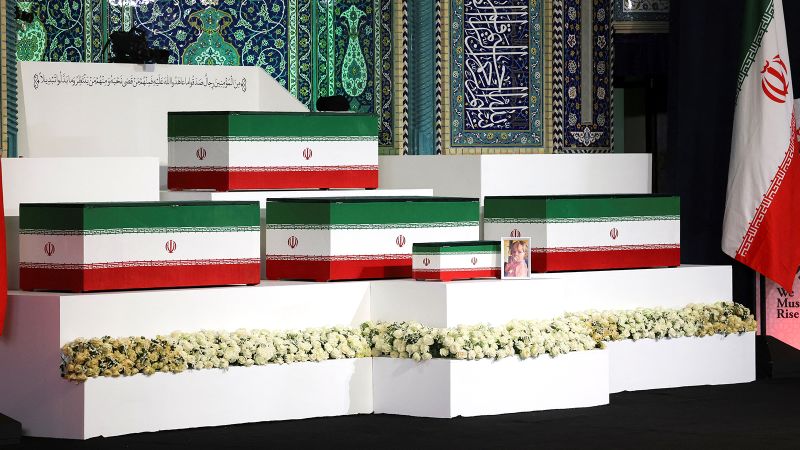
Table of Contents
Tehran Prepares for Mass Mourning
The political center of gravity in Tehran has shifted toward the display of the casket of the late Supreme Leader Ayatollah Ali Khamenei. In a series of high-security arrangements, the coffins of the former leader and several deceased family members are currently on display, marking the beginning of a period of national mourning. Official schedules indicate that funeral processions will span multiple locations from July 4 to July 9, with state organizers expecting millions of mourners to line the streets of the capital and other major cities.
The atmosphere in Tehran is one of calculated solemnity, but beneath the surface, a critical question regarding the continuity of power remains unanswered. While the processions are designed to project strength and unity, the absence of clarity regarding the movements of Mojtaba Khamenei—the newly designated Supreme Leader—has created a vacuum of speculation. It remains unconfirmed whether Mojtaba will make a public appearance during his father’s funeral rites, a move that would serve as a potent symbol of legitimacy and transition.
Diplomatic Presence and Internal Power Shifts
The funeral serves as a rare diplomatic crossroads for the Islamic Republic. Representatives from China and India have already arrived in Tehran, signaling the geopolitical importance of ensuring a stable transition of power in a region already fraught with volatility. The presence of these global powers suggests a desire to maintain strategic ties and trade corridors despite the internal upheaval.
Within the Iranian security apparatus, there are signs of a reshuffle. The new leader of the Islamic Revolutionary Guard Corps (IRGC), a pillar of the regime’s domestic and foreign policy, has made a rare public appearance. This visibility is seen by observers as an attempt to signal stability within the military wing of the government during the transition to the new Supreme Leader.
Military Posturing on the Periphery
As Iran focuses on the internal rituals of succession, the external security environment has grown increasingly precarious. An Iranian army general has issued a stern warning to the United States and Israel, cautioning against any opportunistic military strikes while the nation is preoccupied with the funeral processions. The warning underscores the regime’s fear that a moment of perceived internal weakness could invite foreign intervention.
This caution is grounded in tangible military movements. The U.S. Department of Defense has confirmed the deployment of a second Marine unit to the Middle East. These units typically consist of over 2,000 personnel, significantly augmenting the U.S. footprint in the region. The timing of this deployment, coinciding with the vacuum left by Ali Khamenei’s passing, adds a layer of strategic tension to an already volatile landscape.
The coming days will be a test of both the Iranian state’s internal cohesion and the restraint of regional adversaries. As the processions move toward July 9, the world will be watching not just the grief of the crowds, but the specific individuals who emerge to lead the next era of the Islamic Republic.