Vatican Issues Blanket Excommunication for SSPX After Defiant Bishop Ordinations
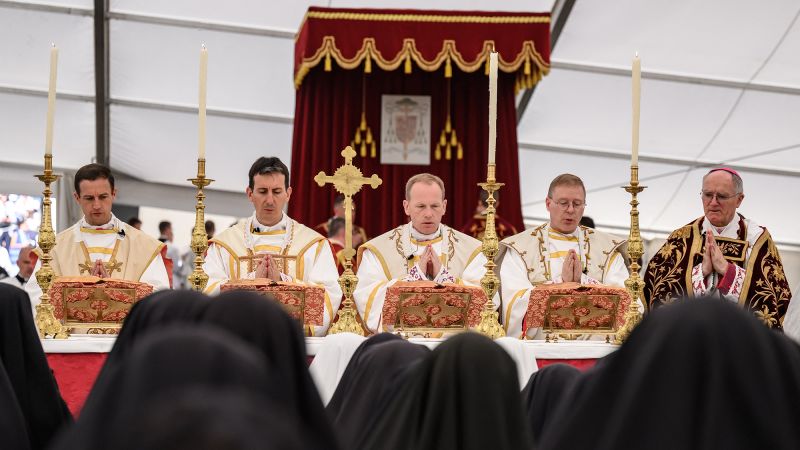
Table of Contents
A Direct Challenge to Papal Authority
The Vatican has moved decisively to isolate the Society of Saint Pius X (SSPX), an ultra-traditionalist Catholic group, announcing on Thursday that the organization is in a state of schism. The move follows a series of defiant ordinations on Wednesday in Écône, Switzerland, where four new bishops were consecrated in direct opposition to explicit warnings from Pope Leo XIV.
The decree, issued by the Vatican’s doctrinal office, confirms the excommunication of the four newly ordained bishops—Marc Hanappier, Michel Poinsinet de Sivry, Michael Goldade, and Pascal Schreiber—as well as the two presiding bishops who performed the ceremonies. In the eyes of the Church, excommunication is the most severe spiritual penalty, effectively barring individuals from receiving the sacraments.
Expanding the Scope of Sanctions
While the current crisis mirrors a similar clash in 1988, the Vatican’s response this time is significantly more expansive. In the previous instance, sanctions were primarily targeted at the bishops involved. The current decree, however, extends excommunication to all priests belonging to the society and lay members who “formally adhere” to the group.
Perhaps most critically for the group’s operations, the Vatican has revoked a previous concession granted by Pope Francis. While the former Pope had allowed the SSPX to administer certain sacraments, the new ruling declares that any marriage or confession offered by the society will now be considered “invalid.” This move effectively strips the SSPX of its legitimacy as a functioning religious entity within the Catholic framework, treating its rituals as spiritually void.
The Theological Rift: Latin Mass and Modernity
The conflict is rooted in a deep-seated ideological divide regarding the Second Vatican Council of the 1960s. The SSPX, founded in 1970 by French Archbishop Marcel Lefebvre, rejects the council’s reforms, particularly those concerning religious freedom, ecumenism, and the transition of the Mass from Latin into vernacular languages.
The “Lefebvrists,” as they are often called, view the modern Church as a departure from sacred tradition. This sentiment was echoed by Father Michael Goldade, who leads the group’s seminary in Dillwyn, Virginia, and was among those ordained on Wednesday. Following the ceremony, Goldade described the “modernist church” as “a desert that kills everything that it touches.”
Conversely, Pope Leo XIV has spent his pontificate emphasizing the necessity of church unity. On June 16, the Pope spoke to journalists, noting that the group’s refusal to accept fundamental elements of the Second Vatican Council created an unsustainable divide. “If that is the choice they make, I am sorry, but we must move forward,” the Pope stated prior to the ordinations.
Operational Impact in the United States
The fallout of this decree will be felt acutely in the United States, where the SSPX maintains a significant infrastructure, including headquarters in Missouri and a seminary in Virginia. The excommunication of Father Goldade, a key leader in the American branch, signals a total breakdown in diplomatic efforts to bring the traditionalists back into the fold.
Despite the severity of the sanctions, the Vatican left a narrow door open for reconciliation. The doctrinal office noted that “the Church, as a caring mother, will welcome with sincere affection and active care all those who wish to return to full communion.” For now, however, the rift appears wider than it has been in decades, as the SSPX continues to operate in open defiance of the Holy See.