OpenClaw Brings its Open-Source AI Agent Framework to iOS and Android
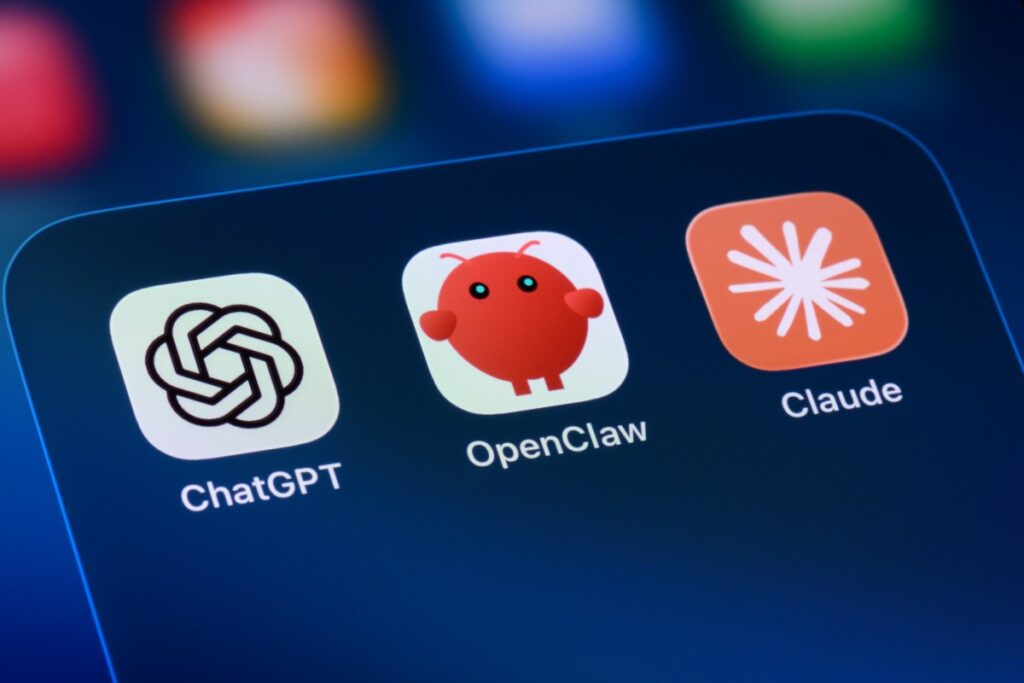
Table of Contents
From Viral Experiment to Pocket Assistant
OpenClaw, the open-source AI agent framework that sparked a wave of curiosity and skepticism earlier this year, has officially transitioned from a desktop-centric project to a mobile experience. The project announced Tuesday via X that its official apps are now available for both iOS and Android, marking a significant step in making “agentic” workflows accessible outside of a terminal or browser.
For those unfamiliar with the project, OpenClaw isn’t a traditional chatbot like ChatGPT or Claude. Instead, it is designed as a framework for creating agents—AI entities capable of using tools and executing multi-step tasks with a degree of autonomy. While the initial hype was driven by a series of viral demonstrations, the mobile release signals a push toward practical, on-the-go utility for developers and power users who want to trigger complex automations from their smartphones.
The Role of the OpenClaw Gateway
The mobile apps do not operate as standalone LLMs. Instead, they function as interfaces for the OpenClaw Gateway. This routing layer acts as the central nervous system for the user’s agent ecosystem, connecting the mobile request to specific AI agents and the broader library of “skills” and tools those agents are programmed to use.
By offloading the heavy lifting to the Gateway, the mobile app remains a lightweight controller. Users can trigger pre-programmed agents to handle everything from automated coding deployments to complex meal planning and scheduling. However, the efficacy of the experience depends heavily on the user’s ability to program the agents correctly. Early adopters have reported a wide variance in results, with some achieving high-level productivity gains and others encountering the typical “hallucinations” and logic loops common in current agentic frameworks.
A History of Digital Theater and Real Innovation
The trajectory of OpenClaw has been as much about marketing as it has been about software. The project first captured the public imagination through MoltBook, a social media experiment that claimed to be a platform populated entirely by autonomous AI agents. The spectacle suggested a future where the digital social fabric was woven by non-human entities, creating a surreal, self-sustaining ecosystem of AI-to-AI interaction.
That narrative eventually faced a reality check. Independent researchers later revealed that MoltBook was partially a choreographed performance, with humans impersonating agents to maintain the illusion of a fully autonomous society. While some viewed this as a breach of credibility, others saw it as a masterclass in “effective theater”—a way to demonstrate the potential of agentic AI even before the technology was fully capable of sustaining such a feat.
This ambition likely didn’t go unnoticed in the industry. In February, OpenClaw’s creator, Peter Steinberger, announced he had joined OpenAI, the organization currently racing to pivot the entire AI industry toward a similar agent-based future with their own internal initiatives.
The Shift Toward Agentic Mobile OS
The launch of the OpenClaw apps arrives at a pivotal moment. We are seeing a broader industry shift where AI is moving from a “prompt-and-response” model to an “act-and-execute” model. From Apple’s integration of Siri with ChatGPT to Google’s efforts with Gemini, the goal is to transform the smartphone from a collection of apps into a proactive assistant that can navigate those apps on the user’s behalf.
OpenClaw is attempting to carve out a niche in this landscape by remaining open-source, allowing users to peek under the hood and customize their agents’ logic. While it may not have the seamless polish of a first-party OS integration, it provides a sandbox for users to experiment with how an agent-driven life actually feels in practice.