The End of the Derailleur? Avinox and Gobao Unveil eCVT Motor Gearboxes
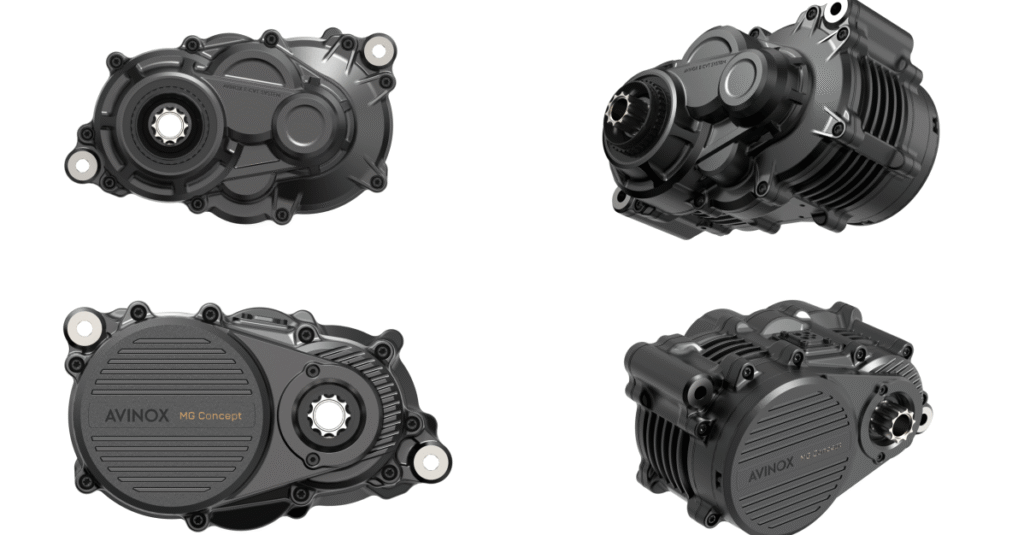
Table of Contents
A Fundamental Shift in Drivetrain Architecture
For decades, the bicycle drivetrain has remained stubbornly traditional: a chain, a series of cogs, and a fragile derailleur that shoves the chain from one to the other. Even the most expensive electric mountain bikes (eMTBs) have largely adhered to this mechanical blueprint. However, the unveiling of new Motor Gearbox Units (MGUs) at the Eurobike trade show in Frankfurt suggests that the industry is moving toward a future where the derailleur becomes a relic of the past.
Avinox—the DJI spinoff that has already disrupted the mid-drive market with its M-series motors—and newcomer Gobao have both introduced integrated eCVT (Electronic Continuously Variable Transmission) systems. Unlike traditional gearboxes that rely on a set number of fixed ratios, these new units provide a stepless shifting experience. This means the motor can adjust the gear ratio infinitely and seamlessly, maintaining a precise pedaling cadence regardless of the incline or speed.
Moving Beyond Fixed Gear Ratios
While integrated gearboxes like those from Pinion already exist, they still operate on discrete steps. The leap here is the integration of the eCVT. By utilizing computerized precision, the Avinox MG Concept and Gobao’s X-series allow riders to define virtual gears or leave the system in a fully automatic mode. In this mode, the software constantly evaluates pedal pressure, current speed, and terrain to keep the rider’s legs spinning at a constant, optimal RPM.
This shift isn’t just about convenience; it’s about physics and durability. By moving the transmission mass from the rear wheel to the center of the frame, manufacturers can improve the bike’s balance and handling. More importantly, by enclosing the gearing within the motor housing, the system is shielded from the mud, grit, and physical impacts that typically bend or snap traditional derailleurs.
From Elite Trails to Urban Commutes
The current rollout is targeting the high-end eMTB market, which serves as a technical proving ground similar to Formula 1. Customers in this segment are willing to pay a premium for marginal gains in performance and reliability. Avinox developed its MG Concept in collaboration with industry heavyweights including Canyon, Commencal, Forbidden, and Mondraker. Prototype bikes featuring these units were displayed at Eurobike, showcasing both traditional chain setups and cleaner belt-drive configurations.
The scalability of this technology is where the real impact lies. While the initial cost will be high, the trajectory of DJI-backed Avinox suggests a push toward affordability. If these MGUs prove reliable, the technology is expected to migrate into the cargo, trekking, and urban commuter sectors, where low maintenance is a primary selling point for non-technical users.
Production Timelines and Specs
Gobao has provided a more concrete roadmap, stating that mass production of its X1 (120Nm torque / 1200W max power) and X1P (150Nm / 1500W) models will begin in February 2027. Avinox is targeting a similar 2027 launch window. Both companies are positioning their units as versatile platforms that can be adapted across various bike geometries, from gravel bikes to “eSUVs.”
For the rider, this represents a move toward a “set and forget” experience. The ability to shift under full load or while standing completely still—without the risk of dropping a chain—addresses the most persistent pain points of current electric drivetrain technology.