The Data-Driven Patient: How a Founder Used LLMs to Navigate a Rare Cancer Diagnosis
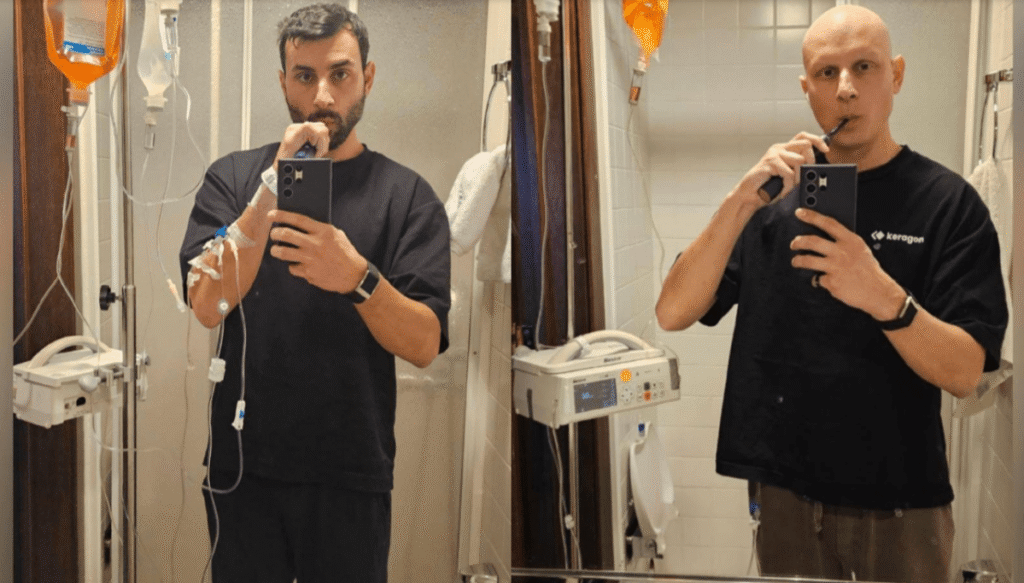
Table of Contents
The Limits of Optimization
Conno Christou lived a life governed by metrics. A second-time founder with a rigorous approach to longevity, Christou tracked his sleep via Whoop and Oura, adhered to the protocols of researchers like Peter Attia, and underwent comprehensive annual biomarker screenings. By early 2025, his health data was ostensibly perfect. However, the precision of his lifestyle optimization proved irrelevant when he was diagnosed with an aggressive, fast-growing form of non-Hodgkin’s lymphoma.
The discovery was incidental. A routine check for blood clots revealed an 11-by-11-by-8 centimeter mass located behind his sternum. The diagnosis was a rare genetic mutation—a random biological failure that ignored his diet, supplements, and fitness regime. Within three more weeks, the tumor would have reached stage four.
The Disparity of Expert Opinion
Christou’s entry into the oncology system immediately highlighted a systemic volatility in medical advice. His first specialist recommended a conservative chemotherapy regimen. Seeking a second opinion, Christou was told the opposite: a more aggressive, hospital-based continuous infusion was necessary. The difference in projected success rates was stark—roughly 60% for the lighter path versus 85% for the aggressive one.
Rather than choosing between two conflicting experts, Christou applied a founder’s mentality to his survival. He leveraged his professional network to solicit 12 independent opinions from hematologists and oncologists globally. The consensus was overwhelming: 11 of the 12 favored the aggressive regimen. This experience underscored a critical gap in the current healthcare model: the variance in provider experience and the danger of relying on a single point of failure in diagnosis.
Synthesizing Data with LLMs
Throughout six months of treatment, Christou treated his recovery as a data-logging exercise. He used voice transcription to maintain a symptom journal and tracked immune system dips using his wearable devices. He then fed this disparate dataset—blood results, imaging reports, and daily logs—into Claude, the LLM developed by Anthropic.
While clinical leads, such as Danielle Bitterman of Mass General Brigham, have warned that general-purpose chatbots are not validated for personalized diagnoses and can be prone to hallucinations, Christou found that the AI served as a sophisticated interface for medical literature. For a condition as rare as his, the AI didn’t replace the oncologist but functioned as a tool for “question engineering,” allowing him to identify specific clinical patterns that his doctors might have overlooked.
The ‘Thymus Rebound’ Intervention
The most critical application of AI occurred during Christou’s final PET scan. The imaging was ambiguous, leading his oncology team to suggest a second line of therapy, including radiotherapy near his heart and lungs.
By feeding his PET and MRI data into Claude, Christou identified a specific phenomenon: thymus rebound. In patients under 40 recovering from certain lymphomas, the thymus gland can reactivate, mimicking the appearance of active disease on a scan. The AI flagged this as a high-probability explanation, citing a known false-positive rate of approximately 60% for end-of-treatment scans in this demographic.
After seeking further verification, a fourth physician confirmed the thymus rebound. The AI-assisted insight prevented Christou from undergoing unnecessary and potentially damaging radiotherapy, confirming he was officially clear of the disease.