Venezuelan Earthquake Death Toll Surges as Crumbling Infrastructure Hampers Rescue Efforts
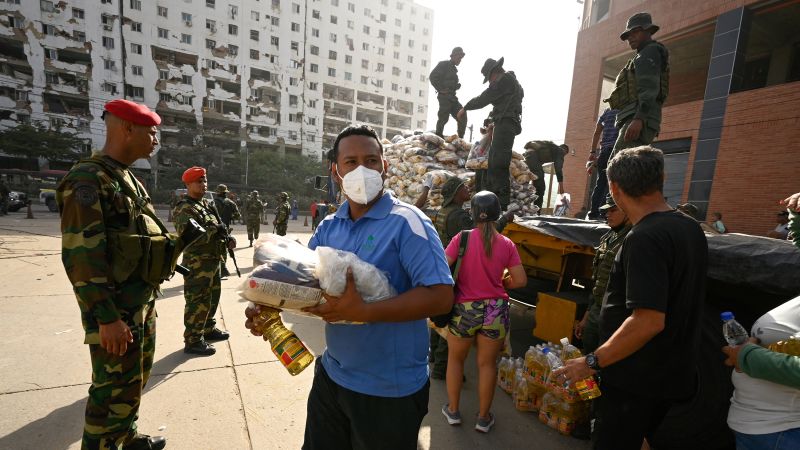
Table of Contents
The Critical Window for Survival
Emergency crews in Venezuela are fighting a desperate race against time as the death toll from this week’s series of devastating earthquakes has climbed to at least 920 people. According to the country’s top lawmaker, the scale of the loss underscores the catastrophic nature of the seismic events and the vulnerability of the region’s built environment.
Rescue teams are now operating within what first responders call the “golden window”—the narrow timeframe where the probability of finding survivors trapped under rubble remains viable. However, the operation is being severely hampered by the state of Venezuela’s urban infrastructure, where decades of economic instability and lack of maintenance have left many buildings structurally unsound long before the first tremors hit.
A Healthcare System at the Breaking Point
The crisis extends beyond the immediate wreckage. Hospitals across the affected regions are struggling to manage a massive influx of critically injured patients, revealing the deep scars of a healthcare system plagued by systemic neglect. Medical professionals report severe shortages of basic surgical supplies, anesthesia, and emergency medications, forcing triage centers to operate under conditions that would be unthinkable in more stable economies.
This lack of institutional capacity has sparked a grassroots surge in response. Frustrated by the perceived sluggishness of official government operations, local residents have begun organizing civilian volunteer groups to clear debris. While these efforts demonstrate remarkable community resilience, they also highlight a dangerous lack of professional coordination and specialized equipment, increasing the risk of further collapses during makeshift rescue attempts.
Geopolitical Tensions and International Aid
The disaster has created a complex diplomatic environment. US Southern Command has issued a statement declaring that it “stands with the people of Venezuela,” a move that carries significant weight given the fraught political relationship between Washington and Caracas. This gesture followed a meeting between US personnel, the US Chargé d’Affaires, and Venezuela’s acting president, Delcy Rodríguez.
While several global organizations and sovereign nations have pledged aid, the logistics of delivering that support remain a hurdle. The challenge is not merely the volume of aid, but the ability of the Venezuelan state to facilitate the distribution of resources without political interference, ensuring that food, water, and medical kits reach the most isolated and hardest-hit communities.
The Infrastructure Deficit as a Force Multiplier
From a technical perspective, the high casualty rate in this event points to a failure in seismic resilience. In many developed urban centers, building codes are updated to include reinforced concrete and flexible joints to withstand tremors. In Venezuela, the intersection of aging colonial architecture and poorly regulated modern construction has turned standard residential blocks into lethal traps.
As the search for survivors continues, the focus is shifting toward the long-term recovery. The disaster has laid bare the reality that in the absence of maintained infrastructure and a functional public health network, natural disasters act as force multipliers, turning manageable geological events into national tragedies.