The Invisible Cheat: AI Smart Glasses Are Disrupting High-Stakes Testing in East Asia
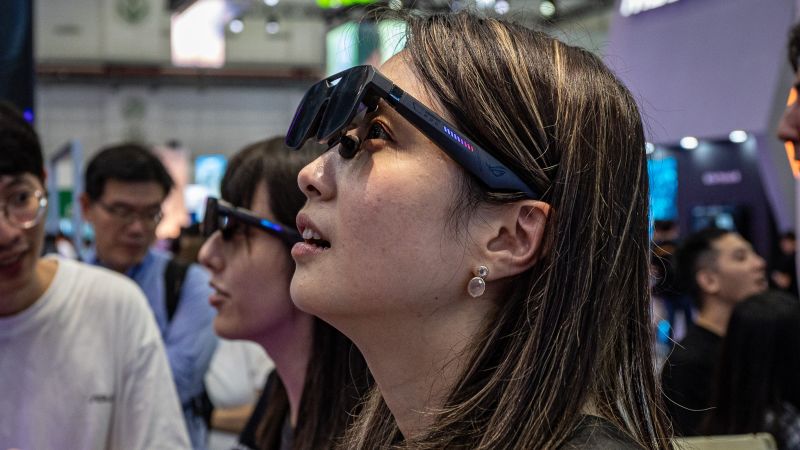
Table of Contents
A New Frontier in Academic Dishonesty
For decades, the art of cheating in high-stakes examinations has evolved from handwritten crib sheets to smuggled smartphones. However, a new, nearly invisible threat has emerged in East Asia’s competitive academic environments: AI-powered smart glasses. In regions where a single entrance exam can dictate a student’s lifelong social and professional trajectory, the pressure to excel is driving a shift toward wearable technology that is almost impossible for traditional proctors to detect.
Recent incidents in South Korea and Taiwan have highlighted the scale of the problem. In South Korea, two individuals were caught using smart glasses during a high-stakes English language proficiency exam—a test frequently used by corporate recruiters to filter candidates. In Taiwan, a prospective medical school student was apprehended after proctors noticed an unusual gaze; upon closer inspection, the student’s glasses frames were emitting heat, a telltale sign of an active processor working in the background.
The Technical Edge: Beyond Simple Teleprompters
While “smart glasses” have existed for years, the integration of Large Language Models (LLMs) has transformed them from novelty gadgets into powerful academic tools. Modern AI eyewear can capture a photo of a question through a built-in camera, send it to a cloud-based AI, and beam the answer directly onto the lens via a heads-up display (HUD) or feed it into a discreet earpiece.
The effectiveness of this tech was demonstrated in a controlled experiment by Assistant Professor Meng Zili and Professor Zhang Jun at the Hong Kong University of Science and Technology (HKUST). Testing commercial AI glasses on an undergraduate electrical engineering exam, the researchers found that the device could successfully process complex technical questions and generate accurate answers in real-time. The result was staggering: the AI-assisted performance placed the “student” in the top five of a class of over 100, far surpassing the average score of 72.
The Hardware Arms Race
The accessibility of this technology is accelerating. The launch of Meta’s AI-enabled Ray-Bans in late 2023 brought sophisticated AI integration into a form factor that looks identical to standard eyewear. With over seven million pairs sold last year, the hardware is no longer a niche product available only to tech enthusiasts; it is a mainstream accessory.
This proliferation has forced regulatory bodies into a reactive stance. During China’s annual college entrance exam—a grueling event involving more than 10 million students—authorities implemented strict screenings of all eyewear. Similarly, in the UK, exam watchdogs have issued warnings that AI glasses and discreet earpieces are poised to exacerbate the cheating crisis.
Rethinking the Architecture of Assessment
The rise of wearable AI is creating a crisis of confidence in traditional testing. Thomas Corbin, a lecturer at Deakin University, suggests that for every reported case, many more likely go undetected. He argues that wearable AI presents a challenge to the education system similar to the disruption ChatGPT caused to the take-home essay in 2022.
This shift is prompting a fundamental debate among educators: if an AI can pass a professional-level exam with a top-tier score, does the act of memorization still hold value? Professor Zhang Jun of HKUST notes that the speed of AI evolution is currently outstripping the ability of educational institutions to adapt. The conversation is moving away from how to better police students and toward how to change the very nature of evaluation—shifting from testing a student’s ability to retrieve information to testing their ability to apply it critically.