Leaked Benchmarks Point to Surface Laptop 8 Featuring Intel’s ‘Panther Lake’ Architecture
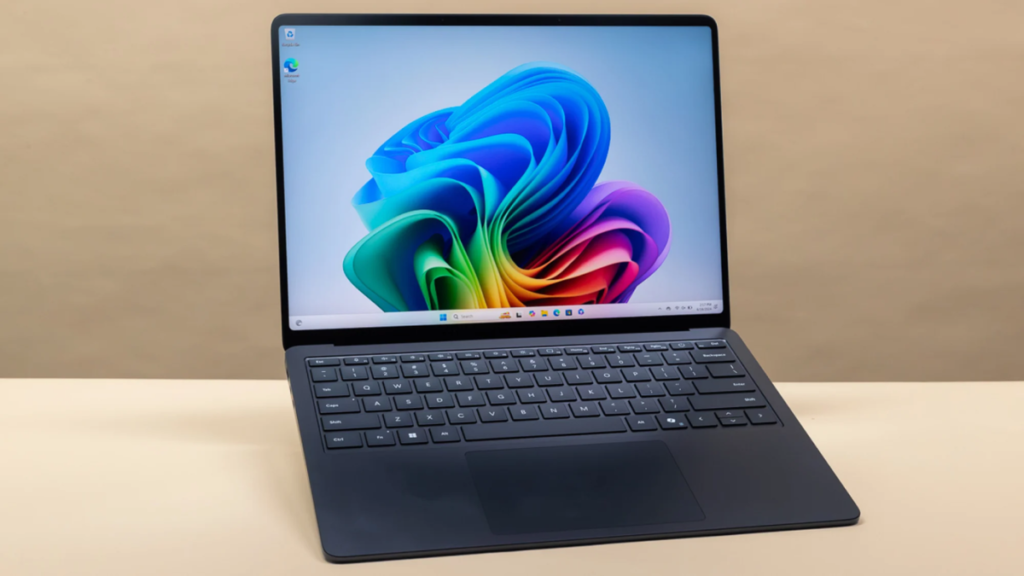
Table of Contents
A slip in the benchmarks
Microsoft rarely leaks its hardware roadmap, but a lapse in benchmark privacy has provided a glimpse into the next generation of the Surface lineup. Two Geekbench 6 listings recently surfaced detailing an unreleased device identified as the “Microsoft Corporation Surface Laptop for Business 13.8in 8th Ed Intel.”
The listings, first spotted by Mashable and archived via screenshots by Notebookcheck, were scrubbed from the Primate Labs database by Thursday morning. However, the data left behind suggests Microsoft is preparing a significant pivot in its processor strategy for the 8th Edition, moving away from the current focus on ARM-based efficiency toward Intel’s next-generation silicon.
The Panther Lake Factor
The most striking detail in the leak is the hardware: the device is powered by an Intel Core Ultra X7 368H chip, paired with Arc B390 graphics and 32GB of RAM. This identifies the machine as part of the “Panther Lake” family, Intel’s upcoming architecture designed to further bridge the gap between high-performance computing and extreme power efficiency.
Initial performance data indicates that the X7 368H performs on par with other modern Windows laptops utilizing the Core Ultra X7 358H. More interestingly, in multi-core workloads—such as heavy video rendering or complex data processing—the leaked Surface scores are competitive with the M5 MacBook Air, suggesting that Intel’s new architecture is successfully clawing back ground in the battle for efficiency and raw power.
Reversing the Launch Cycle
The naming convention “Surface Laptop for Business” hints at a strategic shift in how Microsoft rolls out its hardware. In May 2024, Microsoft pivoted the consumer Surface Laptop 7 to the Qualcomm Snapdragon X series, while the Intel-based enterprise models didn’t arrive until January 2025. This effectively created a two-tier system where the “best” chip depended on whether you were a retail consumer or a corporate procurement officer.
Reports from Windows Central suggest this cycle may be flipping. There are indications that Intel-based Surface Laptops and Pros will lead the charge this spring, with Snapdragon X2 variants arriving later in the summer. This shift could be driven by supply chain stability or a desire to ensure that the majority of Windows software remains natively compatible via x86 architecture before pushing ARM further into the mainstream.
Refining the Chassis
While the internal silicon is the headline, the 8th Edition is expected to refine the existing 13.8-inch form factor. Beyond the processor jump, industry insiders expect the new model to introduce an optional OLED display, which would bring the Surface Laptop in line with the premium panels found in the Surface Pro and competing XPS laptops.
Additional rumored updates include improved haptic feedback on the trackpad and a refreshed color palette. These changes would be a necessary evolution for Microsoft, especially as the company recently implemented price hikes across its current-gen devices, citing rising component and memory costs.
When asked to verify the Geekbench leaks, a Microsoft spokesperson declined to provide details, stating, “Microsoft has nothing further to share at this time.” However, given the specificity of the 13.8-inch branding and the Panther Lake identifiers, the 8th Edition appears to be moving rapidly through the final stages of validation.