Infrastructure Collapse and Connectivity Blackouts: The Technical Fallout of Venezuela’s Historic Earthquakes
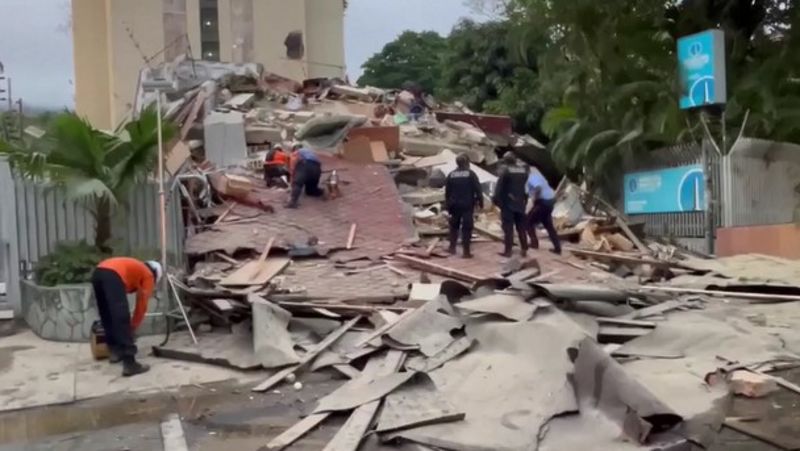
Table of Contents
A Rare Seismic Double-Hit
Venezuela is grappling with a catastrophic structural failure after two massive earthquakes struck its northern coast within sixty seconds on Wednesday. The sequence began with a magnitude 7.2 foreshock near San Felipe, followed almost immediately by a more powerful 7.5 magnitude quake centered near Yumare in Yaracuy state. This rare back-to-back seismic event represents the most significant geological disruption to hit the region in over a century, leaving a trail of collapsed high-rises and shattered utility grids.
The timing and location of the shocks have amplified the crisis. Yumare is a critical hub for the nation’s energy sector, housing some of the country’s largest oil refineries. While official reports on refinery integrity are still pending, the sheer force of a 7.5 magnitude event typically triggers automatic shutdowns and potential structural breaches in industrial piping and storage units.
The Digital Blackout: Network Fragility
Almost immediately following the tremors, Venezuela experienced a sharp decline in internet connectivity. Data from the internet monitor NetBlocks confirms a significant drop in reachable IP addresses, suggesting that the physical layer of the country’s telecommunications infrastructure—fiber optic cables, cellular towers, and power substations—was severely compromised.
In an era of digital coordination, this blackout creates a dangerous vacuum for emergency responders. The loss of stable connectivity hinders the ability of the interim government to coordinate search and rescue operations in real-time. For residents in the hardest-hit zones, such as the coastal state of La Guaira, the failure of mobile networks has turned the initial hours of the disaster into a period of isolation, where the only means of communication is through intermittent satellite links or physical messengers.
Structural Vulnerability and the PAGER Alert
The U.S. Geological Survey (USGS) issued two separate red alerts via its PAGER (Prompt Assessment of Global Earthquakes Reports) system. These alerts aren’t just measures of magnitude, but predictions of impact based on population density and building quality. The USGS warned of probable “high casualties and extensive damage,” noting that a significant portion of the region’s housing stock consists of non-seismic reinforced concrete or unreinforced masonry, which are prone to “pancake” collapses during high-magnitude shaking.
The visual evidence supports this grim assessment. In Macuto, a waterfront hotel was completely reduced to rubble, and in Catia La Mar, high-rise apartments suffered catastrophic structural failure. The damage extends to transport logistics; Simon Bolivar Airport, the primary gateway for international aid, was forced to close temporarily after sustaining runway and terminal damage.
Preventative Measures and Industrial Risks
As part of a nationwide state of emergency, the Ministry of Communication and Information has ordered the immediate cutoff of direct gas supplies to various buildings. This is a critical technical intervention to prevent secondary disasters—specifically urban fires caused by ruptured gas lines—which often claim more lives in the aftermath of a quake than the initial collapse.
With security forces deployed and a high-level task force established, the focus now shifts to the arrival of international technical teams. Rescue specialists from the U.S., Mexico, and Qatar are expected to bring advanced acoustic sensors and thermal imaging equipment to locate survivors trapped beneath the concrete slabs of Caracas and La Guaira. However, the effectiveness of these tools will depend heavily on the restoration of basic power grids and the stabilization of the ground in areas still experiencing heavy aftershocks.