Venezuela Grid and Infrastructure Paralyzed After Back-to-Back Magnitude 7.2 and 7.5 Quakes
Table of Contents
A Catastrophic Sequence of Seismic Events
Northern Venezuela has been plunged into a state of emergency following two massive earthquakes that struck within sixty seconds of each other on Wednesday. The first, a magnitude 7.2 foreshock, hit near San Felipe in Yaracuy state at 6:04 p.m. ET. Just 40 seconds later, a more powerful magnitude 7.5 quake struck approximately 23 kilometers southeast of Yumare, a town critical to the nation’s energy sector and home to some of its largest oil refineries.
The timing of the disaster coincided with a public holiday celebrating St. John the Baptist and Venezuelan independence from Spain, meaning high concentrations of people were likely gathered in residential areas or at public festivities, potentially increasing the casualty rate.
Critical Infrastructure and Digital Blackouts
Beyond the immediate structural collapses, the quakes have dealt a severe blow to Venezuela’s already fragile technological and utility frameworks. According to data from internet watchdog NetBlocks, internet connectivity across the country dropped sharply immediately following the second tremor, signaling widespread damage to telecommunications hardware and power grids.
The impact on transportation and logistics is equally severe. Acting President Delcy Rodríguez confirmed that Simon Bolivar Airport near Caracas was forced to close temporarily due to structural damage. This closure, combined with the suspension of rail services and non-essential activities, has created a logistical bottleneck for emergency response teams attempting to reach the hardest-hit zones in Yaracuy and coastal regions like Catia La Mar.
USGS Red Alert and the Vulnerability Gap
The US Geological Survey (USGS) issued two separate ‘red alerts’ via its PAGER (Prompt Assessment of Global Earthquakes and Risks) system. This is a rare occurrence, as the USGS typically only issues such alerts once or twice a year. A red alert indicates that shaking-related fatalities and economic losses are probable, and the disaster is likely to be widespread, often requiring international intervention.
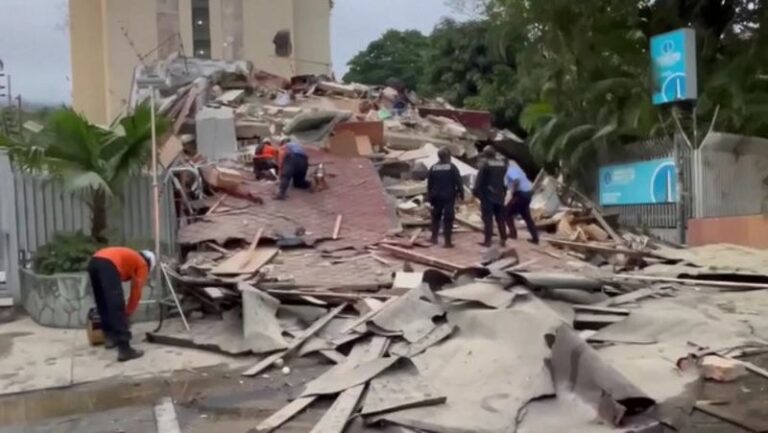
The severity of the damage is exacerbated by a critical lack of seismic-resistant construction. The USGS noted that a vast majority of the population in the affected region resides in structures highly vulnerable to shaking. In Caracas, roughly 300 kilometers from the epicenter, the failure of three buildings in the affluent Altamira Square district highlights that even higher-end infrastructure was unable to withstand the magnitude of the event.
Political Fragility and Emergency Response
The disaster unfolds against a backdrop of extreme political instability. Venezuela is currently operating under an interim government following the capture of President Nicolás Maduro earlier this year. The administration, now led by Delcy Rodríguez, is attempting to manage a national crisis while grappling with a crippled economy and hyperinflation.
To mitigate further risk, the Ministry of Communication and Information announced a preemptive shut-off of direct gas supplies to several buildings to prevent fires caused by leaking lines. Security forces have been deployed nationwide to prevent further collapses and manage the evacuation of residents who, according to eyewitness accounts, described the scenes in Caracas as resembling a “horror movie.” While the US Tsunami Warning Centers have since canceled alerts for Puerto Rico and the Virgin Islands, the internal humanitarian crisis remains acute.