Vishal Sikka’s New Venture Hang Ten Aims to Dismantle the Traditional IT Services Model
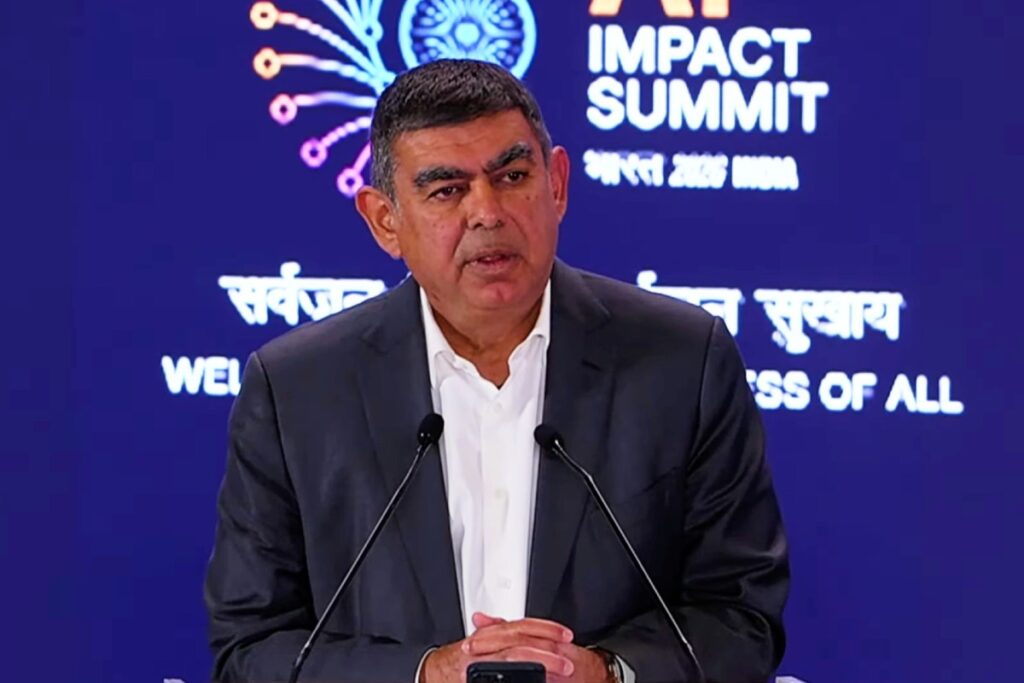
Table of Contents
A Bet Against the Headcount Model
For decades, the global IT services industry has operated on a predictable, linear equation: more revenue requires more people. Firms like Infosys, TCS, and Wipro built empires by deploying thousands of engineers to customize, integrate, and maintain enterprise software for the Fortune 500. But Vishal Sikka, the former CEO of Infosys, is betting that the era of linear scaling is over.
Sikka has officially launched Hang Ten Systems, an AI-native enterprise services startup that seeks to replace manual labor with agentic code generation and automation. The venture has already secured $32 million in seed funding, led by Mayfield, with strategic backing from Aramco Ventures and a board that includes Yahoo co-founder Jerry Yang. Unlike traditional firms that sell hours of human effort, Hang Ten is designed to leverage AI to build and operate software with a fraction of the traditional overhead.
Moving Beyond VianAI
This is not Sikka’s first foray into the AI space. Following his departure from Infosys in 2017, he founded VianAI, which raised significant capital from the SoftBank Vision Fund. However, the distinction between the two is critical. While VianAI focused on high-level analytics and decision-making tools for executives, Hang Ten is aimed directly at the plumbing of the enterprise—the actual delivery and maintenance of software.
The startup is positioning itself as an “AI-native project delivery” firm. According to Navin Chaddha, managing partner at Mayfield, the goal is to create a model where leverage grows with every project. In the old world, a complex SAP integration required a fresh army of consultants; in Hang Ten’s vision, the AI learns from previous deployments, creating a compounding efficiency that traditional firms cannot match without cannibalizing their own billable-hour revenue streams.
The Battle for the Enterprise Pipeline
Hang Ten is not starting from zero. The company has already onboarded early customers, including Fresenius and Siemens Gamesa Renewable Energy. Sikka has also recruited a core team of veterans from his time at SAP and Infosys, including CTO Navin Budhiraja and Chief Design Officer Sanjay Rajagopalan. This level of industry pedigree is likely why the company has found immediate traction in a crowded AI market.
The timing is particularly pointed. Traditional IT giants are currently in a defensive crouch, racing to integrate tools from OpenAI and Anthropic to prevent their margins from collapsing. While Infosys chairman Nandan Nilekani has argued that AI will expand the total addressable market for services, the market has been skeptical. Infosys shares have seen a decline of over 35% this year, reflecting investor anxiety that AI will do more to shrink the need for outsourced labor than to create new opportunities.
Engineering a New Economic Logic
The core technical thesis of Hang Ten rests on agentic code generation. Rather than simply using LLMs to suggest snippets of code, Hang Ten is building systems that can autonomously modify and operate software based on domain expertise. This shifts the value proposition from “we have the people to do this” to “we have the AI agents that can execute this.”
By focusing on reusable AI skills and automated delivery, Hang Ten is essentially attempting to productize the service industry. If successful, the model could force a reckoning across the entire BPO (Business Process Outsourcing) sector, transforming IT services from a labor-intensive business into a high-margin software play.