Google’s Hardware Pivot: Why the ‘Googlebook’ is a Strategic Bet on the Global South
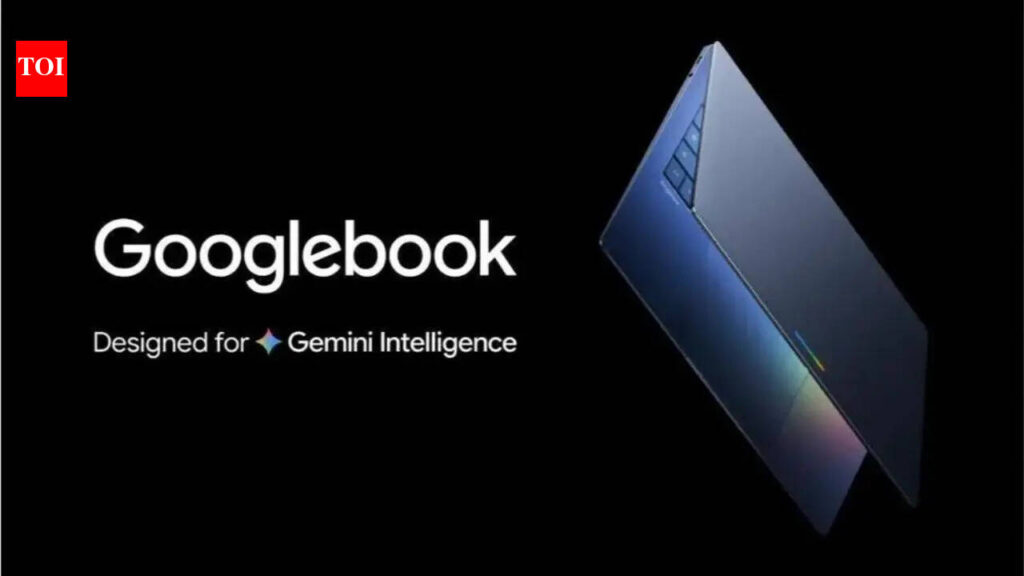
Table of Contents
The Pivot Toward Integrated AI Hardware
For years, Google has treated ChromeOS as a lightweight bridge to the cloud—a fast, secure, and inexpensive way to get online. But the emergence of generative AI has fundamentally changed the calculus of the personal computer. With the introduction of the Googlebook, Mountain View is no longer just providing the browser; it is attempting to own the entire silicon-to-software stack to ensure its Gemini AI models run with maximum efficiency.
The Googlebook isn’t just another Chromebook with a fancy name. It represents a shift toward high-performance hardware capable of handling on-device AI processing. By integrating specialized NPUs (Neural Processing Units) and tightening the link between the kernel and the Gemini LLM, Google is positioning this device as a direct competitor to the AI PCs being pushed by Microsoft and Qualcomm. The goal is simple: move the user away from the ‘web-app’ mindset and into a fully integrated AI workspace.
India: The Ultimate Stress Test
While the hardware will likely see a global rollout, industry insiders are looking at India as the definitive proving ground for the Googlebook. India presents a unique intersection of high mobile penetration and a growing, yet price-sensitive, appetite for computing power among students and young professionals.
For Google, India is more than just a market—it’s a laboratory. The challenge lies in delivering a premium AI experience that can withstand the volatility of varying internet speeds and the demand for multi-lingual AI support. If Google can successfully deploy a device that leverages AI to bridge the digital divide—perhaps through real-time translation and voice-to-text in regional languages—the Googlebook could transition from a niche gadget to a mass-market utility.
The ChromeOS Evolution
The arrival of the Googlebook coincides with a broader transformation of ChromeOS. We are seeing a gradual migration away from the ‘browser-as-an-OS’ philosophy. By baking AI directly into the OS, Google is addressing the long-standing criticism that Chromebooks are only suitable for basic tasks. With the Googlebook, the operating system is becoming an active collaborator, capable of drafting emails, summarizing long documents, and generating code locally without needing a constant, high-bandwidth connection to the cloud.
This strategy also puts Google in a tighter competition with Apple’s M-series chips. While Apple emphasizes the synergy between macOS and its custom silicon, Google is betting that its dominance in the AI layer—specifically through the ubiquity of Google Workspace—will be enough to pull users away from the Mac and Windows ecosystems.
Overcoming the ‘Cheap Laptop’ Stigma
The biggest hurdle for the Googlebook isn’t the tech, but the perception. For a decade, Chromebooks have been synonymous with education-sector budget devices. To succeed, the Googlebook must establish itself as a high-end productivity tool. This means the hardware needs to be impeccable—premium chassis, high-resolution displays, and battery life that rivals the MacBook Air.
If Google can successfully pivot the brand from ‘affordable’ to ‘intelligent,’ the Googlebook could become the primary vehicle for the company’s AI ambitions. However, if it arrives as just another iteration of the Chrome ecosystem without a clear performance leap, it risks being drowned out by the noise of the broader AI PC gold rush.