Pokémon Legends: Z-A Shifts the Series Toward Real-Time Combat in Lumiose City
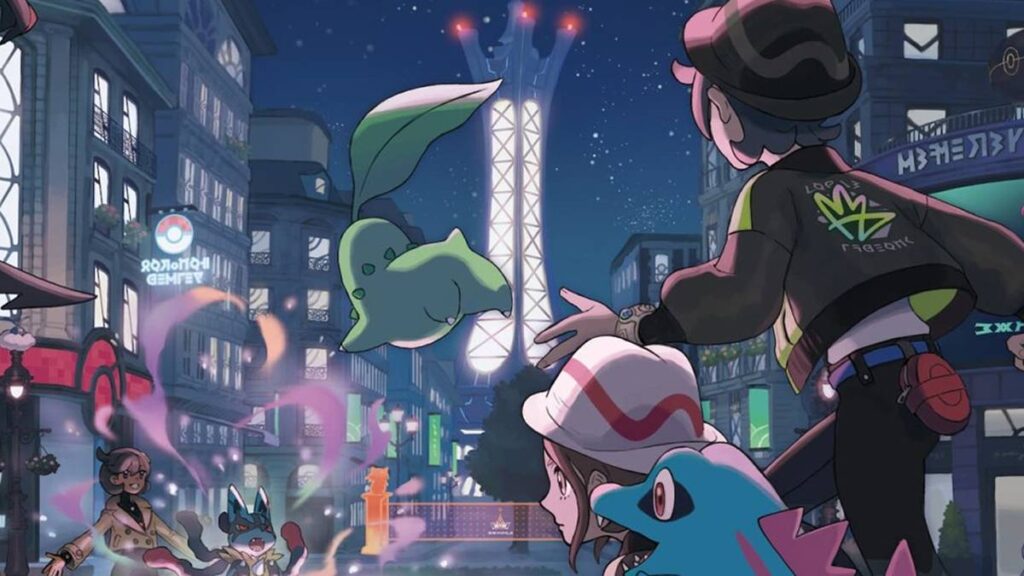
Table of Contents
A Departure from Turn-Based Tradition
For decades, the core Pokémon RPG experience has been defined by the rhythmic, predictable cadence of turn-based combat. From the 8-bit vistas of Kanto to the sprawling landscapes of Paldea, the strategy has always been about choosing the right move and waiting for your turn. Pokémon Legends: Z-A effectively dismantles this foundation, introducing a real-time battle system that transforms the series’ combat dynamics.
In this new iteration, the static battle screen is gone. Trainers and their Pokémon move freely across the battlefield, executing attacks on command rather than in a queued sequence. This shift introduces a layer of spatial awareness and timing previously unseen in the main series. Success no longer depends solely on type advantages, but on the ability to manage area-of-effect attacks and time Pokémon swaps mid-clash to avoid devastating hits.
Urban Redevelopment and the Lumiose Setting
Unlike its predecessor, Pokémon Legends: Arceus, which focused on the wild, untamed frontiers of Hisui, Z-A is strictly urban. The game is set entirely within Lumiose City, focusing on an ambitious urban redevelopment plan designed to harmonize the living spaces of humans and Pokémon. The city, centered around the iconic Prism Tower, serves as both the primary social hub and the battleground.
This concentrated environment allows for a more dense integration of world-building. Players navigate a city teeming with shops and restaurants, but the urban tranquility is disrupted by the appearance of ‘Rogue Mega-Evolved Pokémon.’ These high-difficulty encounters serve as the game’s primary gear-gating mechanism; defeating these rampaging creatures is the only way to secure the valuable Mega Stones required to unlock the series’ most powerful transformations.
The Return of Mega Evolution and the Z-A Royale
The return of Mega Evolution is the central mechanical pillar of Legends: Z-A. The process remains rooted in the bond between Trainer and Pokémon, requiring a Key Stone and a corresponding Mega Stone to trigger. In a real-time environment, the impact of a Mega Evolution is more visceral, offering a significant power spike that can shift the tide of a chaotic battle in seconds.
The game’s progression is tied to the ‘Z-A Royale,’ a competitive circuit that replaces the traditional Gym challenge. The loop is divided into a day-night cycle: players spend their daylight hours in wild zones catching and training, then enter the battle zones at night to climb the rankings. The goal is to ascend from Rank Z to the prestigious Rank A, utilizing bonus card challenges to accelerate the climb.
Connectivity and Multiplayer
Nintendo continues to leverage its ecosystem by tying the competitive experience to a Nintendo Switch Online membership. The real-time combat extends into the multiplayer arena, supporting battles with up to three other Trainers simultaneously. This move toward “frenetic” multiplayer combat suggests that Game Freak is leaning further away from the slow-paced strategy of the VGC (Video Game Championships) and toward a more action-oriented experience.