Digital Diplomacy and De-escalation: The New Hotline in the Strait of Hormuz
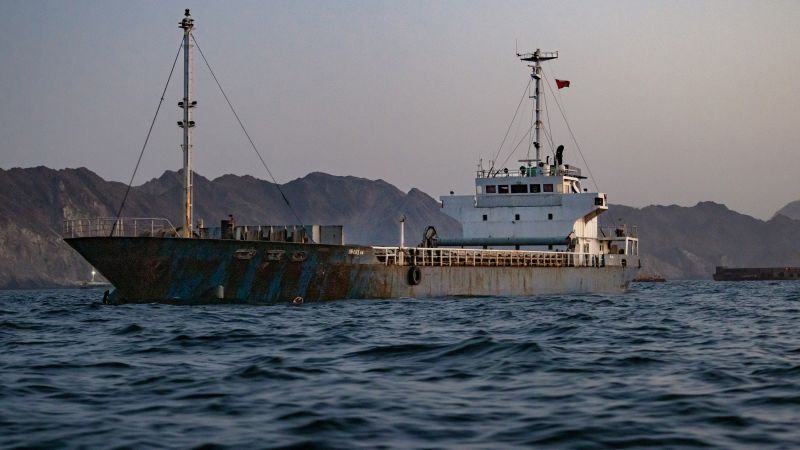
Table of Contents
A High-Stakes Digital Bridge
In a move aimed at cooling one of the world’s most volatile maritime chokepoints, Iran and the United States have agreed to establish a direct communication hotline to manage transit through the Strait of Hormuz. According to Iran’s chief negotiator, the mechanism is specifically designed to “prevent and resolve any misunderstandings” between naval forces and commercial vessels as they navigate the narrow waterway.
The agreement comes at a critical juncture for global energy markets. For years, the Strait has been a flashpoint for seizures, drone strikes, and brinkmanship. By introducing a formalized channel of communication, both nations are attempting to replace reactive military posturing with a structured protocol—essentially creating a diplomatic “fail-safe” to prevent a tactical error from escalating into a regional conflict.
Tracking the Recovery via AIS
While the diplomatic gesture is a positive signal, the data suggests that commercial confidence has not yet fully returned. Real-time shipping analytics from MarineTraffic indicate that while vessel volume is steadily increasing, traffic remains significantly below pre-war benchmarks.
The hesitation is understandable. Modern shipping relies on Automated Identification Systems (AIS) and complex logistics chains that are highly sensitive to risk premiums. When insurance underwriters hike rates for “war zones,” ships are rerouted or delayed, regardless of whether a hotline exists. The slow climb in traffic suggests that the industry is waiting for more than just a communication line; it is looking for a sustained period of stability.
The Lebanese Front and Monitoring Mechanisms
The push for stability in the Gulf is mirrored by renewed efforts in the Levant. The U.S. has stepped back into a central mediation role, launching another round of talks to halt the escalating conflict between Israel and the Iranian-backed Hezbollah in Lebanon.
Notably, U.S. officials have revealed the implementation of a “monitoring mechanism” to oversee the ceasefire. This likely involves a combination of satellite imagery, signals intelligence, and on-the-ground reporting to verify compliance. The necessity of such a mechanism highlights the fragile nature of these agreements; repeated violations have already threatened to derail the broader diplomatic architecture involving Tehran.
The Nuclear Stalemate
The broader geopolitical tension continues to center on Iran’s nuclear ambitions, where communication remains contradictory. U.S. Vice President JD Vance recently stated that Tehran had agreed to permit the reentry of nuclear monitors—a move that would provide the international community with critical transparency regarding uranium enrichment levels.
However, the Iranian government has flatly denied making any new commitments. This disconnect underscores the difficulty of the current diplomatic environment. Despite the friction, President Donald Trump has signaled a pragmatic, if aggressive, priority: the prevention of an Iranian nuclear weapon is, in his view, a goal that outweighs the potential economic fallout of a prolonged confrontation.
As the Strait of Hormuz slowly sees a return of tankers and cargo ships, the effectiveness of the new hotline will be the primary metric of success. If the system can successfully defuse a single high-tension encounter between a U.S. destroyer and an Iranian fast-attack craft, it may provide the confidence needed to return maritime traffic to its historical norms.