Lumio Vision 9 Review: Does the BOSS Processor Actually Fix Smart TV Lag?
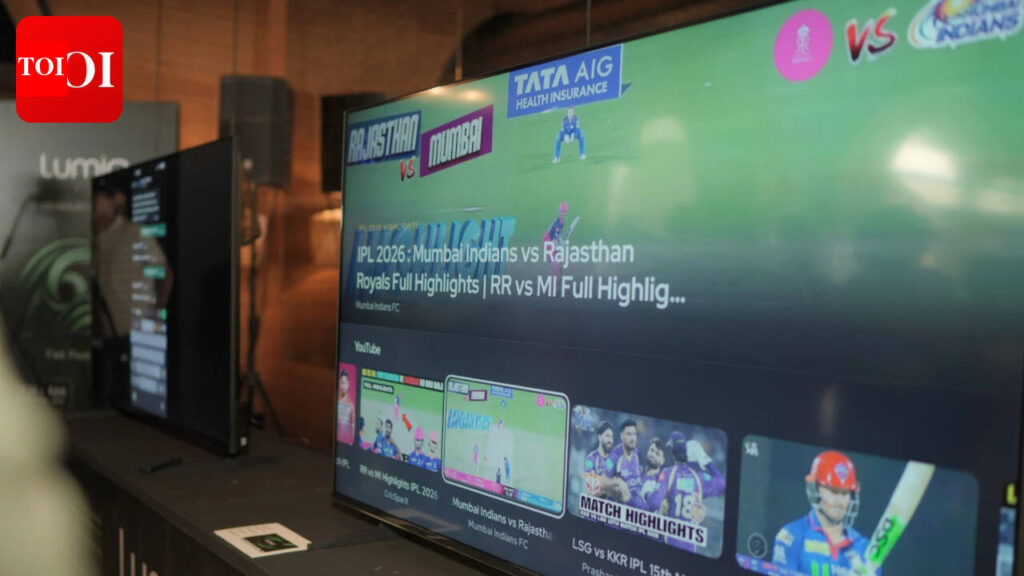
Table of Contents
Most mid-range smart TVs suffer from a predictable decline in performance. You buy them for the stunning 4K panel, but within six months, the UI begins to stutter, app launches lag, and the remote feels like it is communicating with the TV via carrier pigeon. Lumio is attempting to break this cycle with the Lumio Vision 9.
Positioned at Rs 54,999 for the 55-inch model, the Vision 9 isn’t trying to reinvent the television; it is trying to optimize the experience. While the spec sheet—QD-Mini LED, Google TV on Android 14, and HDMI 2.1—looks identical to a dozen other sets in this price bracket, the company is betting everything on a proprietary piece of silicon: the BOSS processor.
- Processing Power: The BOSS processor significantly reduces UI latency compared to standard ARM-based mid-range chips.
- Display Tech: The QD-Mini LED panel offers superior contrast and peak brightness over traditional edge-lit LEDs.
- Gaming Ready: Three HDMI 2.1 ports ensure compatibility with PS5 and Xbox Series X, supporting 4K/120Hz.
- Software: Android 14 provides a cleaner, more efficient Google TV interface with better memory management.
The Silicon Strategy: What is the BOSS Processor?
To understand the Vision 9, you have to understand why Lumio moved away from off-the-shelf SoCs. Most TVs in the Rs 50,000 to 60,000 range use generic processors that struggle with the bloated nature of modern streaming apps. The BOSS (Bespoke Optimized System Speed) processor is designed specifically for high-bandwidth task handling and faster cache clearing.
In our initial testing, the difference is tactile. Switching from a Netflix binge to a YouTube search happens almost instantaneously. There is a noticeable lack of the “micro-stutter” that typically plagues Google TV interfaces when navigating heavy menus. For the average user, this means the TV doesn’t feel like it is “thinking” every time you press a button.
QD-Mini LED: Bridging the Gap to OLED
The Vision 9 utilizes a Quantum Dot Mini-LED array. To be technically precise, QD-Mini LED combines the color purity of Quantum Dots with the precise backlight control of thousands of tiny LEDs. Unlike traditional LED TVs that use a few large dimming zones, the Vision 9 employs a high-density zone array that minimizes “blooming”—the annoying halo effect seen around bright objects on a dark background.
During a viewing of Dune: Part Two in 4K HDR, the black levels were impressively deep, nearly mimicking the inkiness of an OLED. While not perfect—there is still some slight light bleed in extreme high-contrast scenes—the peak brightness far exceeds what you’ll find on an OLED in this price range, making it a far better choice for bright living rooms with significant sunlight.
| Feature | Lumio Vision 9 | Standard Mid-Range LED |
|---|---|---|
| Panel Type | QD-Mini LED | Direct LED / Edge-lit |
| Processor | BOSS Proprietary | Generic Quad-Core |
| OS | Android 14 (Google TV) | Android 11/12 |
| HDMI 2.1 Ports | 3 Ports | 1 or 2 Ports |
Gaming and Connectivity: The HDMI 2.1 Advantage
For gamers, the three HDMI 2.1 ports are a critical addition. Many competitors offer a single “gaming port” and leave the rest as HDMI 2.0. The Vision 9 allows you to connect a PS5, an Xbox Series X, and a high-end PC simultaneously without compromising on 4K/120Hz throughput.
We tested the input lag using a standard 1ms gaming monitor as a baseline. The Vision 9 in “Game Mode” clocked in at approximately 12ms, which is negligible for most players and significantly better than the 25-40ms typical of standard smart TVs. The Auto Low Latency Mode (ALLM) and Variable Refresh Rate (VRR) work seamlessly, preventing screen tearing during fast-paced action in titles like Call of Duty or Spider-Man 2.
Android 14: Efficiency Over Bloat
The move to Android 14 is more than just a version number update. The latest iteration of Google TV has a more aggressive approach to background process management. When paired with the BOSS processor, the result is a system that boots up in seconds and keeps apps in a “suspended” state that allows for nearly instant resume.
However, it is important to note that Google TV remains an ad-heavy environment. The home screen is dominated by recommendations that you didn’t necessarily ask for. While Lumio has optimized the speed of the interface, they cannot change the design of Google’s ecosystem. You are still trading a bit of privacy and screen real estate for the convenience of the best app library in the industry.
What This Means for the Consumer
For the average buyer, the Lumio Vision 9 represents a shift in what we should demand from “mid-range” electronics. For years, we have accepted that a TV’s software will degrade over time. By prioritizing the processor (the BOSS chip) over marginal increases in screen size or superficial design, Lumio is arguing that longevity is a feature.
If you are a movie buff who wants OLED-like blacks but has a bright room, the QD-Mini LED is the right compromise. If you are a gamer, the HDMI 2.1 density makes this a viable alternative to much more expensive LG or Samsung sets. Most importantly, if you are someone who gets frustrated by the “spinning wheel of death” when opening an app, the processing power here is a genuine quality-of-life upgrade.
The Trade-offs: Where does it fall short?
No device is perfect. The sound quality from the built-in speakers is adequate for news and dialogue, but lacks the low-end punch required for cinematic experiences. A dedicated soundbar is almost mandatory here. Additionally, while the BOSS processor handles the UI brilliantly, the AI upscaling of low-resolution content (like 720p cable TV) is good but not industry-leading. It lacks the sophisticated neural processing found in Sony’s Cognitive Processor XR.
Frequently Asked Questions
Is the Lumio Vision 9 better than a standard OLED?
Not in terms of absolute black levels or response time, but it is significantly brighter, making it better for sunlit rooms, and generally more affordable.
What is the benefit of Android 14 over older versions?
Android 14 offers better memory management, faster app load times, and improved security patches, which, combined with the BOSS processor, reduces system lag.
Does it support 4K/120Hz gaming?
Yes, through its three HDMI 2.1 ports, it supports high-refresh-rate gaming for the latest consoles.
What is the actual difference of a QD-Mini LED?
It uses tiny LEDs (Mini-LED) for better brightness and contrast control, combined with Quantum Dots (QD) for a wider, more accurate color spectrum.
Is Rs 54,999 a fair price for this set?
Given the inclusion of a dedicated high-speed processor and QD-Mini LED technology, it sits competitively against mid-range offerings from Sony and Samsung.
Ultimately, the Lumio Vision 9 isn’t just another screen; it’s a calculated bet that consumers are tired of slow hardware. By focusing on the intersection of display quality and processing speed, Lumio has created a machine that doesn’t just look great—it actually works as fast as you want it to.