Vivo Y500 4G Teased With Massive 8,100mAh Battery: A New Benchmark for Endurance?
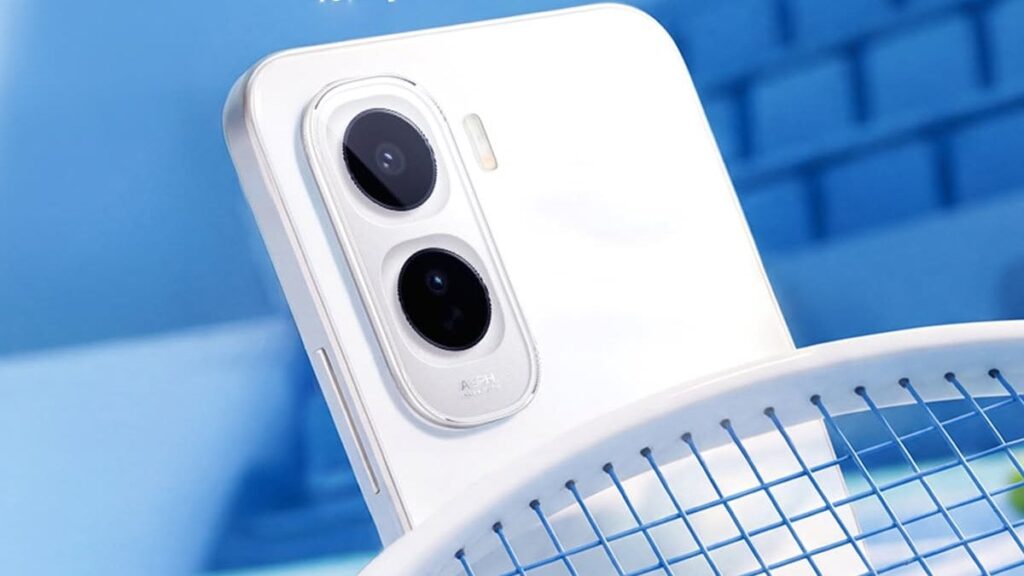
Table of Contents
The Return of the Battery Behemoth
In an era where smartphone manufacturers have largely settled on the 5,000mAh standard, Vivo is attempting to disrupt the endurance equilibrium. The company has officially begun teasing the Vivo Y500 4G, a device that prioritizes raw power longevity over the slim profiles seen in flagship models. The headline feature is an uncompromising 8,100mAh battery, a capacity rarely seen outside of ruggedized outdoor phones or niche tablets.
Initial teasers, primarily surfacing via Vivo’s official Instagram channels in Nepal, suggest that this isn’t just a capacity bump but a strategic play for the “super-user” market—those who struggle to get through a single day of heavy usage or those who rely on their devices for long-duration navigation and media consumption without access to a power bank.
- 8,100mAh BlueVolt Battery: Aiming for multi-day autonomy.
- 1.5K Infinity AMOLED: High-pixel density for a budget-centric series.
- 4G Connectivity: A targeted approach for markets where LTE remains the primary infrastructure.
- Ultra-Smooth Processing: A yet-to-be-named chipset optimized for efficiency.
Decoding the BlueVolt Battery Technology
To cram 8,100mAh into a chassis that remains marketable, Vivo is utilizing what it calls BlueVolt technology. While Vivo has not released a full white paper on the chemistry, industry standards suggest this likely involves high-density silicon-carbon anodes. This material allows for more energy to be stored in a smaller physical footprint compared to traditional graphite anodes.
From a technical perspective, the challenge of an 8,100mAh cell isn’t just capacity, but thermal management during charging. A battery of this size can act as a heat sink, but fast-charging such a massive cell without degrading the lithium-ion chemistry requires sophisticated power management ICs (Integrated Circuits). If Vivo manages to pair this with a 45W or 67W fast-charging solution, it could mitigate the long wait times typically associated with high-capacity batteries.
The Display: Breaking the 1080p Ceiling
Perhaps more surprising than the battery is the inclusion of a 1.5K resolution Infinity AMOLED panel. Traditionally, the Y-series is Vivo’s entry-to-mid-range offering, where 1080p (FHD+) is the norm. Jumping to 1.5K (typically around 1220p) suggests a push toward better text clarity and a sharper visual experience, bridging the gap between budget and premium hardware.
AMOLED technology is critical here. Since the Y500 4G is designed for endurance, the ability to turn off individual pixels (especially in Dark Mode) will be the primary way the device stretches that 8,100mAh capacity. A 1.5K display is more taxing on the GPU and battery than 1080p, but the sheer volume of the BlueVolt battery likely provides the necessary overhead to support this higher resolution without sacrificing multi-day life.
Hardware Synergy: The 4G vs 5G Divide
The emergence of a specific 4G variant is a calculated move. While the 5G version of the Y500—which leverages the MediaTek Dimensity 7300—targets performance and connectivity, the 4G model is likely designed for maximum efficiency. 5G modems are notoriously power-hungry, often draining batteries faster during signal searches in weak areas. By sticking to 4G, Vivo can ensure that the 8,100mAh battery is not wasted on the high energy costs of a 5G radio.
Regarding the “ultra-smooth processor” mentioned in teasers, we expect a chipset from the Qualcomm Snapdragon 6-series or MediaTek Helio G-series. The goal for this specific device is not benchmark dominance, but rather a balanced ratio of performance-per-watt to ensure the screen and battery remain the stars of the show.
What This Means for the Consumer
For the average user, the Vivo Y500 4G represents a shift in value propositions. For years, the industry has pushed for “faster」 charging” to compensate for “smaller」 batteries.” Vivo is pivoting back to the other side of the equation: simply providing more energy.
Practical Implications:
- Travel and Remote Work: Users who spend 12+ hours away from a wall outlet can now realistically expect three to four days of light-to-moderate use.
- Content Consumption: The 1.5K AMOLED screen makes this a formidable device for streaming, while the battery ensures you don’t run out of juice during a long flight or commute.
- Weight Trade-off: Consumers should expect a heavier device. Battery density has improved, but 8,100mAh still requires significant physical mass, likely pushing the weight over 210 grams.
Industry Context: The Battle for Battery Supremacy
Looking at the current market, most manufacturers (Samsung, Xiaomi, OnePlus) have plateaued at 5,000mAh for their standard models. Only “gaming phones” or specialized “rugged phones” (like those from Doogee or Ulefone) typically cross the 8,000mAh threshold. By bringing this capacity to a mainstream, aesthetically pleasing device (teased in a clean white finish with a vertical camera module), Vivo is attempting to normalize the “Power-House” phone for the general public.
| Feature | Standard Mid-Range (Avg) | Vivo Y500 4G (Teased) |
|---|---|---|
| Battery Capacity | 5,000 mAh | 8,100 mAh |
| Display Res | 1080p (FHD+) | 1.5K (QHD-ish) |
| Panel Type | LCD or AMOLED | Infinity AMOLED |
| Connectivity | 5G | 4G LTE |
Frequently Asked Questions
How long will the Vivo Y500 4G battery actually last?
While real-world tests are pending, an 8,100mAh battery is roughly 60% larger than the industry average. Depending on the efficiency of the unnamed processor and the use of the 1.5K AMOLED screen, users could realistically see 3-5 days of moderate use.
Is the Vivo Y500 4G suitable for gaming?
The 4G variant focuses on endurance. While it will handle casual games and social media with ease, those seeking high-performance gaming should look toward the 5G variant equipped with the Dimensity 7300.
What is a 1.5K resolution display?
A 1.5K display sits between Full HD (1080p) and Quad HD (1440p). It provides significantly more detail and sharpness than 1080p while remaining more power-efficient than a full 2K/4K screen.
Will the Vivo Y500 4G be heavy?
Yes. Increasing battery capacity almost always increases the physical weight of the device. Given the 8,100mAh cell, it will likely be heavier than the typical Vivo Y-series phone.
When is the Vivo Y500 4G releasing?
Vivo has teased the launch in Nepal via Instagram, but a global release date has not been officially confirmed. We expect an announcement in the coming weeks.
Final Technical Considerations
The success of the Vivo Y500 4G will depend on two factors: charging speed and software optimization. A massive battery is a liability if it takes four hours to charge from zero. If Vivo includes a high-wattage fast charger, the device becomes a legitimate tool for power users. Furthermore, the Funtouch OS will need to aggressively manage background processes to truly leverage the BlueVolt hardware.
As the device moves from the Google Play Console database to actual retail shelves, the industry will be watching to see if the market prefers the raw endurance of the Y500 4G over the speed and connectivity of 5G alternatives.