Microsoft Surface Laptop 8 Leaks: Intel Panther Lake Performance and the Shift in Business Strategy
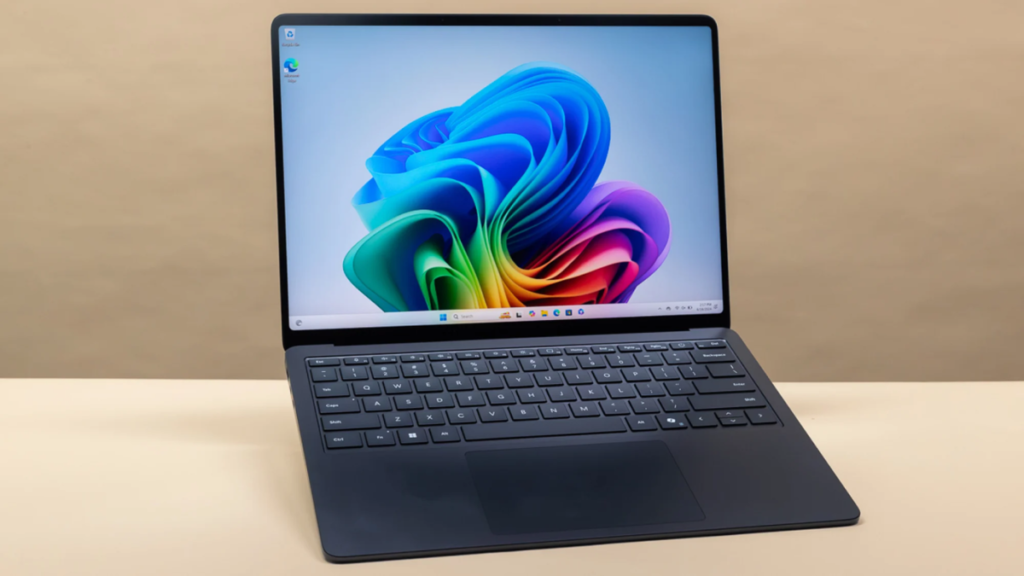
Table of Contents
A Slip-up in the Benchmarks: The Surface Laptop 8 Emerges
In the world of hardware leaks, the most reliable evidence often comes from a forgotten license key. This week, two Geekbench 6 listings briefly appeared online, providing a rare glimpse into Microsoft’s next hardware cycle: the Surface Laptop 8. While the listings were swiftly scrubbed by Thursday morning, they left behind a digital trail that suggests a significant shift in how Microsoft is positioning its premium laptop line for the enterprise market.
The leaked data, first spotted by Mashable and meticulously archived by Notebookcheck, points to a 13.8-inch chassis powered by Intel’s upcoming Panther Lake architecture. For those following the Surface trajectory, this is a pivotal moment. After a heavy push toward Qualcomm Snapdragon X Elite processors to challenge Apple’s M-series efficiency, Microsoft seems to be doubling down on a hybrid strategy, keeping high-performance Intel silicon firmly in the “For Business” pipeline.
- Processor: Intel Core Ultra X7 368H (Panther Lake)
- Graphics: Intel Arc B390
- Memory: 32GB RAM
- Display: 13.8-inch form factor
Decoding the Panther Lake Performance
The presence of the Intel Core Ultra X7 368H is the most critical piece of information here. Panther Lake represents Intel’s next leap in architectural efficiency, aiming to bridge the gap between raw power and the battery longevity that has defined the ARM-based revolution. According to the leaked benchmarks, the 368H chip delivers multi-core performance that rivals the M5 MacBook Air in demanding scenarios like 4K video rendering and large-scale data compilation.
Technical analysis of the Arc B390 graphics indicates a refined approach to integrated GPUs. While not intended to replace a dedicated RTX chip, the B390 is designed to handle AI-driven workloads—such as local LLM execution and advanced photo editing—without draining the battery in ninety minutes. The 32GB RAM configuration suggests that Microsoft is targeting a baseline of high-capacity memory to accommodate the growing footprint of Copilot+ AI features, which are increasingly memory-hungry.
Comparing the Silicon: Intel vs. Qualcomm vs. Apple
To understand why this leak matters, we have to look at the current fragmentation of the Surface line. In May 2024, Microsoft pivoted the Surface Laptop 7 toward the Snapdragon X series, prioritizing NPU (Neural Processing Unit) performance and standby time. However, the enterprise world remains hesitant to fully migrate to ARM due to legacy software dependencies and driver incompatibilities.
| Feature | Surface Laptop 7 (ARM) | Surface Laptop 8 (Leaked Intel) | MacBook Air (M-Series) |
|---|---|---|---|
| Architecture | Qualcomm Snapdragon X | Intel Panther Lake | Apple Silicon (M-series) |
| Primary Strength | Battery Life / NPU | Compatibility / Peak Power | Efficiency / Ecosystem |
| Target Audience | Consumers/Creatives | Enterprise/Power Users | Generalists/Pros |
| Graphics | Adreno | Arc B390 | Integrated Apple GPU |
The Enterprise Pivot: Why ‘For Business’ First?
The specific naming convention in the leak—”Microsoft Corporation Surface Laptop for Business 13.8in 8th Ed Intel”—is telling. It confirms a stratified release strategy. Microsoft is no longer treating the consumer and business versions as identical twins with different warranties. Instead, they are utilizing different chip architectures to serve distinct needs.
Industry reports from Windows Central suggest that Intel-based Surface devices will likely hit the market this spring, while the Snapdragon X2 variants for consumers may follow in the summer. This timing is likely a response to two factors: supply chain volatility surrounding the next-gen ARM chips and the urgent demand from IT departments for a reliable, x86-based upgrade path that supports AI acceleration without the ‘prism’ emulation layers required by ARM Windows.
What This Means for the End User
For the average buyer, the leak of the Surface Laptop 8 signals that the “choice” between battery life and compatibility is becoming more explicit. If you are a developer or a corporate power user whose workflow relies on specialized x86 software, the move toward Panther Lake is an upgrade you can actually use without worrying about software glitches.
Beyond the CPU, the rumored hardware refinements are meaningful. The transition to an optional OLED display would finally bring the Surface Laptop into parity with the high-contrast screens found in the Dell XPS and MacBook Pro lines. Improved haptics in the trackpad would also address one of the long-standing complaints regarding the “mushy” feel of some previous Surface iterations.
The Cost of Innovation: Price Hikes and Hardware
It is worth noting that this hardware push comes at a time of pricing instability. Microsoft recently implemented price increases across its current Surface lineup, citing the rising cost of high-density memory and advanced components. With a 32GB RAM baseline appearing in the benchmarks, it is highly probable that the Surface Laptop 8 will carry a premium price tag, potentially pushing the “Business” editions into a higher bracket than previous generations.
When asked for comment, a Microsoft representative stated, “Microsoft has nothing further to share at this time,” a standard corporate deflection that usually confirms the leak’s validity without admitting to it. The fact that the benchmarks were removed so quickly suggests that the device is currently in the final stages of validation and is not yet ready for public scrutiny.
FAQ: Understanding the Surface Laptop 8 Leaks
When will the Surface Laptop 8 be released?
While not officially confirmed, reports indicate Intel-based models may arrive in Spring 2026, with Snapdragon variants following in the summer.
What is Intel Panther Lake?
Panther Lake is Intel’s upcoming processor architecture designed to improve power efficiency and AI processing (NPU) performance, intended to compete more directly with ARM-based chips.
Will the Surface Laptop 8 have an OLED screen?
Leaked reports and industry insights suggest that an optional OLED display will be available for the 8th edition, providing better contrast and color accuracy.
Why is Microsoft releasing both Intel and Snapdragon versions?
Microsoft is hedging its bets. Snapdragon offers superior battery life and AI efficiency for consumers, while Intel ensures 100% software compatibility for business enterprises.
Does the Surface Laptop 8 support Copilot+?
Yes. Both the Intel Panther Lake and Snapdragon X2 chips are designed specifically to meet the NPU requirements for Microsoft’s Copilot+ AI features.
Closing the Performance Gap
The emergence of the Surface Laptop 8 via Geekbench proves that Microsoft is not abandoning Intel. Instead, they are refining the role of x86 architecture in a world increasingly dominated by AI and efficiency. By pairing the Panther Lake chip with 32GB of RAM and a possible OLED upgrade, Microsoft is attempting to build the ultimate corporate workhorse—one that doesn’t sacrifice the “it just works” reliability of Intel for the promise of ARM’s battery life.