The Trump-Iran MOU: Deconstructing the ‘Vague’ Framework and Its Impact on Middle East Stability
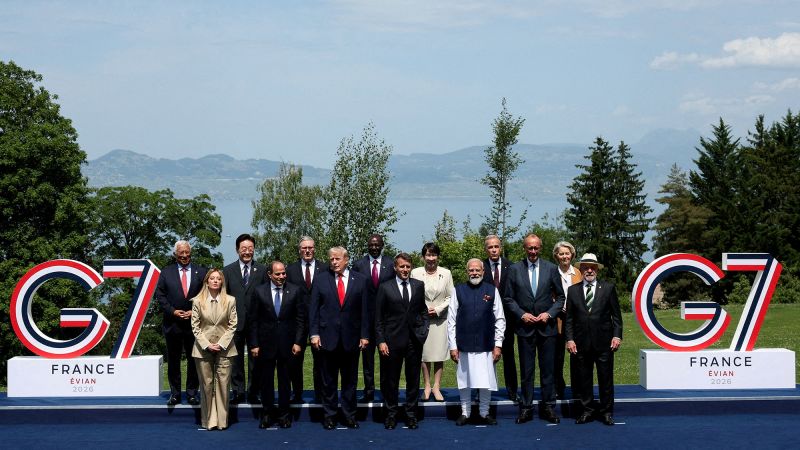
Table of Contents
The Diplomatic Gamble: Understanding the US-Iran Framework
At the current G7 summit in France, President Donald Trump has sparked a geopolitical firestorm by vowing to release the full text of a recently brokered agreement with Iran. While the White House presents the move as a stabilizing force for the Middle East, the actual document—a memorandum of understanding (MOU)—has become a lightning rod for criticism from both former administration allies and strategic partners in Israel.
The agreement arrives at a precarious moment. For weeks, the border between Israel and Lebanon has been a flashpoint of high-intensity kinetic warfare. However, the immediate aftermath of this diplomatic outreach has seen a measurable dip in hostilities, raising questions about whether a ‘vague’ document can actually produce concrete security gains.
- Strategic Ambiguity: US officials describe the MOU as a ‘political document’ designed for domestic consumption in Tehran rather than a technical treaty.
- The Back-Channel Gap: A critical distinction exists between the public text and the private, back-channel commitments Iran has allegedly made to Washington.
- Regional Spillover: The deal is already impacting the ground in southern Lebanon, with UNIFIL reporting a sharp decline in airspace violations and rocket fire.
The MOU: Why ‘Vagueness’ is a Calculated Strategy
According to US officials speaking to CNN, the memorandum of understanding is intentionally brief—spanning only one-and-a-half pages, as confirmed by Vice President JD Vance. In the world of high-stakes diplomacy, brevity and vagueness are often not failures of drafting, but deliberate tools of statecraft.
The primary objective of the MOU is to provide the Iranian leadership with a ‘political win’ that they can sell to their hardline internal audience. By keeping the language broad, Tehran can claim a diplomatic victory without appearing to surrender core ideological pillars. This creates a ‘bridge’ to the more rigorous, technical in-person negotiations that the US intends to lead.
However, this strategy carries significant risks. When a document is too vague, it allows multiple parties to interpret the agreement in contradictory ways. For the US, the confidence in this deal doesn’t stem from the 1.5 pages of the MOU, but from ‘back-channel commitments’—private assurances that are not codified in the public text. This disconnect is exactly what has alarmed Israeli intelligence and former US officials.
The Lebanon Equation: Data-Driven De-escalation
While the diplomatic rhetoric in France is heated, the operational reality in southern Lebanon shows a surprising shift. Data provided by the United Nations peacekeeping mission (UNIFIL) suggests that the US-Iran agreement is acting as a psychological brake on the escalation between the Israel Defense Forces (IDF) and Hezbollah.
On Monday, June 16, 2026, the UN recorded 38 violations of Lebanese airspace by the IDF, a significant drop from the 83 recorded the previous Sunday. Even more striking is the volume of projectiles; launches dropped from 705 on Sunday to 174 on Monday. This represents a nearly 75% decrease in rocket activity within a 24-hour window.
The United Nations has hailed the US-Iran agreement as having a ‘positive impact on the situation’ in Lebanon, noting that approximately 10,000 displaced persons have returned from shelters in the last four days.
Despite these numbers, the peace is fragile. Lebanon remains the primary sticking point in the broader negotiations. Iran continues to demand a full Israeli withdrawal from southern Lebanon, a condition that Israel has flatly rejected, maintaining that its military presence is essential to neutralizing Hezbollah’s launch capabilities.
Internal Fracture: The ‘Appeasement’ Debate
The Trump administration’s approach has not been met with universal acclaim within the Republican party. Former Vice President Mike Pence has emerged as a leading critic, describing the framework as something that ‘smacks of appeasement.’
Pence’s critique centers on the ‘trust but verify’ axiom of nuclear diplomacy. He argues that the administration is prioritizing the ‘trust’ phase—accepting vague promises—without establishing the ‘verify’ phase. His concern is that by allowing Iran to maintain its pursuit of nuclear capabilities while granting economic concessions, the US is repeating the mistakes of previous iterations of the JCPOA (Joint Comprehensive Plan of Action).
This internal divide highlights a fundamental clash in foreign policy philosophy: the ‘populist right’ approach of disruptive, deal-making diplomacy versus the traditional neoconservative approach of maximum pressure and verifiable surrender.
What This Means for Global Security
The implications of this agreement extend far beyond the borders of Iran and Lebanon. If the US successfully leverages a vague MOU to pull Iran back from the brink of a regional war, it validates a new model of ‘transactional diplomacy’ where public documents serve as mere placeholders for private deals.
For the average observer, this means the stability of the Middle East currently rests on a foundation of verbal agreements and back-channel trust rather than ironclad legal treaties. For the energy markets, a reduction in tension in the Strait of Hormuz and the Levant could lead to a stabilization of oil prices, which have been volatile due to the threat of Iranian intervention.
Analysis of G7 Dynamics
The G7 summit in France has served as the backdrop for these revelations, with sources describing the discussions among world leaders as ‘frank.’ The fact that Israel requested to see the text of the agreement and was rejected by the US administration signals a growing friction in the US-Israel security partnership.
President Trump’s comments that Prime Minister Netanyahu ‘needs to be more responsible’ with Lebanon suggest a shift in the US role from an unconditional supporter of Israeli military objectives to a mediator attempting to balance regional stability against Israeli security needs. This pivot is a significant departure from previous decades of US policy in the Levant.
Frequently Asked Questions
What is the US-Iran MOU?
The MOU (Memorandum of Understanding) is a brief, 1.5-page political document designed to establish a framework for peace between the US and Iran. It is intended to be a starting point for technical negotiations rather than a final, comprehensive treaty.
Why is the document’s language described as ‘vague’?
The language is intentionally broad to allow the Iranian government to present the deal as a victory to its domestic audience without committing to specific, high-cost concessions in a public forum.
How has the deal affected the Israel-Lebanon border?
According to UNIFIL, there has been a marked decrease in violence, including a drop in airspace violations (from 83 to 38) and a sharp decline in projectiles launched across the border.
Why does Mike Pence oppose the agreement?
Pence argues that the deal lacks verification mechanisms and resembles ‘appeasement,’ fearing it allows Iran to continue its nuclear ambitions while receiving diplomatic and economic relief.
Will the full text of the agreement be released?
President Trump has vowed to release the text ‘in a couple of days,’ though US negotiators are warning the public not to over-analyze the wording since it does not reflect all the private commitments made by Iran.