Samsung Galaxy Tab Active 6 Leaks: 2027 Timeline and 5G Integration Signal a Rugged Pivot
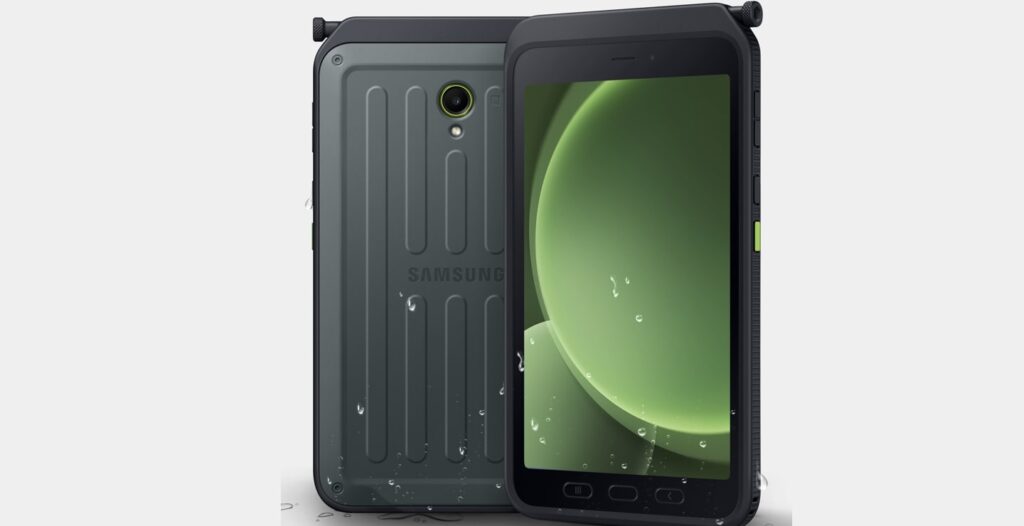
Table of Contents
A Long Game for Rugged Mobility
In the niche but critical world of enterprise hardware, timing is rarely about the next quarterly cycle and more about the lifecycle of the fleet. Samsung is playing a long game. Recent reports from SamMobile indicate that the Samsung Galaxy Tab Active 6 is already appearing in internal tracking, with a projected launch window extending into early 2027. While a three-year lead time seems unusual for consumer tech, it aligns with the procurement cycles of logistics, construction, and public safety sectors—the primary users of the Active series.
- Model Identification: The global variant is reportedly identified as SM-X316B.
- Timeline: Anticipated release in early 2027, suggesting a strategic shift in the product cadence.
- Connectivity: Native 5G integration is expected to be a baseline feature, moving away from optional LTE modules.
- Software: Likely to ship with Android 17 and One UI 9, ensuring long-term security support for corporate fleets.
The current Galaxy Tab Active 5, released in 2024, set a high bar for compact ruggedness with its 8-inch form factor and IP68 rating. However, the jump to the Active 6 isn’t just about a version number; it represents a transition toward a more connected, cloud-reliant industrial ecosystem where 5G is no longer a luxury but a requirement for real-time telemetry and remote diagnostics.
Decoding the SM-X316B: What the Model Number Tells Us
For those tracking Samsung’s ecosystem, model numbers are the only reliable breadcrumbs before an official press release. The emergence of SM-X316B suggests a specific global configuration. In Samsung’s nomenclature, the ‘X’ series typically denotes tablets, and the ‘3’ series often aligns with the Active or smaller-form-factor lines. The ‘B’ suffix generally indicates a global or international version, designed to handle multiple frequency bands across different regions.
The most significant detail accompanying this leak is the emphasis on 5G. While the Active 5 offered connectivity, the Active 6 appears to be optimized for the next generation of private 5G networks. Many industrial sites—from ports to automated warehouses—are currently deploying private 5G (P5G) to avoid the interference and latency issues associated with Wi-Fi in metallic environments. A native, high-performance 5G modem in the Active 6 would make it a primary candidate for these specialized deployments.
The Rugged Standard: Beyond the IP68 Rating
To understand where the Galaxy Tab Active 6 is going, we have to look at where the Active 5 stands. For the uninitiated, IP68 is an International Protection rating where ‘6’ denotes total protection against dust and ‘8’ denotes protection against immersion in water (typically up to 1.5 meters for 30 minutes). However, for a field engineer, IP68 is just the baseline.
The real value of the Active series is the MIL-STD-810H certification. This is a U.S. Military Standard that tests equipment against environmental stress, including extreme temperature swings, humidity, vibration, and shock. If the Active 6 follows this trajectory, we can expect improvements in:
- Screen Durability: A shift toward more advanced Gorilla Glass or specialized polymers that resist shattering upon impact on concrete.
- Thermal Management: Better heat dissipation for devices used in direct sunlight or near industrial machinery.
- Battery Versatility: The Active series is known for user-replaceable batteries. In an era of sealed glass sandwiches, this remains a critical feature for workers on 12-hour shifts who cannot wait for a USB-C charge.
Software Architecture: Anticipating Android 17
A 2027 launch puts the Galaxy Tab Active 6 in the crosshairs of Android 17. This is a massive leap from the current software landscape. By the time this device hits the market, we expect Google’s OS to be even more deeply integrated with generative AI at the kernel level. For a rugged tablet, this isn’t about writing emails; it’s about Computer Vision (CV).
Imagine a technician pointing the Tab Active 6 camera at a complex circuit board, and One UI 9 using on-device AI to overlay a wiring diagram in real-time (Augmented Reality). This requires significant NPU (Neural Processing Unit) power, which suggests the Active 6 will need a more robust chipset than the mid-range silicon found in previous iterations.
Comparative Specification Forecast
| Feature | Galaxy Tab Active 5 (Current) | Galaxy Tab Active 6 (Predicted) |
|---|---|---|
| Connectivity | LTE/5G (Regional) | Advanced Global 5G / P5G Support |
| OS | Android 13/14 | Android 17 (One UI 9) |
| Display | 8-inch LCD | 8-inch Enhanced Brightness/Anti-Reflective |
| Battery | 5,050mAh (Removable) | 6,000mAh+ (Removable) |
| Durability | MIL-STD-810H / IP68 | MIL-STD-810H (Updated) / IP69K? |
What This Means for the Enterprise Sector
The shift to a 2027 timeline and the focus on 5G signal a strategic pivot. For the average consumer, a tablet that takes three years to iterate is a failure. For a Chief Technology Officer (CTO) managing 5,000 devices in the field, it’s a blessing. Enterprise hardware requires a stability and longevity that consumer hardware avoids.
1. Reduction in Hardware Churn: By extending the cycle, Samsung is acknowledging that rugged tablets are meant to last 5-7 years. This reduces the total cost of ownership (TCO) for companies.
2. The Edge Computing Shift: With 5G and Android 17, the Active 6 will likely serve as an “edge node.” Instead of processing data on the device, it will stream massive datasets from the cloud in real-time, allowing the tablet to remain compact while performing heavy-duty computations.
3. Ecosystem Lockdown: We expect deeper integration with Samsung Knox. The Active 6 will likely feature hardware-level security enhancements to protect sensitive infrastructure data from cyber threats, a priority for government and military contracts.
Technical Analysis: The Connectivity Leap
Why is 5G such a focal point for the Active 6? In industrial environments, 4G LTE often struggles with “hand-offs” between towers and suffers from high latency in congested areas. 5G’s Ultra Wideband (UWB) and Massive MIMO (Multiple Input Multiple Output) allow for thousands of devices to connect in a small area without signal degradation.
For a utility worker managing a power grid or a first responder in a disaster zone, the difference between a 50ms lag and a 5ms lag can be the difference between a successful operation and a critical failure. The SM-X316B is likely being engineered to support these low-latency requirements, potentially including support for 5G Standalone (SA) networks, which remove the dependence on legacy 4G cores.
While Samsung dominates the “semi-rugged” space, they face stiff competition from Panasonic’s Toughbook series and Dell’s rugged latitudes. Panasonic focuses on extreme durability and modularity, whereas Samsung wins on software fluidity and ecosystem integration. The Active 6 is Samsung’s attempt to close the gap on extreme durability while maintaining the Android advantage.
Frequently Asked Questions
When will the Samsung Galaxy Tab Active 6 be released?
According to recent leaks and internal model tracking, the Samsung Galaxy Tab Active 6 is expected to launch in early 2027. This deviates from the typical annual or biennial cycle, suggesting a longer development phase for updated rugged standards.
What is the model number for the Galaxy Tab Active 6?
The global variant of the device has been identified in leaks as SM-X316B.
Will the Galaxy Tab Active 6 have a removable battery?
While not officially confirmed, the Active series’ core value proposition is its user-replaceable battery. It is highly probable that the Active 6 will continue this tradition to support long-shift industrial use.
Is the Galaxy Tab Active 6 waterproof?
Yes, it is expected to maintain at least an IP68 rating, meaning it can be submerged in water and is completely protected against dust. There is speculation it may move toward IP69K, which protects against high-pressure steam cleaning.
Will it run the latest version of Android?
Given the 2027 timeline, the device is projected to ship with Android 17 and Samsung’s corresponding One UI 9 skin.
How does the Active 6 differ from a standard Galaxy Tab?
Unlike the S-series tablets, the Active series is built to military-grade standards (MIL-STD-810H), features a more durable chassis, often includes a physical programmable key, and supports removable batteries—features absent in consumer tablets.
The Road to 2027
The anticipation surrounding the Samsung Galaxy Tab Active 6 highlights a peculiar tension in the tech world: the clash between the rapid iteration of software and the slow, steady requirements of hardware durability. While the 2027 date may seem distant, the integration of 5G and Android 17 suggests that Samsung isn’t just refreshing a product—they are redesigning the tool for the next era of industrial digitalization.
For now, those in need of a rugged solution will have to rely on the Galaxy Tab Active 5, which remains a formidable device. But for the enterprises planning their 2027 budgets, the SM-X316B is a signal that the future of work will be faster, more connected, and significantly more durable.