Tesla Cybercab EPA Filings Reveal Unprecedented Efficiency and Minimalist Specs
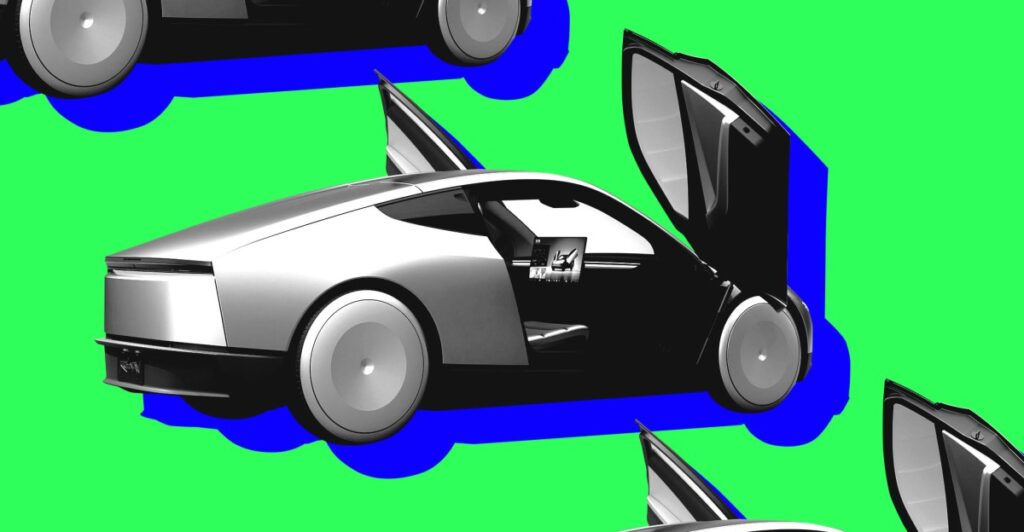
Table of Contents
The Data Behind the Hype: Decoding the Cybercab’s EPA Filings
For months, the Tesla Cybercab existed primarily as a series of ambitious promises and sleek renders. However, the transition from concept to commercial reality is now visible in the paperwork. Recent filings with the Environmental Protection Agency (EPA) have provided a rare, clinical look at the vehicle’s internals, revealing a machine that prioritizes efficiency over raw power and luxury.
The data paints a picture of a vehicle that is fundamentally different from any Tesla previously released. By stripping away the redundancies of human-driven cars—most notably the steering wheel and pedal assemblies—Tesla has managed to create a platform that is not just lighter, but drastically more energy-efficient. This isn’t just a marginal improvement; it is a shift in the physics of EV design.
- Unmatched Efficiency: The Cybercab records 165 Wh/mi, making it significantly more efficient than the Lucid Air (230 Wh/mi).
- Extreme Weight Reduction: At 3,113 lbs, it is roughly 700 lbs lighter than the lightest Model 3, aiding its energy profile.
- Compact Powerhouse: It utilizes a 48 kWh battery and a 219 hp front-mounted permanent magnet motor.
- Range Reality: While lab numbers suggest 418 miles, real-world EPA-adjusted range is estimated between 290-300 miles.
Engineering a Robotaxi: The Impact of Weight on Range
In the electric vehicle industry, weight is the enemy of range. Most modern EVs are plagued by “battery bloat,” where manufacturers add larger and larger battery packs to compensate for the increasing weight of the vehicle itself. The Cybercab breaks this cycle by attacking the curb weight from the opposite direction.
The official curb weight of 3,113 pounds is a striking figure. To put this in perspective, it places the Cybercab in the weight class of a traditional internal combustion engine (ICE) compact car. This was achieved primarily through the removal of the steering column, driver’s seat adjustments, and various analog safety overrides that are unnecessary for a Level 4 or Level 5 autonomous system.
The Technical Breakdown of the Powertrain
According to the EPA certificates filed on May 21st, the Cybercab eschews the complex dual-motor setups found in the Model 3 Performance or Model S. Instead, it relies on a single front-mounted permanent magnet motor producing 219 horsepower. This front-wheel-drive configuration is a strategic choice; for a city-dwelling robotaxi, high-speed acceleration is secondary to consistent energy consumption.
The energy storage is equally lean. The vehicle utilizes a compact 48 kWh battery pack running at 326 volts. While 48 kWh would be insufficient for a long-distance touring car, the Cybercab’s extreme efficiency allows it to stretch this capacity further than any other vehicle in its class.
The Efficiency War: Cybercab vs. The Industry
The most disruptive metric in the EPA filing is the 165 Watt-hours per mile (Wh/mi) rating. To understand why this matters, we have to look at the current benchmark for EV efficiency: the Lucid Air. Long touted as the gold standard for aerodynamics and powertrain efficiency, the Lucid Air operates at approximately 230 Wh/mi.
| Metric | Tesla Cybercab | Lucid Air (Approx.) | Standard EV Average |
|---|---|---|---|
| Energy Consumption | 165 Wh/mi | 230 Wh/mi | 250-350 Wh/mi |
| Miles per kWh | ~6.0 | ~4.3 | ~3.0-4.0 |
| Battery Weight | Low (48 kWh) | High (100+ kWh) | Variable |
This delta is not merely a technical curiosity; it is a business imperative. For a robotaxi fleet operator, the goal is to maximize the “uptime” of the vehicle. A car that can travel 6 miles on a single kilowatt-hour costs significantly less to operate per mile than a competitor. When these vehicles are intended to run 20 hours a day, a 30% gain in efficiency translates into millions of dollars in saved electricity and reduced downtime for charging across a global fleet.
Analyzing the Range: Lab Numbers vs. Real World
The EPA paperwork lists a raw, unadjusted range of 418 miles. For many readers, this number seems contradictory to the small 48 kWh battery. However, it is crucial to distinguish between unadjusted laboratory cycles and EPA-certified range.
In a controlled lab environment, the Cybercab’s minimal weight and aerodynamic profile allow it to coast with almost no resistance. In real-world conditions—where wind, temperature, and city stop-and-go traffic come into play—these numbers invariably drop. Based on historical Tesla patterns, a lab number of 418 miles typically translates to a real-world range of 290 to 300 miles. This aligns perfectly with Tesla’s internal targets, suggesting that the Cybercab is precisely where the engineers wanted it to be.
The Operational Gap: Where the Vision Meets Reality
While the engineering of the Cybercab is a triumph of efficiency, the deployment strategy remains opaque. There is a stark contrast between the vehicle’s technical readiness and Tesla’s operational footprint. Currently, Tesla is operating a very limited fleet of fewer than 60 Model Y robotaxis across select Texas cities. This is a far cry from Elon Musk’s earlier projections that such services would be available to half the U.S. population by the end of 2025.
The company is currently navigating the regulatory minefield of permits in Las Vegas and various Florida municipalities. The challenge is no longer about whether the car can be efficient—the EPA data proves it can—but whether the software (FSD) and the legal framework can support a steering-wheel-less vehicle on public roads.
What This Means for the Consumer and the Market
For the average rider, the Cybercab represents a shift toward utility-first transportation. The lack of a steering wheel isn’t just a gimmick; it’s a way to optimize the interior cabin for passenger comfort and reduce the cost of the ride. If Tesla can keep operating costs low through 165 Wh/mi efficiency, we may see ride-hailing prices drop below the cost of owning a personal vehicle.
For the industry, this puts immense pressure on Waymo and Zoox. While those competitors have focused heavily on the “experience” and sensor redundancy, Tesla is playing a game of extreme optimization. By making the vehicle incredibly light and efficient, Tesla is attempting to win the robotaxi war through superior unit economics.
Frequently Asked Questions
Does the Cybercab have a steering wheel?
No. According to the design and EPA filings, the Cybercab is designed as a fully autonomous vehicle, removing traditional manual controls to reduce weight and maximize interior space.
How is the Cybercab more efficient than the Lucid Air?
The Cybercab achieves 165 Wh/mi compared to the Lucid Air’s 230 Wh/mi. This is largely due to its significantly lower curb weight (3,113 lbs) and its specific design for low-speed urban efficiency rather than high-speed luxury touring.
What is the actual range of the Tesla Cybercab?
While EPA lab filings show 418 miles, the adjusted real-world range is expected to be between 290 and 300 miles, which is sufficient for the intended urban robotaxi use case.
Is the Cybercab available for purchase?
No. The Cybercab is intended for use within the Tesla Network as a robotaxi service, though the exact business model for individual ownership versus fleet usage has not been fully detailed.
Why does the Cybercab only have a 48 kWh battery?
Because of its extreme efficiency and light weight, the vehicle does not need a massive battery to achieve a usable range. A smaller battery reduces the vehicle’s overall weight, which in turn further increases efficiency.
Conclusion: A Masterclass in Minimalism
The Tesla Cybercab is a testament to the idea that the most advanced technology is often that which is removed. By stripping the vehicle down to its bare essentials, Tesla has created the most efficient EV in history. However, the technical victory of 165 Wh/mi is only half the battle. The success of the Cybercab will ultimately be measured not by its EPA filing, but by its ability to navigate the complex intersection of autonomous software, city regulations, and public trust. For now, the Cybercab stands as a lean, mean, energy-sipping machine waiting for the green light to take over the streets.