TechCrunch Disrupt 2026: The High-Stakes Hustle for Startup Battlefield 200
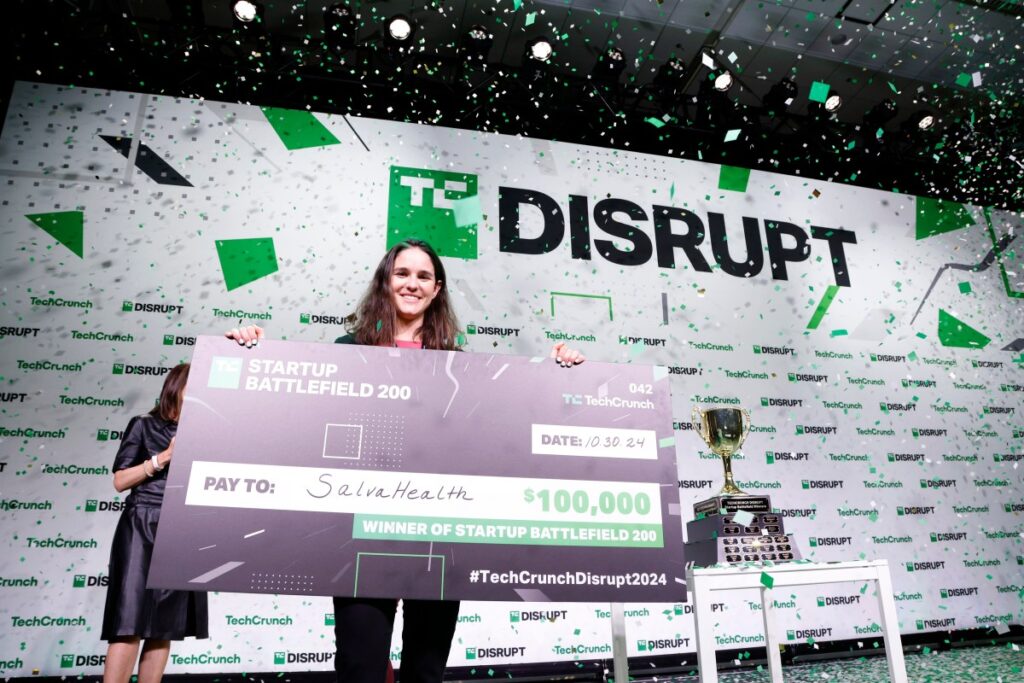
Table of Contents
The Final Countdown for the Next Great Disruptor
For early-stage founders, the distance between obscurity and a global stage is often a single application. The window for Startup Battlefield 200 is officially closing on June 8 at 11:59 p.m. PT, marking the final opportunity for entrepreneurs to vie for a spot at TechCrunch Disrupt 2026, held at San Francisco’s Moscone West this October.
While the headline-grabbing $100,000 equity-free prize often draws the most attention, the actual value proposition for a seed-stage company is far more nuanced. In an era where venture capital has become increasingly selective—shifting from the ‘growth at all costs’ mentality of 2021 to a rigorous focus on sustainable unit economics and tangible Moats—the visibility provided by a Disrupt stage pitch acts as a powerful signal to the market.
- Deadline: Applications close June 8, 11:59 p.m. PT.
- Eligibility: Open to bootstrapped, pre-seed, and seed-stage startups with a working MVP.
- The Stakes: One winner takes $100,000 in equity-free funding; all finalists gain massive industry exposure.
- Track Record: Alumni have raised over $32 billion and include titans like Dropbox, Discord, and Fitbit.
Decoding the Startup Battlefield Ecosystem
Startup Battlefield 200 is an elite competitive platform designed to identify high-potential, early-stage companies and propel them into the view of the global investment community. Unlike traditional accelerators that take equity for mentorship, Battlefield operates as a high-visibility showcase. The primary objective is to bridge the gap between a working prototype and a scalable, venture-backed business.
The competition is not merely about the pitch; it is about the Minimum Viable Product (MVP). TechCrunch explicitly seeks founders who have moved beyond the ‘idea’ phase. To be competitive in 2026, a startup must demonstrate not just a vision, but a functional product that solves a specific pain point in a way that is difficult to replicate.
The Alumni Effect: From Pitch to Powerhouse
To understand the weight of a Battlefield selection, one only needs to look at the historical data. The program’s alumni have collectively raised more than $32 billion. This is not a coincidence of timing, but a result of the ‘curation’ effect. When TechCrunch selects a company for the Disrupt stage, it serves as a preliminary filter for VCs, reducing the perceived risk of the investment.
The list of former competitors reads like a ‘Who’s Who’ of the modern internet: Dropbox, Discord, Mint, Fitbit, and Trello all utilized this platform to gain early momentum. Furthermore, the exit velocity of Battlefield alumni is staggering, with over 250 exits to giants like Google, Amazon, and Microsoft. For a founder, this suggests that the program isn’t just about the immediate prize, but about entering an ecosystem that attracts the eyes of M&A strategists.
Strategic Analysis: Why This Matters in the Current Market
The 2024-2026 fundraising environment is fundamentally different from the previous decade. We are seeing a ‘flight to quality’ where investors are ignoring generic AI wrappers in favor of ‘vertical AI’—applications that solve deep, industry-specific problems (e.g., legal tech, biotech, or precision manufacturing).
The Signal-to-Noise Problem
In a sea of thousands of startups, the hardest part for a founder is not building the product, but getting a GP (General Partner) at a top-tier VC firm to actually open the pitch deck. Startup Battlefield 200 solves this ‘signal-to-noise’ problem. By being one of the selected 200, a startup is effectively validated by a recognized editorial and industry authority, providing a layer of institutional trust that can accelerate a seed round by months.
The Power of Equity-Free Capital
The $100,000 prize is notably equity-free. In the seed stage, every percentage of equity is precious. Receiving six figures without giving up a slice of the cap table allows founders to extend their runway, iterate on their MVP, or hire a key engineer without the immediate pressure of a priced round. This non-dilutive capital is a significant strategic advantage when negotiating future valuations.
Who Should Apply? (And Who Shouldn’t)
The criteria for Startup Battlefield 200 are specific. While the call is open to many, certain profiles have a higher probability of success.
The Ideal Candidate
- The Iterative Founder: Those who have a working MVP and have already gathered initial user data or early paying customers.
- The Category-Definer: Companies building something that doesn’t just improve an existing process by 10%, but fundamentally changes how an industry operates.
- The Capital-Intensive Disruptor: While primarily for seed stage, select Series A companies in sectors like hard-tech, energy, or aerospace may qualify if their vision is sufficiently disruptive.
The Red Flags
Founders with only a pitch deck and no product are unlikely to find success here. The ‘vision’ is important, but the ‘execution’ (proven by the MVP) is the prerequisite. Similarly, companies that are already heavily funded and have reached a late-stage growth phase will find less value in this specific competition, as the primary benefit is early-stage discovery.
Practical Implications: What This Means for the Ecosystem
The timing of the Disrupt 2026 cycle suggests a pivot in what the tech world values. By emphasizing ‘bold’ and ‘category-defining’ companies, there is a clear move away from the saturation of generative AI chatbots toward more substantive technological breakthroughs. For the broader ecosystem, this means the ‘bar’ for entry is rising. It is no longer enough to have an AI-powered tool; you must have a defensible business model.
| Feature | Standard Pitch Event | Startup Battlefield 200 |
|---|---|---|
| Funding | Variable/None | $100,000 (Grand Prize) |
| Equity Cost | N/A | Equity-Free |
| Audience | Local/Niche | Global VCs, Media, & Partners |
| Validation | Self-reported | Curated by TechCrunch Editorial |
| Historical Outcome | Unknown | $32B+ Total Capital Raised |
Frequently Asked Questions
What is the definition of a ‘working MVP’ for this competition?
A Minimum Viable Product (MVP) is a version of a new product that allows a team to collect the maximum amount of validated learning about customers with the least effort. For Startup Battlefield, this means the product must be functional enough for a user to interact with and derive value from, rather than being a series of static mockups.
Can I apply if I have already raised a Seed round?
Yes. Bootstrapped, pre-seed, and seed-stage startups are the primary targets. Some Series A startups may qualify if they operate in capital-intensive sectors where the funding requirements are naturally higher.
What happens if I am selected but don’t win the $100,000?
The primary value of the program is the exposure. Selected founders pitch live on the Disrupt stage, providing direct access to top-tier investors, influential tech media, and potential strategic partners. Many alumni report that the networking and press coverage resulting from the event far outweigh the monetary prize.
Is there a fee to apply or compete?
The application process for Startup Battlefield is typically free, though attending the full TechCrunch Disrupt event as a participant may involve specific registration requirements.
How are the winners chosen?
Applications are reviewed by the TechCrunch team, who look for technical viability, market potential, and the ability of the founder to communicate a disruptive vision. The final winners are determined based on their performance and the impact of their product.
Finalizing the Application
With the June 8 deadline approaching, founders should focus their applications on evidence of traction and technical differentiation. Avoid generic claims about ‘changing the world’ and instead provide specific metrics: user growth, pilot programs, or a unique technical breakthrough that creates a barrier to entry for competitors. The opportunity to move from ‘unknown’ to ‘impossible to ignore’ is rare; securing a spot on the Disrupt stage is one of the fastest ways to achieve that trajectory.