Tecno Spark 50 Pro Debuts With Helio G100 Ultimate and Sony Lytia 600 Sensor: A New Budget Benchmark?
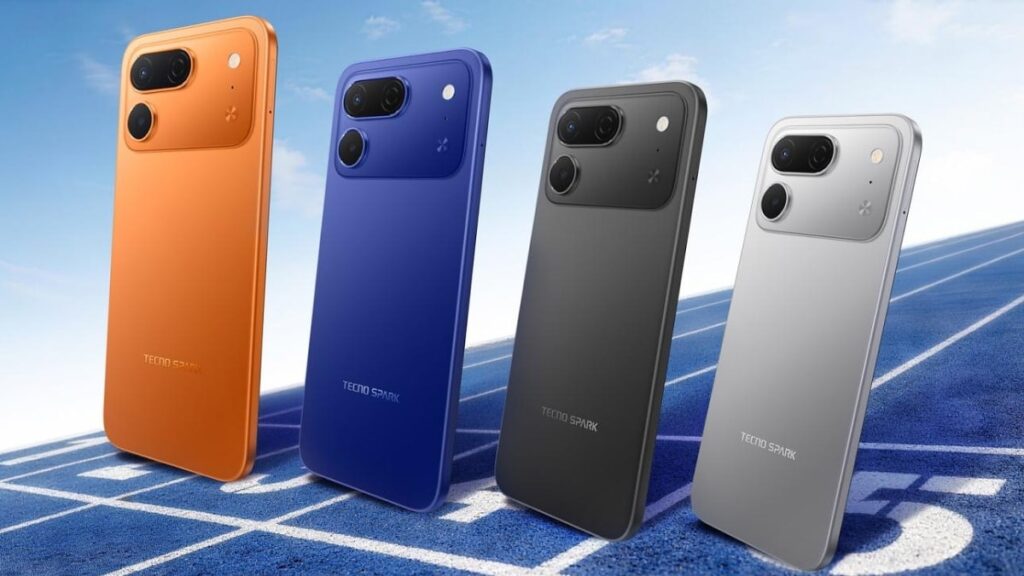
Table of Contents
A Strategic Leap for the Spark Series
Tecno has officially expanded its budget-centric lineup with the introduction of the Tecno Spark 50 Pro. While the standard Spark 50 focused on essential affordability, the Pro variant is clearly designed to bridge the gap between entry-level hardware and mid-range performance. By integrating the MediaTek Helio G100 Ultimate and a Sony Lytia 600 sensor, Tecno is attempting to redefine what users should expect from a device in this price bracket.
- Performance: Powered by the MediaTek Helio G100 Ultimate, targeting an AnTuTu score of ~550,000.
- Imaging: Features a 50MP Sony Lytia 600 sensor, moving away from generic budget sensors.
- Durability: Boasts both IP68 and IP69 certifications, offering high-pressure water resistance.
- Battery Life: Available in 5,600mAh or 6,000mAh variants with a claimed 1,900+ cycle lifespan.
- Software: Launches with HiOS 16 based on the latest Android 16.
The arrival of this device comes at a time when budget OEMs are shifting focus from mere spec-sheet bloating to actual sustainable value. The Spark 50 Pro isn’t just about a faster chip; it’s about durability and battery health—two areas where budget phones historically fail within 18 months of purchase.
The Silicon Heart: MediaTek Helio G100 Ultimate
At the center of the Tecno Spark 50 Pro is the MediaTek Helio G100 Ultimate. To understand the impact of this chipset, one must look at the trajectory of the G-series. While not a 5G chipset, the G100 Ultimate is optimized for efficiency and consistent peak performance in 4G environments.
Tecno claims an AnTuTu benchmark score of approximately 550,000. In practical terms, this puts the Spark 50 Pro in a competitive position against other budget contenders. For the average user, this means seamless multitasking between social media apps and light productivity tools. For the casual gamer, it translates to stable frame rates in titles like Mobile Legends or Free Fire, though it will struggle with high-fidelity settings in Genshin Impact.
Why the ‘Ultimate’ Branding Matters
The ‘Ultimate’ designation usually implies specific tuning for the device’s thermal envelope. By optimizing the clock speeds and voltage curves, Tecno aims to reduce the thermal throttling that often plagues thin budget devices. When paired with a 120Hz refresh rate on the 6.78-inch HD+ display, the synergy between the SoC and the screen should provide a fluid user interface experience, provided the RAM management in HiOS 16 is efficient.
Imaging Evolution: The Sony Lytia 600 Integration
Perhaps the most significant upgrade is the transition to the Sony Lytia 600 50-megapixel sensor. Historically, budget phones have relied on high-megapixel counts using small pixels (binning) to simulate quality. The Lytia series, however, is designed for better light intake and dynamic range.
The Lytia 600 employs an advanced architecture that improves low-light performance and reduces noise in shadow areas. By moving to a more reputable Sony sensor, Tecno is signaling a move toward ‘computational photography’ that relies on better hardware rather than just aggressive software sharpening. Users can expect more natural skin tones and better contrast in daylight shots, while the 50MP resolution allows for decent cropping without immediate pixelation.
Ruggedness and the IP69 Standard
While IP68 (immersion in water) is becoming common in flagships, IP69 certification is a rarity in the budget segment. IP69 protects the device against high-pressure, high-temperature water jets. This is an industrial-grade standard typically reserved for ruggedized phones used in construction or extreme outdoor environments.
For the urban user, this means the Spark 50 Pro is significantly more resilient to accidental spills or heavy rain than its predecessors. It provides a peace of mind that extends the device’s lifespan, reducing the likelihood of motherboard failure due to moisture ingress—a common death sentence for affordable smartphones.
Battery Engineering: Beyond the Capacity
The Spark 50 Pro offers a choice between a 5,600mAh dual-cell battery and a 6,000mAh single-cell unit. While the raw capacity is impressive, the real story is the cycle longevity. Tecno asserts that these batteries maintain over 80% of their original capacity after 1,900 charging cycles.
Analyzing the 1,900 Cycle Claim
Most standard smartphone batteries are rated for 500 to 800 cycles before they hit the 80% degradation mark. A jump to 1,900 cycles suggests a shift in cell chemistry or a more sophisticated charging algorithm. Combined with 60W fast charging, the Spark 50 Pro solves the ‘budget battery paradox’: providing a massive cell that doesn’t take four hours to charge and doesn’t die after a year of use.
| Feature | Standard Budget Phone | Tecno Spark 50 Pro |
|---|---|---|
| Water Resistance | IP53 or None | IP68 & IP69 |
| Battery Health | ~500-800 Cycles | 1,900+ Cycles |
| Camera Sensor | Generic 50MP | Sony Lytia 600 |
| Charging Speed | 18W – 33W | 60W Fast Charge |
Software: The Android 16 Advantage
Launching with HiOS 16 based on Android 16 puts the Spark 50 Pro at the forefront of the software curve. Android 16 is expected to further refine background process management and privacy controls. For the user, this means a more modern UI and access to the latest Google ecosystem features from day one.
However, the effectiveness of HiOS will depend on how much ‘bloatware’ Tecno includes. The integration of AI-driven battery optimization and memory expansion (virtual RAM) will be critical to maintaining that 120Hz smoothness over the long term.
What This Means for the Consumer
The Tecno Spark 50 Pro is not trying to beat the iPhone or Samsung Galaxy S-series; it is trying to beat the expectation of what a cheap phone can be. For the student, the delivery driver, or the first-time smartphone user, this device offers a level of durability (IP69) and longevity (1,900 cycles) that previously cost twice as much.
The practical implication is a lower Total Cost of Ownership (TCO). When a phone lasts three years instead of two because the battery hasn’t degraded and the port hasn’t leaked, the value proposition increases exponentially.
Comparison with the Standard Spark 50
The gap between the Spark 50 and the Pro is wide. While the base model serves as a basic communication tool, the Pro targets the ‘power budget’ user—someone who consumes high volumes of media, plays occasional games, and needs a device that can survive a rugged lifestyle without a bulky protective case.
Frequently Asked Questions
Is the Tecno Spark 50 Pro a gaming phone?
It is not a dedicated gaming phone, but the Helio G100 Ultimate and 120Hz screen make it capable of handling most popular mobile games on low-to-medium settings. It is better suited for casual gaming than competitive e-sports.
What is the difference between IP68 and IP69?
IP68 means the phone can be submerged in water for a specific time and depth. IP69 means it can withstand high-pressure steam and water jets, which is a much more rigorous test of the device’s seals.
How long will the battery actually last?
With a 6,000mAh cell, most users will easily get two days of moderate use. The 1,900-cycle rating means the battery’s maximum capacity will remain healthy for significantly longer than standard budget devices.
Does it support 5G?
No, the MediaTek Helio G100 Ultimate is a 4G chipset. While it offers excellent efficiency and speed for 4G networks, it does not support 5G bands.
When will it be available in India?
Tecno has not yet released specific regional pricing or launch dates for the Indian market, though they typically follow global unveils within a few weeks.
Final Verdict on the Pro Positioning
The Spark 50 Pro is a calculated risk by Tecno to move up-market within the budget tier. By prioritizing the ‘unseen’ specs—battery cycle life and IP69 rating—alongside the ‘seen’ specs like the Sony Lytia sensor, they are appealing to a pragmatic consumer. If the pricing remains aggressive, this could become a benchmark for other brands like Xiaomi and Realme in the entry-level space.