Asus ProArt PZ14 and TUF Gaming A14 Hit India: Snapdragon X Elite Meets RTX 50-Series Power
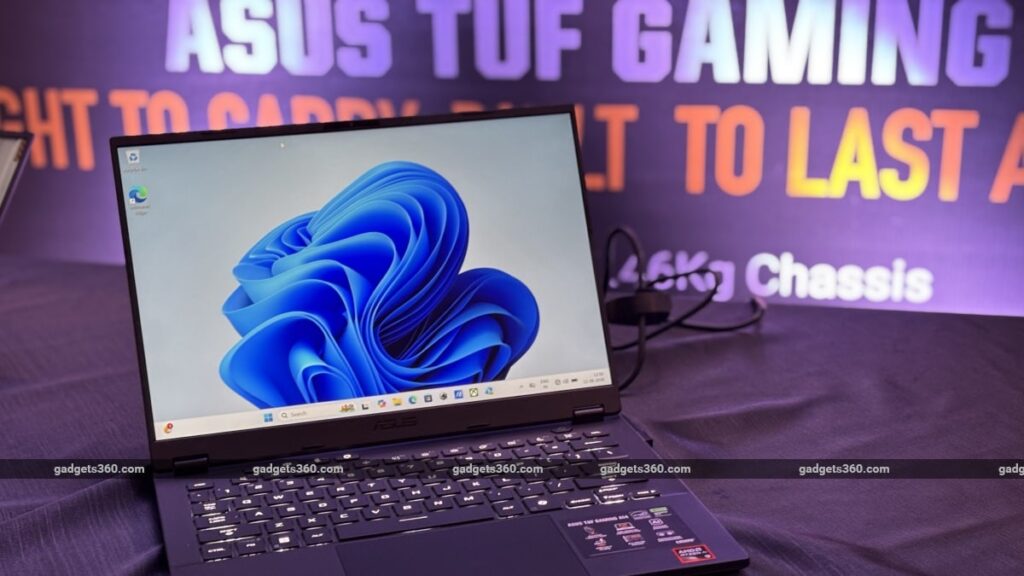
Table of Contents
The Convergence of ARM Efficiency and Raw GPU Power
Asus has officially expanded its high-end portfolio in the Indian market, introducing two machines that represent fundamentally different philosophies of modern computing: the Asus ProArt PZ14 and the refreshed Asus TUF Gaming A14. While one pushes the boundaries of the Windows on ARM movement for creators, the other doubles down on compact, high-wattage performance for gamers.
The ProArt PZ14 enters the fray as a versatile 2-in-1, attempting to bridge the gap between a high-end tablet and a professional workstation. Powered by the Qualcomm Snapdragon X Elite, it is a direct challenge to the iPad Pro and the Surface Pro series, targeting users who need color-accurate screens and AI-driven workflows without the bulk of a traditional laptop. On the other side of the spectrum, the updated TUF Gaming A14 is a refinement of the ‘small-form-factor powerhouse’ trend, integrating the latest Nvidia hardware into a chassis that refuses to compromise on portability.
- Asus ProArt PZ14: A detachable 2-in-1 featuring a 3K OLED screen and Snapdragon X Elite, priced at ₹2,69,990.
- Asus TUF Gaming A14: A compact gaming rig with an AMD Ryzen AI 9 465 and Nvidia RTX 5060, priced at ₹1,99,990.
- AI Integration: Both devices feature dedicated NPUs, moving beyond basic software acceleration to hardware-level AI processing.
- Market Strategy: Asus is aggressively targeting the ‘Prosumer’ segment in India, splitting the line between ARM-based efficiency and x86 raw power.
Asus ProArt PZ14: Testing the ARM Waters for Professionals
The ProArt PZ14 is not just another tablet; it is a calculated bet on the Snapdragon X Elite architecture. For years, Windows on ARM was viewed as a compromise—better battery life but poor app compatibility. However, with the introduction of the X Elite and the Prism emulation layer, the narrative has shifted. The PZ14 leverages this to provide a device that remains cool under pressure while offering the instantaneous wake-up times typically reserved for smartphones.
The Detachable Workflow
The core appeal of the PZ14 lies in its physical versatility. The detachable keyboard transforms the device from a traditional laptop into a digital canvas. For designers and architects, this means the ability to sketch directly on the 3K OLED touchscreen with a stylus and then snap the keyboard back to finalize a project in Adobe Premiere or Lightroom.
OLED Excellence and Color Accuracy
For the ProArt series, the display is the product. The 3K OLED panel is engineered for color precision, which is critical for professionals whose work will be printed or broadcast. OLED technology ensures true blacks and an infinite contrast ratio, eliminating the ‘grayish’ blacks found in traditional IPS panels. This makes it an ideal tool for HDR grading and high-fidelity photo editing.
The New TUF Gaming A14: Small Chassis, Massive Heat
While the ProArt is about elegance and efficiency, the TUF Gaming A14 is about thermal management and throughput. The refresh focuses on the internal silicon, swapping in the AMD Ryzen AI 9 465 processor. This chip is designed to handle the heavy multi-threading required for modern gaming and streaming while keeping power consumption in check.
The Leap to RTX 50-Series
The standout feature of the refreshed TUF A14 is the integration of the Nvidia GeForce RTX 5060. Moving to the new architecture allows for improved DLSS capabilities and better ray-tracing performance per watt. In a 14-inch chassis, the challenge is always heat. Asus has implemented an updated cooling solution to ensure the GPU can sustain its boost clocks without aggressive thermal throttling, a common pain point in 14-inch gaming laptops.
Performance Metrics: Gaming vs. Productivity
With the Ryzen AI 9, the TUF A14 isn’t just a gaming machine. The NPU (Neural Processing Unit) allows for local AI tasks—such as background noise cancellation in calls or AI-assisted video rendering—to happen without taxing the GPU. This creates a more balanced system where the RTX 5060 is reserved for rendering frames rather than managing system-level AI processes.
Comparing the Silicon: Snapdragon X Elite vs. AMD Ryzen AI 9
| Feature | ProArt PZ14 (Snapdragon X Elite) | TUF Gaming A14 (Ryzen AI 9) |
|---|---|---|
| Architecture | ARM64 | x86-64 |
| Primary Focus | Battery Life & AI Efficiency | Raw Performance & Compatibility |
| Graphics | Integrated Adreno GPU | Nvidia RTX 5060 (Discrete) |
| Display | 3K OLED Touchscreen | High-Refresh Gaming Panel |
| Ideal User | Digital Artists, Executives, Travelers | Gamers, Engineers, Streamers |
What This Means for the Indian Consumer
The launch of these two devices signals a divergence in the Indian premium laptop market. For the first time, we are seeing a clear split between ‘AI-Efficient’ (ARM) and ‘AI-Powerful’ (x86).
If you are a professional who spends six hours a day in meetings and four hours in creative software, the ProArt PZ14 offers a level of mobility that was previously impossible on Windows. You no longer have to carry a charger to a coffee shop. However, the trade-off remains software compatibility. While most creative apps now run natively on ARM, niche legacy software may still struggle through emulation.
Conversely, the TUF Gaming A14 targets the ‘student-professional’ hybrid. It is small enough to fit in a backpack for university but powerful enough to run AAA titles at Ultra settings. The inclusion of the RTX 5060 makes it a future-proof investment for those entering the world of 3D modeling or game development.
Technical Breakdown: The Role of the NPU
Both laptops emphasize their NPUs, but they use them differently. In the ProArt PZ14, the NPU is the heart of the experience, managing everything from battery optimization to real-time AI image enhancement. In the TUF A14, the NPU acts as a support system, offloading low-level AI tasks from the GPU to keep the frame rates stable during intense gameplay.
This shift toward dedicated AI silicon means that future Windows updates (Copilot+ features) will run significantly faster on these machines than on older laptops that rely solely on the CPU or GPU for AI tasks.
Availability and Pricing in India
The ProArt PZ14 (Nano Black HT7407NA-SN024WS) is positioned as a luxury tool at ₹2,69,990. The TUF Gaming A14 (FA401GM-RG038WS) is more accessible at ₹1,99,990. Both are available through a wide network including Asus Exclusive Stores, Amazon, Flipkart, and specialized retail outlets like Croma and Reliance Digital.
FAQ: Everything You Need to Know
Is the Asus ProArt PZ14 compatible with all Windows apps?
Most modern applications, including the Microsoft 365 suite and many Adobe apps, run natively on the Snapdragon X Elite. However, some legacy x86 applications use an emulation layer called Prism. While Prism is highly efficient, some specialized drivers or very old software may exhibit compatibility issues.
Can the TUF Gaming A14 handle 4K gaming?
While the RTX 5060 is powerful, it is primarily designed for high-refresh 1080p or 1440p gaming. 4K gaming is possible with the help of DLSS (Deep Learning Super Sampling), but for a consistent 60+ FPS at 4K, a larger laptop with an RTX 4080/5080 would be more appropriate.
How does the battery life of the ProArt PZ14 compare to the TUF A14?
The ProArt PZ14, thanks to its ARM architecture, will significantly outperform the TUF A14 in battery endurance, particularly during light productivity tasks (web browsing, document editing). The TUF A14 is designed for performance and will require a power outlet for any serious gaming sessions.
What is the benefit of a 3K OLED screen on the ProArt?
OLED screens provide perfect blacks and higher color accuracy (ΔE < 2), which is essential for professional photographers and videographers. The 3K resolution ensures that images are sharp even on a 14-inch display, reducing the need for an external monitor during travel.
Is the TUF Gaming A14 suitable for professional video editing?
Yes. The combination of the AMD Ryzen AI 9 and the RTX 5060 makes it an excellent machine for 4K video editing and 3D rendering, though it lacks the touch-screen versatility and color-critical precision of the ProArt line.