Redmi Turbo 5 Debuts in India: A Battery Behemoth Challenging the Mid-Range Status Quo
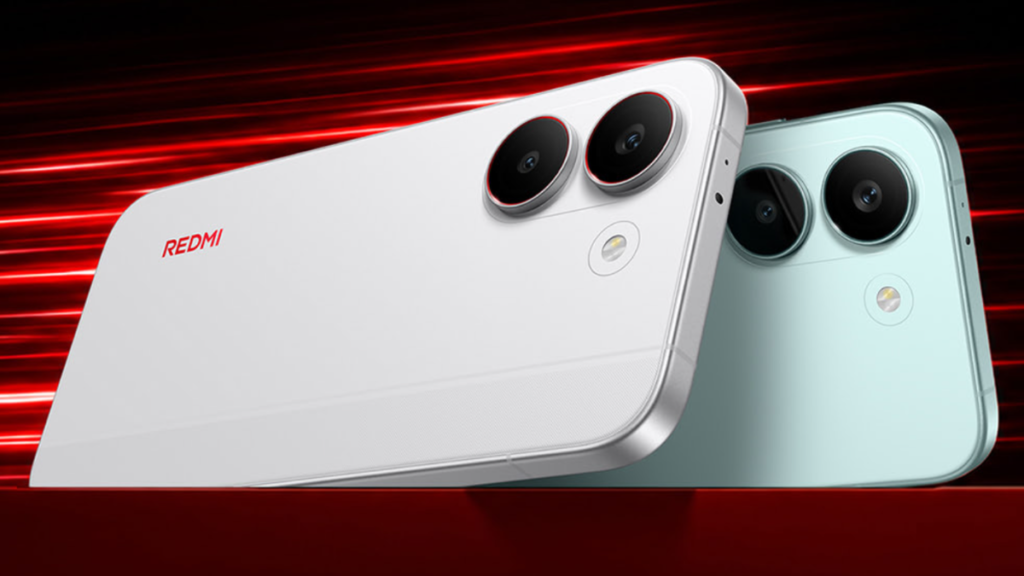
Table of Contents
A New Paradigm for Battery Life in the Mid-Range
Xiaomi has officially brought the Turbo series to the Indian market with the launch of the Redmi Turbo 5. While the mid-range segment is typically defined by a compromise between performance and endurance, the Turbo 5 attempts to eliminate that trade-off entirely. The headline feature is an unprecedented 7,540mAh battery, a figure that dwarfs the standard 5,000mAh cells found in almost every competing device from Samsung or Realme.
Launched on Tuesday, the Redmi Turbo 5 isn’t just a capacity play. It pairs this energy reserve with the MediaTek Dimensity 8500 Ultra, a chipset designed to balance high-efficiency processing with the thermal demands of a thin chassis. For the Indian consumer, where long commutes and heavy mobile data usage are the norm, this device represents a shift toward ‘utility-first’ hardware.
- Battery: Industry-leading 7,540mAh capacity with 100W wired charging.
- Performance: Powered by the MediaTek Dimensity 8500 Ultra SoC.
- Display: 1.5K resolution AMOLED panel with 120Hz adaptive refresh.
- Pricing: Starts at Rs. 37,999 (8GB/256GB) up to Rs. 40,999 (12GB/256GB).
The Hardware Deep Dive: Dimensity 8500 Ultra and Performance
At the heart of the Redmi Turbo 5 lies the MediaTek Dimensity 8500 Ultra. To understand the positioning of this SoC, one must look at the current trajectory of ARM-based architecture. The 8000 series has historically occupied the ‘premium mid-range’ slot, offering flagship-adjacent speeds without the extreme cost or heat of the 9000 series. The ‘Ultra’ designation typically denotes a partnership with the OEM (in this case, Xiaomi) to tune the clock speeds for better sustained performance in gaming and multitasking.
Coupled with options of 8GB or 12GB of LPDDR5X RAM, the device is engineered to handle heavy workloads. However, the real engineering feat is the thermal management. Packing a 7,540mAh battery leaves very little room for cooling systems. Xiaomi has utilized a revised graphite cooling layer and a high-conductivity vapor chamber to ensure the Dimensity 8500 Ultra doesn’t throttle during extended 1.5K gaming sessions.
Display Quality and Visuals
The Redmi Turbo 5 features a 1.5K AMOLED display. In the current market, 1.5K is the ‘sweet spot’—offering significantly more detail than standard 1080p (FHD+) while consuming less power than a full 2K (QHD+) panel. The 120Hz refresh rate ensures fluid navigation, which is critical for a device targeting the ‘Turbo’ demographic—gamers and power users who prioritize responsiveness.
Breaking Down the Battery: 7,540mAh in Reality
The most disruptive spec is undoubtedly the battery. A 7,540mAh cell is roughly 50% larger than the industry average. For the average user, this could realistically translate to 3-4 days of light use or two full days of heavy multitasking without reaching for a charger.
However, a battery of this size creates a potential bottleneck: charging time. Xiaomi has mitigated this by including 100W wired fast charging. Based on similar architectures, this allows the device to go from 0% to 50% in roughly 20-25 minutes, though a full charge of a 7,540mAh cell will still take longer than the smaller batteries found in the Xiaomi 14 series.
| Feature | Redmi Turbo 5 Spec | Typical Mid-Range Avg |
|---|---|---|
| Battery Capacity | 7,540mAh | 5,000mAh |
| Charging Speed | 100W | 33W – 67W |
| Display Res | 1.5K AMOLED | FHD+ AMOLED |
| Chipset | Dimensity 8500 Ultra | Snapdragon 7 Gen series |
Camera Performance: The Trade-off?
When a manufacturer prioritizes battery and processing power, the camera department often sees the most compromise. The Redmi Turbo 5 utilizes a dual rear camera setup, led by a 50-megapixel main sensor. While 50MP is standard, the ‘Turbo’ branding suggests this phone is a tool for productivity and gaming rather than a professional photography rig.
The 20-megapixel front-facing camera, situated in a hole-punch cutout, is more than sufficient for high-quality video calls and social media content. While we don’t expect this to challenge the Pixel or Galaxy S series in low-light photography, the primary sensor should deliver crisp images in daylight, leveraging the Dimensity 8500 Ultra’s ISP (Image Signal Processor) for better noise reduction.
Pricing and Market Position in India
The pricing strategy for the Redmi Turbo 5 is aggressive, aiming directly at the ‘performance’ segment of the Indian market.
- Base Variant: Rs. 37,999 (8GB RAM / 256GB Storage)
- High Variant: Rs. 40,999 (12GB RAM / 256GB Storage)
To further incentivize early adoption, Xiaomi is offering bank discounts of up to Rs. 2,000 via SBI, ICICI, and Axis Bank. This brings the entry price down to approximately Rs. 35,999, placing it in direct competition with devices like the Poco X series and the Realme GT line.
What This Means for the Consumer
For the end-user, the Redmi Turbo 5 represents the end of ‘battery anxiety.’ In practical terms, this means you can leave your power bank at home for a weekend trip. It also means that the device can maintain a high refresh rate and high brightness for longer periods without killing the day’s charge. If you are a professional who spends hours on Zoom calls, or a mobile gamer who plays Genshin Impact on the go, the hardware profile of the Turbo 5 is specifically tailored to your needs.
Frequently Asked Questions
How long does the 7,540mAh battery actually last?
While real-world benchmarks vary by usage, a battery of this size typically provides 15-20 hours of screen-on time. For light users, it can easily last 3 days; for power users, 2 days is a realistic expectation.
Is the Redmi Turbo 5 good for gaming?
Yes. The combination of the Dimensity 8500 Ultra and the 120Hz 1.5K display makes it a strong contender for mid-range gaming. The massive battery also allows for longer gaming sessions without needing to stay plugged into a wall.
Does it support wireless charging?
No, the Redmi Turbo 5 focuses on 100W wired fast charging to maximize efficiency and reduce the weight and thickness of the device.
What is the difference between the 8GB and 12GB RAM variants?
The 12GB variant is recommended for those who keep many apps open in the background or engage in heavy multitasking. For standard social media and streaming, the 8GB variant is sufficient.
How does the 1.5K display compare to 1080p?
A 1.5K display offers higher pixel density, meaning text is sharper and images are more detailed, but it is more power-efficient than a 4K or 2K screen, which is vital for maintaining the Turbo 5’s battery life.
Final Technical Verdict
The Redmi Turbo 5 is a specialized instrument. It isn’t trying to be a ‘do-it-all’ flagship; instead, it doubles down on power and endurance. By integrating the Dimensity 8500 Ultra and a massive 7,540mAh cell, Xiaomi has created a device that appeals to the most demanding segment of the mid-range market: the power user. While the camera system is modest, the trade-off is justified by the sheer utility of the battery and the fluid performance of the 1.5K AMOLED screen.