Loft Orbital and NASA JPL Deploy First Vision-Language Model in Space: A New Era of Autonomous Earth Observation
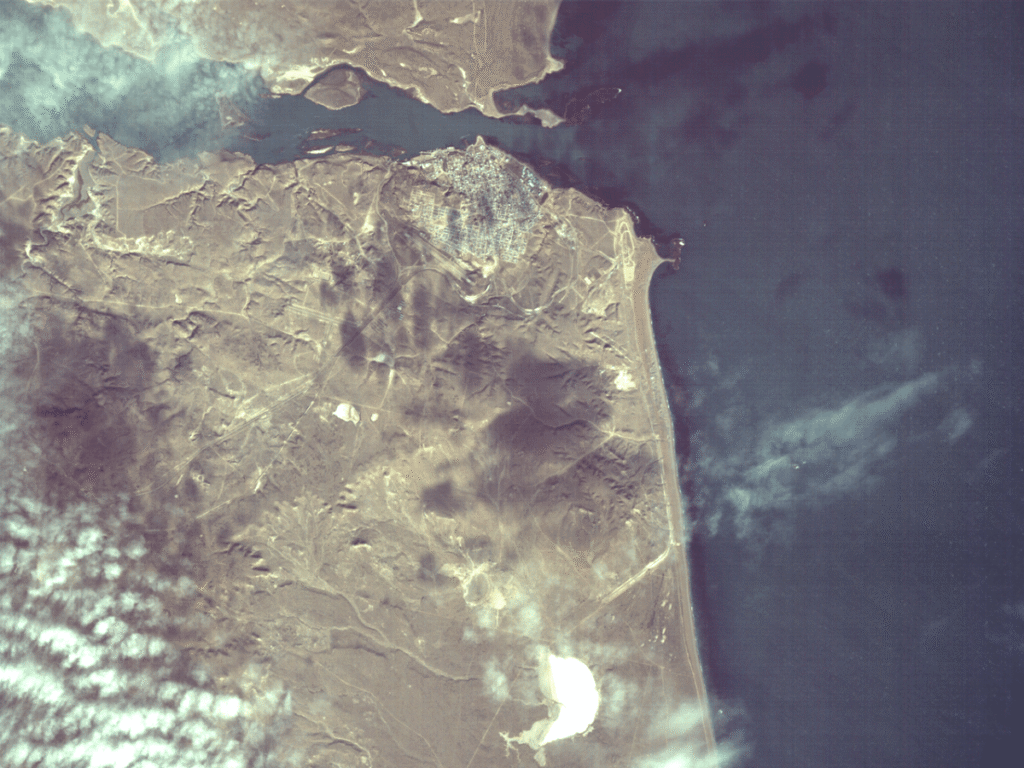
Table of Contents
The Shift from Data Downlinks to Orbital Intelligence
For decades, the operational bottleneck of Earth observation has not been the quality of the sensors, but the physics of the downlink. Satellites typically capture massive volumes of raw imagery, which are then transmitted to ground stations for human analysts or terrestrial machine learning clusters to process. This ‘capture-then-transmit’ model creates significant latency and wastes precious bandwidth on empty clouds or irrelevant terrain.
That paradigm shifted in April when Yam-9, a spacecraft operated by space infrastructure firm Loft Orbital, successfully identified specific targets on Earth autonomously. This wasn’t a simple object-detection algorithm designed to spot a specific shape—it was the first reported deployment of a Vision-Language Model (VLM) in orbit. By integrating Google DeepMind’s Gemma 3, the satellite could process natural language queries and reason about the imagery it saw in real-time, without waiting for a human on the ground to tell it what was important.
- Autonomous Triage: Yam-9 can now identify areas of interest (e.g., infrastructure around railway hubs) using natural language queries, reducing the need for massive raw data downloads.
- Edge AI Implementation: The mission utilized Google DeepMind’s Gemma 3, optimized for limited hardware, running on an Nvidia Jetson Orin AGX GPU.
- Collaboration: The project is a joint effort between Loft Orbital’s infrastructure and NASA’s Jet Propulsion Laboratory (JPL), which developed the NAVI-Orbital software harness.
- Scalability: This proof-of-concept paves the way for ‘always-on’ patrol layers in space and interactive AI assistants for future lunar or Martian missions.
Defining the Tech: What is a Vision-Language Model (VLM)?
A Vision-Language Model (VLM) is a class of AI that bridges the gap between visual perception and linguistic reasoning. Unlike traditional Computer Vision (CV) models, which are trained for specific tasks—such as ‘detecting a ship’ or ‘counting cars’—a VLM understands the relationship between images and natural language. This allows a user to ask a complex, open-ended question like ‘find areas where human development meets a natural forest’ and have the AI interpret the visual scene to find a match.
In the context of the Yam-9 mission, the VLM transforms the satellite from a passive camera into an active observer. Instead of sending back a thousand images of a coastline for a human to sift through, the satellite can be instructed to ‘only send images of illegal fishing vessels near the protected reef.’ This represents a fundamental shift toward edge compute, where the intelligence resides where the data is generated.
The Architecture of Yam-9: Powering AI in the Vacuum
Running a large-scale AI model in space is an engineering nightmare. Satellites face extreme temperature swings, high radiation, and severely limited power budgets. To make Gemma 3 viable, Loft Orbital and NASA JPL had to solve for the ‘compute-power-thermal’ triangle.
The Hardware Backbone
The brain of Yam-9 is the Nvidia Jetson Orin AGX. While commonly used in autonomous robots and industrial edge devices on Earth, the Orin AGX provides the necessary CUDA cores and tensor processing capabilities to run quantized versions of VLMs. However, the hardware is only half the battle; the software must be stripped of all redundancies to fit into the satellite’s limited memory footprint.
The NAVI-Orbital Software Harness
Juan Delfa Victoria and his team at NASA JPL developed NAVI-Orbital, the software layer that allows Gemma 3 to function in a space environment. The primary challenge was streamlining the software libraries. Standard AI frameworks are often bloated with dependencies that are useless in orbit. By creating a lean ‘harness,’ JPL was able to reduce the memory overhead, ensuring that the VLM could execute queries without crashing the satellite’s primary flight systems.
What This Means for the Space Economy
The deployment of VLMs in orbit is not just a technical curiosity; it has immediate commercial and strategic implications. The current business model for Earth observation relies on selling high-resolution imagery or specific analytics. By moving the analysis onboard, the value proposition changes.
Reducing ‘Data Noise’
Current satellite constellations generate petabytes of data, much of it unusable due to cloud cover or lack of targets. Onboard triage allows satellites to discard useless data immediately, ensuring that the bandwidth is used exclusively for high-value intelligence. This drastically lowers the cost of ground-segment operations.
The Rise of ‘Patrol Layers’
Paul Lasserre, Loft Orbital’s head of AI, suggests this opens the door to ‘always-on patrol layers.’ Imagine a constellation of 50 to 100 satellites capable of monitoring a global border or a specific environmental disaster in real-time. Instead of a human analyst manually checking images every few hours, the AI continuously monitors the region and alerts ground control only when a ‘suspicious’ or ‘significant’ event occurs. This creates a reactive, rather than proactive, intelligence loop.
Infrastructure-as-a-Service (IaaS) in Space
Loft Orbital is positioning itself as an IaaS provider. Rather than selling a finished satellite, they provide the platform—the bus, the power, and the compute—allowing third parties to upload their own AI models. Their recent partnership with EarthDaily, involving six satellites, demonstrates how this modular approach allows for faster iteration of AI capabilities without needing to launch new hardware for every software update.
The Broader Horizon: From Earth to Mars
While the current focus is on Earth observation, the implications for deep space exploration are profound. The NAVI-Space initiative, conceived by JPL researcher Taran Cyriac John, was originally envisioned as a digital assistant for astronauts.
On the Moon or Mars, communication latency makes real-time ground control impossible. An astronaut in a pressurized suit cannot use a keyboard to query a database. An interactive VLM would allow an astronaut to simply point a camera at a rock formation and ask, ‘Is this geological feature consistent with previous volcanic activity in this sector?’ The AI would process the image, consult its internal knowledge base, and provide a spoken answer—effectively acting as a field scientist in the suit’s ear.
Market Context and Competitive Landscape
Loft Orbital is not alone in the race for orbital compute, though they are among the first to prove VLM functionality. Other players are aggressively pursuing similar goals:
| Company | Approach | Current Status/Capability |
|---|---|---|
| Planet Labs | Utilizes Jetson Orin processors for object detection. | Researching VLM integration for complex scene understanding. |
| Kepler Communications | Operates the largest fleet of GPUs in space. | Multiple undisclosed AI use cases; focused on high-throughput compute. |
| Loft Orbital | Modular IaaS platforms (Yam-9). | First proven VLM (Gemma 3) deployment for natural language queries. |
The industry is moving toward a ‘distributed cloud’ in space. Rather than a few massive satellites, the trend is toward constellations of smaller, intelligent nodes that can collaborate to process data across a wide area.
Technical Limitations and the Road Ahead
Despite the success, significant hurdles remain. First is the power constraint. Running a VLM is computationally expensive; doing so continuously would drain a small satellite’s batteries rapidly. Current deployments likely rely on ‘burst’ processing—turning the AI on only when a specific region is in view.
Second is model drift and accuracy. AI models can hallucinate. In a scientific or military context, a ‘false positive’ from an orbital VLM could lead to wasted resources or incorrect intelligence. Rigorous validation frameworks are needed to ensure that the ‘reasoning’ performed by Gemma 3 in orbit matches the ground truth.
Frequently Asked Questions
How does a VLM differ from standard AI on satellites?
Standard AI usually performs ‘object detection’ (finding a known shape). A VLM performs ‘semantic understanding,’ meaning it can interpret a description in plain English and find a visual match, even for things it wasn’t explicitly programmed to ‘detect’ in a narrow sense.
Which AI model was used on the Yam-9 satellite?
The satellite used Google DeepMind’s Gemma 3, specifically a version optimized for edge applications to fit the constraints of space-grade hardware.
Who is Loft Orbital and what do they do?
Loft Orbital is a space infrastructure company that provides satellites as a service. They build the platforms and compute environments, allowing other companies or agencies to deploy their own sensors and AI software.
Why is this a big deal for NASA?
It proves that complex reasoning can happen on the ‘edge’ (in space), which is critical for future missions to the Moon and Mars where communicating with Earth takes too long for real-time decision making.
What hardware allows this to happen?
The primary driver is the Nvidia Jetson Orin AGX GPU, which provides high-performance AI compute in a small, power-efficient form factor suitable for satellite integration.
Final Analysis: The End of the ‘Dumb’ Satellite
The successful operation of the VLM on Yam-9 marks the end of the era of the ‘dumb’ sensor. We are entering a period where satellites are no longer just cameras in the sky, but intelligent agents capable of autonomous decision-making. By shifting the analytical load from the ground to the orbit, NASA and Loft Orbital have not only optimized bandwidth but have fundamentally changed the speed of intelligence. The transition from ‘seeing’ to ‘understanding’ in real-time is the critical leap required for the next generation of space exploration and planetary monitoring.