UK Court of Appeal Upholds Proscription of Palestine Action: The Intersection of National Security and Civil Liberties
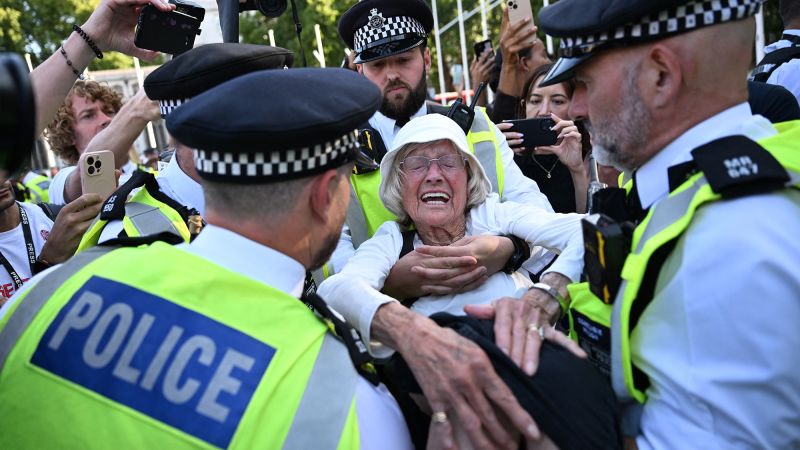
Table of Contents
The Verdict: A Shift in the Legal Definition of Protest
In a ruling that signals a tightening of the UK’s internal security apparatus, the Court of Appeal in London has determined that the British government acted lawfully in designating Palestine Action as a terrorist organization. The decision, delivered by Chief Justice Sue Carr, effectively overrides a previous High Court ruling and cements the group’s status as a proscribed organization, placing it in the same legal category as al-Qaida and Hamas.
This judicial pivot is not merely a victory for the Home Office; it represents a significant evolution in how the UK state distinguishes between ‘civil disobedience’ and ‘terrorism.’ For years, Palestine Action has framed its activities—which include breaking into defense facilities and destroying machinery—as a moral imperative to stop the flow of arms to Gaza. However, the Court of Appeal has rejected this framing, asserting that the group’s operational structure and methods exceed the boundaries of non-violent protest.
- Legal Precedent: The Court of Appeal overturned a February High Court decision, ruling that the government’s proscription of Palestine Action was lawful.
- The ‘Terror’ Threshold: Chief Justice Sue Carr rejected the claim that the group is a non-violent civil disobedience organization, citing the use of covert cells and targeted property destruction.
- Severe Penalties: Membership in or support for the group now carries a potential prison sentence of up to 14 years under the Terrorism Act.
- Civil Liberties Conflict: Over 3,300 arrests have occurred, sparking a fierce debate over the erosion of free speech and the right to protest in the UK.
Analyzing the Judicial Reasoning: Why the High Court was Overturned
To understand the gravity of this ruling, one must examine the contradiction between the High Court’s February decision and the Court of Appeal’s Monday verdict. The High Court had previously suggested that while Palestine Action’s activities were criminal, the scale and nature of these acts did not necessarily warrant the extreme measure of proscription under the Terrorism Act. The logic was that the group could be handled through standard criminal prosecutions for vandalism and trespassing.
Chief Justice Sue Carr fundamentally disagreed with this assessment. The Court of Appeal found that the premise of Palestine Action being a “non-violent organization” was “seriously flawed.” The court’s focus shifted from the intent of the protesters to the methodology of the organization. Specifically, the court highlighted the use of covert cells and the strategic targeting of defense infrastructure as hallmarks of an organization that operates beyond the scope of traditional activism.
By designating the group as a terrorist entity, the state is no longer treating these incidents as isolated acts of criminal damage. Instead, they are viewed as coordinated attacks on national security infrastructure. This transition is critical because it allows the state to utilize intelligence-gathering powers and sentencing guidelines that are far more aggressive than those used in common law property crimes.
The Infrastructure of Conflict: Elbit Systems and National Security
At the heart of this legal battle is the relationship between the UK government and global defense contractors, most notably Elbit Systems UK. Palestine Action has targeted Elbit facilities for years, claiming the company is instrumental in the Israeli military’s offensive in Gaza. From a technical and operational standpoint, the group’s tactics have evolved from simple picket lines to sophisticated break-ins involving the smashing of high-value industrial equipment.
Government officials have argued that these actions cause millions of pounds in damage and, more importantly, disrupt the operational capacity of the UK’s defense supply chain. When activists broke into a Royal Air Force base in June 2025, the state viewed it not as a symbolic gesture, but as a breach of national security. This specific incident acted as a catalyst for the government’s decision to outlaw the group.
The intersection of technology and security is evident here. The disruption of automated manufacturing lines and the breaching of secure military perimeters are treated by the Home Office as threats to the state’s ability to manage its defense interests. The court’s ruling validates the government’s claim that such disruptions constitute a threat to national stability, thereby justifying the use of the Terrorism Act.
What This Means for Civil Liberties and Free Speech
The practical implications of this ruling extend far beyond the core members of Palestine Action. Because the group is now proscribed, the legal definition of “support” has become a volatile point of contention. Under the Terrorism Act, demonstrating support for a proscribed organization is a criminal offense.
This has led to a surge in arrests. Reports indicate that more than 3,300 people have been detained for holding signs that read, “I oppose genocide. I support Palestine Action.” While over 700 have been charged, the lack of convictions thus far suggests a tension between the act of arresting and the ability to prove a crime in court. However, the process itself—the arrest, the detention, and the legal cost—acts as a powerful deterrent to peaceful protest.
Civil liberties organizations, including Defend Our Juries, argue that the judiciary is being “instrumentalized” to suppress political opposition. They contend that by labeling a protest group as “terrorists,” the state effectively criminalizes a political viewpoint. This creates a chilling effect where citizens may avoid peaceful demonstrations for fear of being swept up in anti-terror sweeps.
Comparing the Legal Frameworks
| Legal Status | Applicable Law | Maximum Penalty | State Powers |
|---|---|---|---|
| Criminal Group | Criminal Damage / Trespass Acts | Varies (typically months to few years) | Standard Police Investigation |
| Proscribed Organization | Terrorism Act 2000 | Up to 14 Years | Intelligence Surveillance / Anti-Terror Units |
The Path to the Supreme Court
The legal battle is unlikely to end with the Court of Appeal. Huda Ammori, co-founder of Palestine Action, has explicitly stated that the group will challenge the proscription in the Supreme Court and the European Court of Human Rights (ECHR). This sets the stage for a definitive ruling on whether the UK’s application of terror laws is compatible with the European Convention on Human Rights, specifically Article 10 (Freedom of Expression) and Article 11 (Freedom of Assembly and Association).
The Supreme Court will likely have to decide whether the “terrorist” label is being applied too broadly. If the court finds that the government is using the Terrorism Act to bypass the nuances of criminal law in order to silence political dissent, it could lead to a landmark reversal. Conversely, if the state can prove that the “covert cell” structure of Palestine Action mirrors the operational patterns of violent extremists, the ban will likely remain an enduring part of the UK’s security landscape.
Technical Analysis: Proscription and the ‘Terror’ Label
Proscription is the legal process by which the Home Secretary bans an organization. Once a group is proscribed, it becomes illegal to belong to it, invite others to join, or wear clothing/carry items that suggest support for it. In the case of Palestine Action, the government’s argument rested on the group’s engagement in “terrorism,” which is defined broadly under UK law as the use or threat of action designed to influence the government or intimidate the public for a political, religious, racial, or ideological cause.
The critical technicality here is the “intimidation of the public” and the “influence of the government.” The government argued that the destruction of military equipment and the breaching of RAF bases were not merely protests but attempts to coerce the government into changing its foreign policy through illegal and violent means. The Court of Appeal agreed that these actions fit the statutory definition of terrorism, regardless of whether the group’s ultimate goal was the cessation of violence in Gaza.
Frequently Asked Questions
What does it mean for a group to be ‘proscribed’ in the UK?
Proscription means the organization is officially banned. It is a criminal offense to be a member of the group, support it, or express support for it in public. This is the highest level of legal restriction the UK government can place on an organization.
Can I be arrested for supporting Palestine Action?
Yes. Since the ban was upheld, expressing support for Palestine Action—including through placards or social media—can be interpreted as supporting a proscribed terrorist organization, which is a crime under the Terrorism Act.
Why is this different from a regular criminal charge for vandalism?
Vandalism is a crime against property. Terrorism charges are crimes against the state. The penalties for terrorism are significantly harsher (up to 14 years), and the police have broader powers for surveillance and detention when dealing with proscribed groups.
Did the group actually use violence against people?
The group maintains it is non-violent. However, the Court of Appeal ruled that the systematic destruction of property and the infiltration of military bases constitute a form of violence and operational aggression that warrants a terror designation.
Will this affect other protest groups in the UK?
Legal experts suggest this creates a precedent that could be used against other direct-action groups. If the state can successfully argue that property destruction in the name of a political cause is “terrorism,” other environmental or political groups utilizing similar tactics could face similar designations.