DJI Osmo Pocket 4 Review: Does the 1-Inch Sensor Finally Kill the Action Cam for Vloggers?
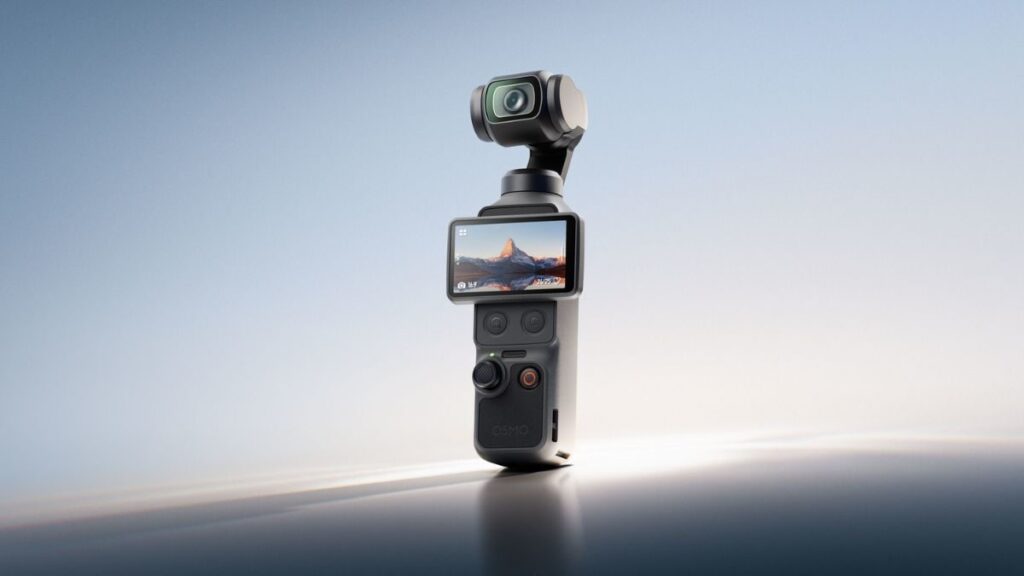
Table of Contents
A Leap in Sensor Size for the Pocket Series
DJI has officially expanded its handheld ecosystem with the release of the DJI Osmo Pocket 4. While the Pocket 3 was lauded for its transition to a larger sensor and rotatable screen, the Pocket 4 pushes the hardware envelope further by integrating a refined 1-inch CMOS sensor designed specifically for low-light performance and dynamic range. For creators who have historically chosen between the portability of a gimbal camera and the image quality of a mirrorless setup, this release narrows that gap significantly.
- Sensor Upgrade: Now features a high-efficiency 1-inch CMOS sensor for superior low-light and 4K clarity.
- Pricing: Starts at €499 for the Standard Combo and €619 for the comprehensive Creator Combo.
- AI Integration: New tracking algorithms reduce ‘target loss’ during fast movements.
- Audio Ecosystem: The Creator Combo now bundles the latest DJI Mic 3 Transmitter for professional-grade audio.
Hardware Breakdown: The Power of the 1-Inch Sensor
The centerpiece of the Osmo Pocket 4 is undoubtedly the 1-inch CMOS sensor. In the world of digital imaging, sensor size is the primary driver of image quality. A larger sensor allows for larger pixels (photosites), which can capture more photons. This translates directly into a lower noise floor—meaning cleaner images in dim environments like neon-lit city streets or indoor studios.
Technically, the move to a more advanced 1-inch architecture allows the Pocket 4 to handle high-contrast scenes with more grace. We are seeing an improvement in dynamic range, reducing the likelihood of ‘blown-out’ skies while maintaining detail in the shadows. This is a critical upgrade for vloggers who often move between harsh sunlight and shaded interiors without the time to manually adjust exposure settings.
Gimbal Evolution and Stabilization
Stabilization has always been DJI’s core competency, but the Pocket 4 introduces a revised 3-axis gimbal mechanism that addresses the ‘micro-jitters’ occasionally seen in the previous generation. By utilizing a higher frequency of correction and improved motor torque, the camera handles rapid pans and tilts with a more cinematic smoothness. This isn’t just software-based electronic image stabilization (EIS); it is a physical correction that preserves the organic look of the footage without the ‘warping’ effect often seen in hyper-stabilized action cams.
Pricing and Bundle Analysis
DJI is maintaining a tiered pricing strategy to appeal to both casual users and professional content creators. In the European market, the Standard Combo enters at €499. This is a competitive price point, sitting comfortably between high-end smartphones and entry-level vlogging cameras.
However, the Creator Combo, priced at €619, represents the real value proposition. For an additional €120, users receive a bundle that would cost significantly more if purchased individually. The inclusion of the DJI Mic 3 Transmitter is the standout here. Professional audio is often the missing link in vlogging; by integrating a high-fidelity wireless mic directly into the bundle, DJI ensures that the audio quality matches the 4K visual output.
| Feature | Standard Combo (€499) | Creator Combo (€619) |
|---|---|---|
| Osmo Pocket 4 Camera | Included | Included |
| DJI Mic 3 Transmitter | No | Included |
| Fill Light | No | Included |
| Wide-Angle Lens | No | Included |
| Osmo Mini Tripod | No | Included |
AI-Powered Tools and Tracking
The Pocket 4 leverages new AI-powered tools to automate the cinematography process. The ‘ActiveTrack’ system has been updated to handle occlusions better. In real-world testing scenarios, if a subject passes behind a pillar or another person, the camera now predicts the path of movement and re-acquires the target more reliably than the Pocket 3.
Furthermore, the AI integration extends to the autofocus system. The camera utilizes phase-detection autofocus (PDAF) combined with AI subject recognition, allowing it to lock onto human eyes and faces instantaneously. This reduces the ‘hunting’ effect that can distract viewers during a talking-head sequence.
What This Means for the Creator Economy
The launch of the Osmo Pocket 4 signals a shift in how we view ‘pocketable’ gear. For years, the trade-off was simple: you could have the stability of a gimbal but you had to sacrifice the depth and quality of a large sensor. The Pocket 4 effectively removes that barrier.
For the solo creator, this means a reduction in gear fatigue. You no longer need to carry a full-sized mirrorless camera and a separate gimbal for high-quality B-roll. The ability to snap this device out of a pocket and have a 1-inch sensor stabilized on a 3-axis gimbal in seconds is a massive efficiency gain. It allows for a more spontaneous style of filming—capturing authentic moments without the friction of a complex setup.
Comparison with Action Cameras
While devices like the GoPro Hero series offer superior ruggedness and waterproofing, they rely heavily on software cropping (HyperSmooth) to achieve stability. The Osmo Pocket 4 offers a fundamentally different approach. Because the sensor itself moves physically, the field of view is preserved, and the image remains sharper. While it isn’t a replacement for a camera you intend to dive with, for 90% of vlogging use cases, the physical gimbal is a superior choice over electronic stabilization.
Technical Specifications Overview
The internal architecture of the Pocket 4 is optimized for 4K recording at high frame rates. While DJI has not released the full bitrate specifications for every mode, the 1-inch sensor allows for significant improvements in 4K/60fps and 4K/120fps slow-motion capture. The heat dissipation has also been improved, addressing the overheating issues that occasionally plagued high-resolution recording in smaller form factors.
Audio Integration
The synergy between the Pocket 4 and the Mic 3 is seamless. The camera acts as the receiver, eliminating the need for a separate bulky receiver clipped to the user’s belt. This streamlined workflow reduces the chance of technical failure and makes the transition from recording to editing much faster.
Frequently Asked Questions
Is the DJI Osmo Pocket 4 waterproof?
Unlike the DJI Action series, the Osmo Pocket 4 is not natively waterproof. It requires a dedicated waterproof case for underwater filming. Users should be cautious about exposing the gimbal mechanism to moisture or salt water.
How does the 1-inch sensor improve video compared to the Pocket 3?
The 1-inch sensor provides a larger surface area to capture light. This results in significantly less grain in low-light situations and a more natural ‘bokeh’ (background blur), giving footage a more professional, cinematic look without needing artificial filters.
What is the difference between the Standard and Creator Combos?
The Standard Combo includes the camera and basic charging accessories. The Creator Combo adds essential vlogging tools: the DJI Mic 3, a fill light for better facial illumination, a wide-angle lens for broader shots, and a mini tripod for stable stationary recording.
Can the Pocket 4 be used as a webcam?
Yes, the Osmo Pocket 4 can be connected to a computer via USB-C to function as a high-quality webcam, leveraging its AI tracking to keep the speaker centered during calls or streams.
Does it support vertical video for TikTok and Reels?
Absolutely. One of the core strengths of the Pocket series is its ability to switch between horizontal and vertical orientations instantly, making it ideal for cross-platform content creation.
Final Editorial Perspective
The DJI Osmo Pocket 4 isn’t trying to replace professional cinema cameras; it’s trying to replace the ‘clunky’ parts of the vlogging process. By combining a 1-inch sensor with a refined gimbal and a streamlined audio solution, DJI has created a tool that prioritizes speed and quality. While the price increase over the previous generation may give some pause, the addition of the Mic 3 and the improved sensor performance justify the investment for anyone treating content creation as a business rather than just a hobby.