Deezer Launches Cross-Platform AI Music Detector: A Direct Challenge to Spotify and Apple Music
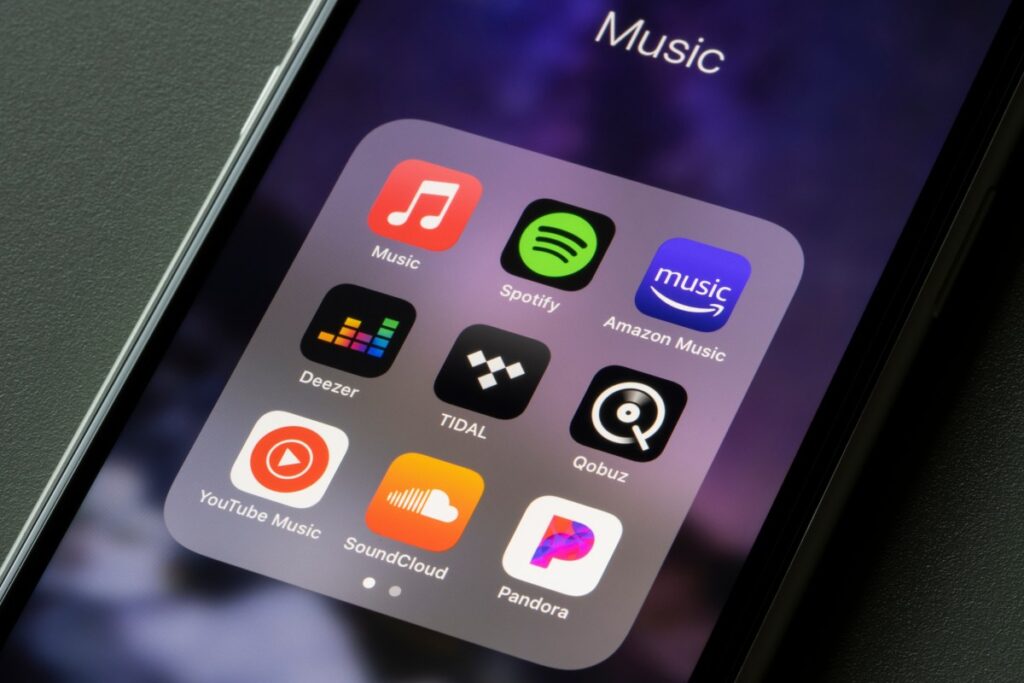
Table of Contents
The Synthetic Surge: Why Deezer is Scanning Your Playlists
The music streaming landscape is currently facing an existential crisis of authenticity. For years, the industry has grappled with ‘streaming fraud’—the use of bot farms to inflate play counts—but the emergence of high-fidelity generative AI has introduced a new, more complex problem: the proliferation of synthetic audio that mimics human artistry without the human creator.
Deezer has responded to this shift by launching a first-of-its-kind AI music detector. Unlike internal filters used by platforms to manage their own libraries, Deezer’s tool is a public-facing utility designed to scan playlists from rival services, including Spotify, Apple Music, SoundCloud, and YouTube Music. The goal is to provide listeners with a transparency layer that is currently missing from the dominant market leaders.
- Transparency: Users can now verify if the tracks they’ve discovered via algorithms are human-made or synthetic.
- Industry Pressure: By offering this tool for free across 20 platforms, Deezer is effectively shaming competitors who have opted for simpler tagging systems rather than active detection.
- Data-Driven Urgency: The move follows a startling internal discovery: nearly half of all new music entering the Deezer ecosystem is now AI-generated.
This isn’t just about a ‘cool tool’ for curious listeners. It is a strategic move in a larger war over copyright, royalties, and the definition of art in the age of Large Language Models (LLMs) and diffusion-based audio generators.
Decoding the Data: 44% of New Music is Now Synthetic
To understand why a public detector is necessary, one must look at the sheer volume of synthetic content hitting servers. According to data released by Deezer, 44% of all new music uploaded to the platform is AI-generated. When you break this down into daily numbers, the scale is staggering: approximately 75,000 AI tracks are uploaded every single day, totaling over two million monthly additions.
However, there is a significant gap between upload volume and actual consumption. Deezer reports that AI-generated music accounts for only 1% to 3% of total streams. This discrepancy points to a systemic issue: the vast majority of AI uploads aren’t intended for organic listeners. Instead, they are designed to game the system.
The Mechanics of Streaming Fraud
The intersection of AI music and streaming fraud is where the real financial damage occurs. Deezer asserts that roughly 85% of streams for AI-generated content are fraudulent. This typically involves ‘looping’ tracks via bot networks to trigger royalty payouts. Because AI can generate infinite variations of ‘lo-fi beats’ or ‘ambient sleep music’—genres that are high-consumption and low-engagement—it is the perfect vehicle for royalty siphoning.
By demonetizing these tracks, Deezer is attempting to protect the royalty pool for human artists. If a significant portion of the payout pot is diverted to bot-operated AI accounts, the per-stream rate for legitimate musicians inevitably drops.
How the AI Music Detector Works in Practice
For the end user, the process is designed to be frictionless. The tool operates as a web-based interface where users grant temporary access to their external playlist data. The system then cross-references these tracks against Deezer’s proprietary detection database, which has been refined over the last 18 months of internal tagging.
The detector supports 27 languages and integrates with 20 of the most popular streaming platforms. Once the scan is complete, the user receives a report detailing which tracks are flagged as synthetic. This transparency allows users to make an informed choice: do they value the ‘vibe’ of the music regardless of its origin, or do they prefer to support human creators?
“By detecting and tagging AI-generated music over the past year and a half, Deezer has been at the forefront of transparency in music streaming,” stated CEO Alexis Lanternier. “No other company has followed our lead yet, so we decided to make it possible for everyone to check if their playlists include synthetic music.”
What This Means for the Streaming Ecosystem
The launch of this tool signals a shift from passive tagging to active policing. For a long time, the industry standard—led by Spotify and Apple Music—was to simply tag AI content if the uploader disclosed it, or ignore it if it didn’t violate specific copyright terms. Deezer is arguing that ‘disclosure’ is an insufficient metric because the creators of fraud-driven AI music will never self-report.
Impact on Independent Artists
For independent musicians, this is a double-edged sword. On one hand, the removal of synthetic ‘noise’ from editorial playlists and recommendations increases the visibility of human artists. On the other hand, the aggressive use of AI detectors can lead to ‘false positives,’ where human artists using advanced production tools (like AI-assisted mixing or synthesis) might find their work flagged as synthetic.
The Regulatory Ripple Effect
Deezer’s mention of updating supplier policies suggests a move toward a ‘whitelist’ or ‘verified human’ model. This mirrors the approach taken by Bandcamp, which banned AI music earlier this year to preserve its identity as a creator-first marketplace. If Deezer successfully implements a system that penalizes synthetic uploads, it may force a broader industry standard for ‘Proof of Humanity’ in digital distribution.
Comparing Detection Strategies: Deezer vs. The Giants
| Feature | Deezer Approach | Spotify/Apple Approach | Industry Impact |
|---|---|---|---|
| Detection Method | Active Scanning & Flagging | Passive Tagging / User Reports | Higher accuracy for fraud prevention |
| Playlist Visibility | Excludes AI from Editorial Lists | Algorithmic Inclusion | Protects human artist discovery |
| Cross-Platform Tooling | Public External Detector | Internal Only | Forces transparency across rivals |
| Monetization | Aggressive Demonetization of Bots | Standard Royalty Distribution | Preserves the royalty pool |
Addressing the Technical Challenges of Audio Detection
Detecting AI music is significantly harder than detecting AI text. While LLMs leave predictable linguistic patterns, modern audio diffusion models (like Suno or Udio) generate waveforms that are increasingly indistinguishable from human recordings to the naked ear.
Deezer’s detection likely relies on a combination of spectral analysis (looking for unnatural repetitions or frequency gaps) and metadata pattern recognition (analyzing upload frequency and account behavior). When a single account uploads 500 tracks in a week, all of which follow a similar sonic profile, the probability of AI generation is nearly 100%.
The ‘Cat and Mouse’ Game
As detection tools improve, AI generators will evolve to bypass them. We are entering an era of ‘adversarial audio,’ where AI music is specifically engineered to pass as human to evade detectors. This means the AI music detector cannot be a static tool; it must be a constantly evolving machine-learning model that learns from the very AI it is trying to catch.
Frequently Asked Questions
Is the Deezer AI music detector free to use?
Yes, the tool is currently offered as a free online utility. Users do not need a paid Deezer subscription to scan their playlists from other platforms.
Which platforms are compatible with the detector?
The tool supports 20 major platforms, including Spotify, Apple Music, YouTube Music, and SoundCloud.
Does flagging a song as AI mean it’s bad music?
Not necessarily. The tool identifies synthetic origin, not musical quality. Many users enjoy AI-generated ambient or study music; the tool is simply providing transparency about how the music was created.
Why does Deezer care about AI music on Spotify?
By providing a tool for users of other platforms, Deezer positions itself as the ‘ethical’ alternative for music lovers and creates a competitive advantage based on transparency and artist support.
Will AI music be completely banned from streaming?
While some platforms like Bandcamp have implemented bans, most major streamers are currently focusing on tagging and demonetization of fraud rather than an outright ban on all synthetic content.
The Path to a Verified Human Era
The ultimate trajectory of this conflict is likely the implementation of a digital watermark. Just as the C2PA standard is being adopted for images and video to prove authenticity, the music industry will likely require a ‘Human-Made’ certification embedded in the audio file itself.
Until that happens, tools like Deezer’s AI music detector serve as a critical stopgap. They shift the power from the platform’s opaque algorithms back to the listener, allowing them to decide whether they want their ears—and their data—to support a human artist or a server farm in a data center.