Lenovo’s MWC 2026 Showcase: From Foldable Gaming Handhelds to Modular AI PCs
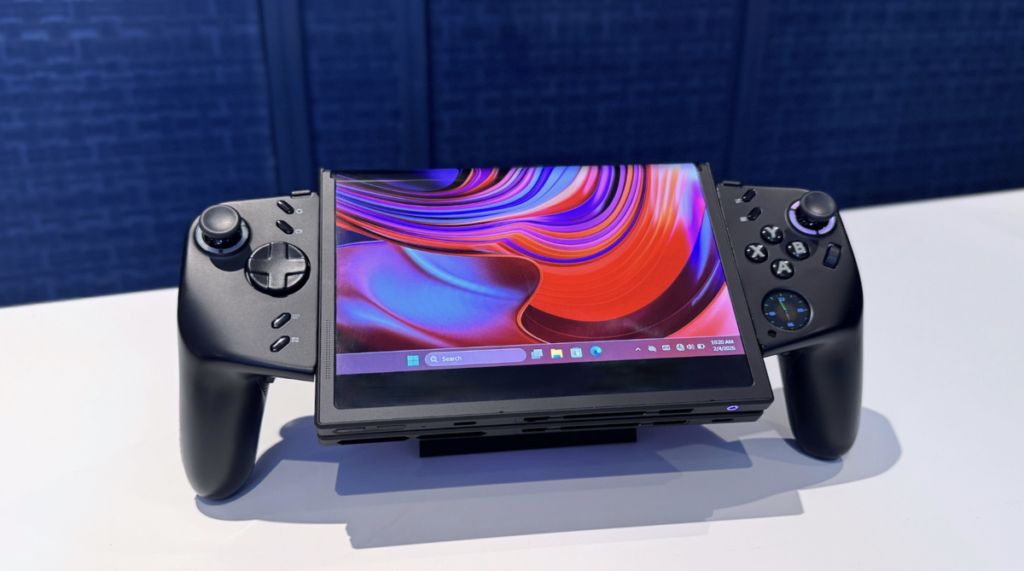
Table of Contents
A Pivot Toward Flexibility and Longevity
Lenovo has long been the volume leader in the PC market, but its presence at Mobile World Congress (MWC) 2026 suggests a strategic shift. While the company continues to refresh its core fleet of ThinkPads and Yoga laptops, the real story in Barcelona is a move toward modular hardware, foldable productivity, and specialized AI peripherals. This isn’t just about adding another SKU to the catalog; it’s an attempt to solve the ‘disposable tech’ problem while pushing the boundaries of how we interact with Windows environments.
- The Legion Go Fold emerges as the most ambitious concept, merging a 7.7-inch handheld with an 11.6-inch foldable tablet.
- Repairability is now central, with the T-Series ThinkPads and a new Modular AI PC Concept focusing on user-replaceable parts.
- The Yoga 9i Aura Edition leads the consumer charge, featuring Intel Core Ultra Series 3 silicon and a refined 2-in-1 chassis.
- AI is moving off-screen with the introduction of the AI Work Companion and AI Workmate desk peripherals.
The Legion Go Fold: A New Category of Gaming?
The most talked-about device at Lenovo’s MWC showcase is undoubtedly the Legion Go Fold Concept. After weeks of leaks, the company confirmed a handheld that attempts to bridge the gap between a Steam Deck-style device and a full-fledged productivity tablet. The device features a 7.7-inch POLED display that unfolds into a massive 11.6-inch canvas.
From a technical standpoint, the Legion Go Fold is surprisingly potent. It is powered by Intel’s Lunar Lake architecture paired with 32GB of RAM, suggesting that Lenovo is prioritizing efficiency and battery life—two perennial weaknesses in handheld gaming. The most innovative aspect is the detachable wireless keyboard, which allows the device to function as a clamshell laptop. One of the controllers even doubles as a vertical mouse, solving the awkwardness of navigating Windows 11 on a foldable screen.
While Lenovo labels this a “concept,” the inclusion of specific hardware specs usually indicates that the product is in the late stages of validation. If this hits the market, it would challenge the iPad Pro’s dominance in the “ultra-portable” space by offering a full x86 OS in a foldable form factor.
The Modular Movement: ThinkBook AI PC Concept
Perhaps more significant for the industry than the foldables is the ThinkBook Modular AI PC Concept. In an era of soldered RAM and glued-in batteries, Lenovo is experimenting with a Framework-inspired approach to longevity. The modular PC allows users to swap ports and peripherals via pogo-pin connectors, meaning a broken USB-C port no longer requires a motherboard replacement.
The system also features a detachable secondary display and keyboard, allowing the user to reconfigure the device’s physical layout based on their workflow. This is a direct response to the growing demand for Circular Economy electronics. By decoupling the screen and keyboard from the main logic board, Lenovo could theoretically extend the lifespan of these devices by several years, allowing users to upgrade the CPU module without discarding the chassis.
The Engineering of Modular Integration
Unlike previous modular attempts that felt clunky, the ThinkBook Concept uses integrated pogo-pin connectors for data and power transfer. This ensures a stable connection that doesn’t degrade with frequent swaps. The ability to use the detached screen as a secondary monitor via a built-in kickstand turns a single laptop into a dual-screen workstation, a trend we’ve seen in the ASUS ZenBook Duo but implemented here with a focus on repairability over sheer aesthetics.
Visualizing the Future: Yoga Book Pro 3D
Lenovo is doubling down on glasses-free 3D technology with the Yoga Book Pro 3D Concept. This device is aimed squarely at the creative professional market—architects, 3D modelers, and digital artists who currently rely on expensive VR headsets or specialized monitors to preview their work.
The hardware is formidable: an Intel Core Ultra 7 processor and an Nvidia GeForce RTX 5070. The 3D effect is achieved through advanced eye-tracking sensors that adjust the render in real-time based on the viewer’s perspective. During live demos at MWC, the depth perception was striking, though it requires the user to remain in a relatively fixed position for the best effect.
The addition of snap-on pads for the lower touchscreen adds a tactile layer to the 3D experience, allowing creators to trigger specific menus without obscuring the visual field. While 3D screens have historically been a gimmick, the integration of an RTX 50-series GPU suggests Lenovo is targeting actual production workloads rather than mere novelty.
The Production Line: Yoga 9i and ThinkPad Refreshes
While concepts steal the headlines, the Yoga 9i 2-in-1 Aura Edition is the product users can actually buy. Launching in May for $1,949, this updated 2-in-1 is a masterclass in iterative improvement. It moves to the Intel Core Ultra Series 3 chip, which promises better NPU performance for on-device AI tasks. Notably, Lenovo listened to user feedback by re-introducing the headphone jack—a small but critical win for professionals.
On the enterprise side, the T-Series ThinkPads are seeing a significant shift in internal design. All T-Series models for 2026 now feature more repairable chassis, larger speakers, and an optional 5MP camera for better remote collaboration. This indicates that Lenovo’s internal “Space Frame” design—which won a Best of CES award for the X1 Carbon Gen 14—is being scaled across the entire business lineup.
| Device | Key Spec/Feature | Status |
|---|---|---|
| Yoga 9i Aura Ed. | Core Ultra Series 3 / $1,949 | Available May 2026 |
| Legion Go Fold | Intel Lunar Lake / 11.6″ Foldable | Concept |
| Yoga Book Pro 3D | RTX 5070 / Glasses-free 3D | Concept |
| ThinkBook Modular | Swap-able Ports / Detachable Display | Concept |
AI Beyond the Keyboard: The Desk Companions
Lenovo’s most experimental move is the attempt to decouple AI from the laptop screen. The AI Work Companion and AI Workmate are two tabletop devices designed to handle the “administrative overhead” of professional life.
The Work Companion resembles a minimalist desk clock but functions as a task orchestrator. Its “Thought Bubble” feature syncs schedules across devices to create a daily plan, while also monitoring screen time to suggest burnout-prevention breaks. The AI Workmate, conversely, is a more anthropomorphic device—resembling a lamp with emoji eyes—that can project content onto surfaces and summarize physical documents via spatial interaction.
These devices represent a bet that AI should be an ambient presence rather than just another app window. By moving AI processing locally on-device, Lenovo is addressing the privacy concerns that have plagued cloud-based AI agents like the Qira system, which is currently rolling out to over 20 Lenovo devices.
What This Means for the Consumer
The convergence of these announcements points to three major trends in the computing landscape for 2026:
1. The Death of the Static Laptop: Between the foldable Legion Go and the modular ThinkBook, the idea of a “single form factor” is disappearing. We are moving toward adaptive hardware that changes shape based on whether you are gaming, typing, or sketching.
2. The Repairability Mandate: Lenovo’s shift toward modularity and the “Space Frame” design suggests that the industry is finally bowing to pressure from Right-to-Repair advocates and EU regulations. For the user, this means higher resale values and lower long-term costs of ownership.
3. Specialized AI Hardware: Instead of just adding AI buttons to keyboards, Lenovo is creating dedicated hardware for AI. This suggests a future where your laptop is the “brain,” but your desk is populated by AI-driven “organs” that handle specific tasks like scheduling or document scanning.
FAQ: Understanding Lenovo’s MWC 2026 Lineup
Can I buy the Legion Go Fold now?
No. The Legion Go Fold is currently a concept prototype. While it has confirmed specs (Lunar Lake, 32GB RAM), Lenovo has not announced an official release date or pricing.
What is the “Aura Edition” in the Yoga 9i?
The Aura Edition represents a collaboration focused on optimizing AI performance and user experience, featuring the latest Intel Core Ultra Series 3 chips and a more refined chassis with a dedicated Canvas mode for the Yoga Pen.
How does the glasses-free 3D screen work?
The Yoga Book Pro 3D uses eye-tracking sensors and a specialized panel that renders slightly different images for each eye, creating a perception of depth without the need for 3D glasses.
Are the new ThinkPads easier to fix?
Yes. Lenovo has integrated more repairable designs into the 2026 T-Series, following the success of the X1 Carbon Gen 14’s Space Frame design, which allows for easier internal component replacement.
What is the difference between the AI Work Companion and the AI Workmate?
The Work Companion is a minimalist tool for scheduling and burnout prevention, whereas the Workmate is a more advanced, interactive assistant capable of spatial projection and document summarization.
Final Assessment: Ambition vs. Execution
Lenovo’s MWC 2026 presence is a calculated gamble on variety. By showcasing six concepts alongside a massive production rollout, they are signaling to the market that they are no longer content being the “safe” choice for enterprise fleets. The move toward modularity is particularly commendable, as it aligns business interests with environmental sustainability.
The success of these initiatives will depend on how many of these concepts actually make it to the shelf. A modular ThinkBook that costs 50% more than a standard laptop may struggle, but if Lenovo can maintain price parity while offering longevity, they may just redefine the PC market for the next decade.