US and Iran Agree to Reopen Strait of Hormuz: The Global Impact on Tech Supply Chains and Energy Markets
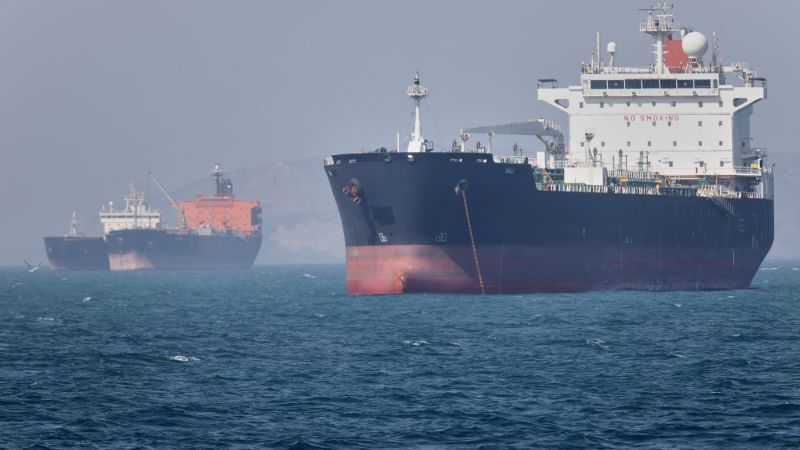
Table of Contents
A High-Stakes Pivot in the Middle East
In a sudden diplomatic shift that has sent ripples through global financial markets, the United States and Iran have announced a preliminary agreement to end current hostilities. Central to this breakthrough is the commitment by the U.S. to lift its naval blockade of Iranian ports and reopen the Strait of Hormuz, a critical maritime artery through which approximately one-fifth of the world’s total oil consumption flows.
President Donald Trump confirmed the development on Sunday, stating that the blockade would be removed upon the formal signing of the deal this coming Friday. While the full text of the agreement remains confidential, the immediate economic reaction has been visceral. Oil prices plummeted and Asian equity markets surged, as investors bet on a return to stability in a region that has essentially held the global energy supply hostage for the duration of the conflict.
- The Deal: The US will lift its naval blockade on Iranian ports, reopening the Strait of Hormuz effective Friday.
- The Timeline: A formal signing ceremony is scheduled for June 19 in Geneva, Switzerland.
- Economic Impact: WTI crude fell 4.8% and Brent crude dropped 4% following the announcement; Nikkei 225 hit a record high.
- The Friction Point: Conflict remains over the release of frozen Iranian funds, which the US describes as a “pay for performance” arrangement.
The Geopolitics of the Strait of Hormuz
To understand why this agreement is viewed as a global relief valve, one must look at the geography of the Strait of Hormuz. This narrow waterway, separating Oman and Iran, is the only exit point for oil exports from the Persian Gulf. When the U.S. military established the blockade in mid-April, it didn’t just target Iran—it created a systemic risk for every economy reliant on Middle Eastern hydrocarbons.
For the technology sector, the implications are less about the fuel and more about the logistics. The blockade stymied the movement of critical commodities and raw materials required for high-end hardware manufacturing. From chemicals used in semiconductor fabrication to the logistical stability needed for shipping components to East Asian hubs, the closure of the Strait acted as a bottleneck that exacerbated the already fragile post-pandemic supply chain.
The Geneva Summit and the 60-Day Window
The formalization of this peace occurs on June 19 in Geneva. According to Pakistan’s foreign minister Mohammad Ishaq Dar, who confirmed the venue via X (formerly Twitter), the city serves as a neutral ground to stabilize global markets. However, the signing is merely the beginning of a precarious 60-day negotiation period.
Kazem Gharibabadi, Iran’s deputy foreign minister, has been explicit about Tehran’s priorities during these two months. In an interview with the official Islamic Republic of Iran News Network, Gharibabadi stated that the “termination of all sanctions” is the primary objective. This includes the removal of United Nations Security Council resolutions and IAEA Board of Governors resolutions, which have crippled Iran’s ability to engage in international trade for years.
Market Volatility and the “Tech Shock”
The reaction from the financial sector was almost instantaneous. On Monday, Asian equities climbed sharply, reflecting a belief that the primary risk to global growth—energy price spikes—has been mitigated. The Nikkei 225 in Japan gained 5.4%, reaching a record high, while South Korea’s Kospi climbed 5%.
| Market Indicator | Immediate Reaction | Significance |
|---|---|---|
| WTI Crude Oil | -4.8% | Reduced risk premium on energy shipments. |
| Brent Crude | -4.0% | Global benchmark reflects expected flow return. |
| Nikkei 225 | +5.4% | Confidence in industrial recovery and lower energy costs. |
| Hang Seng Index | +1.2% | Optimism regarding regional trade stability. |
Beyond the ticker symbols, this matters for the end consumer of technology. The “energy squeeze” mentioned by analysts refers to the increased cost of logistics and raw material extraction. When oil prices spike, the cost of shipping a container of GPUs or smartphones from Shenzhen to Los Angeles rises. More importantly, the volatility in the region often leads to “risk-off” behavior in venture capital and tech investment, slowing the pace of innovation in emerging markets.
The “Frozen Funds” Dispute: A Trust Gap
Despite the optimism, a significant point of contention threatens to derail the agreement before the ink is dry in Geneva. The dispute centers on billions of dollars in frozen Iranian assets held in foreign banks.
Iran’s deputy foreign minister has claimed that negotiations will only truly begin once these funds are released. Conversely, U.S. officials have categorically rejected this demand. A U.S. official stated that the current arrangement is a “pay for performance deal,” meaning funds will only be unlocked as Iran meets specific, verifiable benchmarks of the agreement.
This fundamental disagreement over trust vs. verification is a classic hallmark of U.S.-Iran relations. If the U.S. maintains a strict performance-based release of funds while Iran demands them upfront as a prerequisite for diplomacy, the 60-day window could quickly become a stalemate.
Regional Fallout: The Israel-Lebanon Dimension
The agreement does not exist in a vacuum. The Middle East remains a powder keg, and the US-Iran deal has created an awkward diplomatic vacuum for Israel. Just before the announcement, Israeli forces launched airstrikes in Beirut, signaling that their security concerns remain independent of Washington’s diplomatic pivots.
President Trump’s public criticism of Prime Minister Benjamin Netanyahu, labeling him “a very difficult guy,” suggests a growing rift in the traditionally tight U.S.-Israel alliance. This friction may indicate that the U.S. is prioritizing global economic stability and energy security over the regional containment strategies previously favored by the Israeli government.
What This Means for the Global Economy
For the average consumer and tech enthusiast, this deal translates to three primary outcomes:
- Lower Energy Costs: A decrease in crude prices typically leads to lower fuel costs and lower shipping surcharges, which can eventually lower the retail price of consumer electronics.
- Supply Chain Reliability: The reopening of the Strait of Hormuz removes a critical “single point of failure” in the global trade route, reducing the likelihood of sudden hardware shortages.
- Geopolitical Stability: A reduction in war footing in the Middle East allows for more predictable long-term investment in infrastructure and emerging technology sectors in Asia and Europe.
Frequently Asked Questions
What is the Strait of Hormuz and why is it important?
The Strait of Hormuz is a narrow waterway between Oman and Iran. It is the world’s most important oil chokepoint, as it is the only route for oil exports from the Persian Gulf to reach global markets. Any closure of this strait leads to an immediate spike in global oil prices.
When will the US naval blockade actually be lifted?
According to current statements from the White House and US officials, the blockade is scheduled to be removed on Friday, June 19, coinciding with the formal signing of the agreement in Geneva.
Will this agreement immediately lower gas prices?
While crude oil futures have already dropped, the price at the pump typically lags behind. However, the removal of the “war premium” from oil prices generally leads to a downward trend in energy costs globally.
What are the “frozen funds” mentioned in the reports?
These are billions of dollars in Iranian assets held in foreign bank accounts, frozen by the US and its allies as part of various sanctions regimes. Iran wants this money back to stabilize its economy; the US wants to use it as leverage to ensure Iran complies with the new deal.
How does a conflict in the Middle East affect technology hardware?
Conflicts in the region disrupt the shipping of raw materials and commodities needed for manufacturing. Additionally, high energy costs increase the overhead for factories in Asia, which can lead to increased prices for components like semiconductors and circuit boards.
The Path Forward
As the world looks toward Geneva on June 19, the primary question is whether this is a sustainable peace or a temporary tactical pause. The 60-day negotiation window will be the true test. If the U.S. and Iran can bridge the gap on the release of frozen assets and the removal of IAEA resolutions, the global economy may finally move past the instability of the last several months.
For now, the markets are breathing a sigh of relief. With the naval blockade poised to end, the flow of oil—and the stability of the tech supply chain—appears to be returning to a more predictable equilibrium.