Switzerland Rejects 10 Million Population Cap: Why the Vote Safeguards EU Ties and Tech Talent
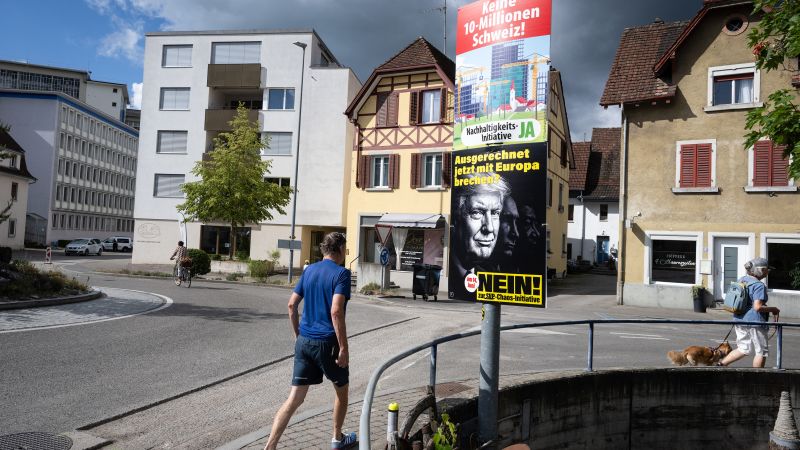
Table of Contents
Economic Stability Wins Over Immigration Anxiety in Swiss Referendum
In a decision that sends a clear signal of stability to international markets and the European Union, Swiss voters have rejected a contentious proposal to cap the national population at 10 million. The preliminary results of the nationwide referendum show a decisive 55% against the cap, with 45% in favor. This vote arrives at a precarious moment for the Swiss economy, which relies heavily on the free movement of labor to sustain its high-tech industries, healthcare systems, and financial services.
- Voter Mandate: 55% of Swiss citizens rejected the population cap, prioritizing economic ties over immigration restrictions.
- EU Relations: The ‘No’ vote prevents a legal trigger that would have forced Switzerland to terminate the free movement of labor with the EU.
- Economic Risk: Business associations warned that a cap would lead to acute labor shortages in specialized tech and care sectors.
- Political Divide: High support in rural areas contrasted with strong opposition in urban centers, highlighting a growing cultural rift.
The proposal, championed by the right-wing Swiss People’s Party (SVP), was not merely a suggestion but a rigid legal mechanism. Had it passed, the law would have stipulated that if the population exceeded 10 million for two consecutive years before 2050, Switzerland would be legally mandated to end the freedom of movement with the European Union. For a nation that views the EU as its primary trading partner, such a move would have been an economic shock similar in scale to the disruptions seen during the UK’s exit from the European Union.
The Labor Equation: Why the Tech and Healthcare Sectors Panicked
For the Swiss technology sector and the broader professional services industry, the referendum was viewed as an existential threat. Switzerland currently has a population of approximately 9.1 million, with foreigners comprising nearly 28% of the total. Official projections suggest the country will hit the 10 million mark by the early 2040s. In a high-cost economy where productivity is driven by specialized skill sets, the prospect of a hard cap on residency would have stifled the pipeline of engineers, data scientists, and medical professionals.
Urs Bieri, a lead analyst at pollster GFS Bern, noted that while general anxiety regarding population growth is prevalent, the fear of economic self-sabotage proved more powerful. The ability to recruit foreign talent is not a luxury for Switzerland; it is a structural necessity. From the pharmaceutical hubs of Basel to the fintech clusters in Zurich, the Swiss economy operates on a global talent acquisition model that a population cap would have rendered illegal.
The Geopolitical Context: A Shield Against Isolation
The timing of the vote was heavily influenced by external pressures. The “No” campaign strategically leveraged current geopolitical volatility, specifically referencing the volatility of US-European trade relations. During 2025, President Donald Trump implemented some of the highest tariffs in history on Swiss goods, leaving Bern in a vulnerable position. Opponents of the cap argued that alienating the EU while simultaneously facing trade wars with the US would be a “recipe for chaos.”
The imagery used in the campaign was blunt: posters featuring a smiling Trump questioned whether breaking with Europe was the right move at a time when Switzerland needed allies more than ever. This pragmatic approach resonated with urban voters and the business community, who viewed the free movement of people as a vital counterbalance to unpredictable trade policies.
Analyzing the Social Divide: Rural vs. Urban
Despite the overall defeat of the proposal, the result reveals a deeply fractured electorate. Marcel Dettling, president of the Swiss People’s Party, admitted that the initiative found strong support in rural cantons. In these regions, concerns about the strain on public infrastructure, rising rents, and the perceived erosion of national identity are more acute. Campaign materials from the SVP claimed that only 10% of immigrants were “needed skilled workers,” a statistic designed to fuel the narrative that the current system favors quantity over quality.
Conversely, urban centers—the engines of Switzerland’s GDP—voted overwhelmingly against the cap. For residents of Zurich and Geneva, the influx of international talent is viewed as a catalyst for innovation and economic growth rather than a burden on public services. The high turnout of 59%, significantly above the 48% average for Swiss referendums, indicates that this issue has touched a nerve across the entire social spectrum.
The Bilateral Framework and the Path Forward
The victory of the “No” camp provides a critical window of opportunity for the Swiss government. The business association economiesuisse has already urged the government to use this mandate to ratify the deal struck with Brussels in late 2024. This agreement aims to deepen bilateral economic ties and stabilize the legal framework governing trade and labor.
EU Commission President Ursula von der Leyen confirmed that Brussels and Bern will continue their collaborative efforts. However, the political victory for the status quo is not absolute. Sibel Arslan of the Green Party warned that while the cap was rejected, the conversation it sparked has “legitimized” the idea of population control. The underlying issues—housing shortages and infrastructure pressure—remain unsolved, meaning the political tension is likely to resurface in future legislative cycles.
What This Means for International Professionals and Investors
For those looking to move to or invest in Switzerland, this result is a signal of continued accessibility. The rejection of the cap ensures that the legal pathway for EU citizens to work in Switzerland remains intact and that the country will continue to pursue a policy of “openness and reliability,” as described by Justice Minister Beat Jans.
- For Tech Talent: The risk of sudden visa restrictions or a total freeze on new residency permits due to a population ceiling has been removed for the foreseeable future.
- For Businesses: The stability of the labor supply chain is preserved, allowing companies to maintain long-term hiring strategies without fear of an arbitrary 10-million-person cutoff.
- For the EU: The result prevents a diplomatic crisis and ensures that the Swiss market remains open to European services and labor.
Comparison of the Two Campaign Visions
| Metric/Focus | The ‘Yes’ Campaign (SVP) | The ‘No’ Campaign (Govt/Business) |
|---|---|---|
| Primary Goal | Curb immigration to preserve services | Maintain economic stability & EU ties |
| Economic View | Excessive growth strains infrastructure | Labor shortages threaten GDP growth |
| EU Strategy | Willing to end free movement of labor | Prioritize bilateral agreements |
| Key Demographic | Rural and conservative voters | Urban, tech, and business sectors |
| Risk Assessment | Loss of national identity | Economic isolation and labor collapse |
Addressing Common Questions About the Swiss Referendum
What exactly was the 10 million population cap proposal?
The proposal sought to implement a legal limit on Switzerland’s total population. If the population exceeded 10 million people and stayed above that level for two years before 2050, the government would be legally required to terminate the free movement of labor agreement with the European Union.
Why is the ‘free movement of labor’ so important for Switzerland?
The free movement of labor allows EU citizens to work in Switzerland without complex visa processes. Because Switzerland has a chronic shortage of skilled labor in sectors like IT, healthcare, and engineering, this agreement is the primary mechanism for filling critical job vacancies.
Does this mean immigration to Switzerland is now unrestricted?
No. Switzerland still maintains its own immigration laws and quotas for non-EU citizens. The referendum was specifically about a hard cap on the total population and the potential termination of the EU labor agreement.
How did the US-Swiss trade relationship influence the vote?
The ‘No’ campaign argued that with the US imposing high tariffs on Swiss goods in 2025, Switzerland could not afford to simultaneously alienate the EU. The goal was to avoid geopolitical isolation by maintaining a strong partnership with European neighbors.
Who were the main opponents of the population cap?
The primary opponents included the Swiss federal government, major business associations like economiesuisse, and various political parties including the Greens, who argued that the cap would cause economic upheaval and fuel xenophobia.
Will this result end the debate over immigration in Switzerland?
Unlikely. While the specific proposal was defeated, the high level of support (45%) indicates that a large portion of the population remains concerned about housing costs and public services. Political leaders have pledged to find alternative ways to address these concerns without dismantling EU ties.
A Verdict of Pragmatism over Populism
Ultimately, the Swiss electorate chose the known benefits of international integration over the theoretical promises of population control. By rejecting the 10 million cap, Switzerland has avoided a potential legal clash with Brussels and reaffirmed its position as a global hub for talent and business. However, the narrow margin of victory serves as a reminder that the pressure on Swiss infrastructure and the housing market is a real issue that requires a sustainable, non-isolationist solution.