From E-Scooters to Orbit: Why a16z is Betting $5 Million on Space Data Centers
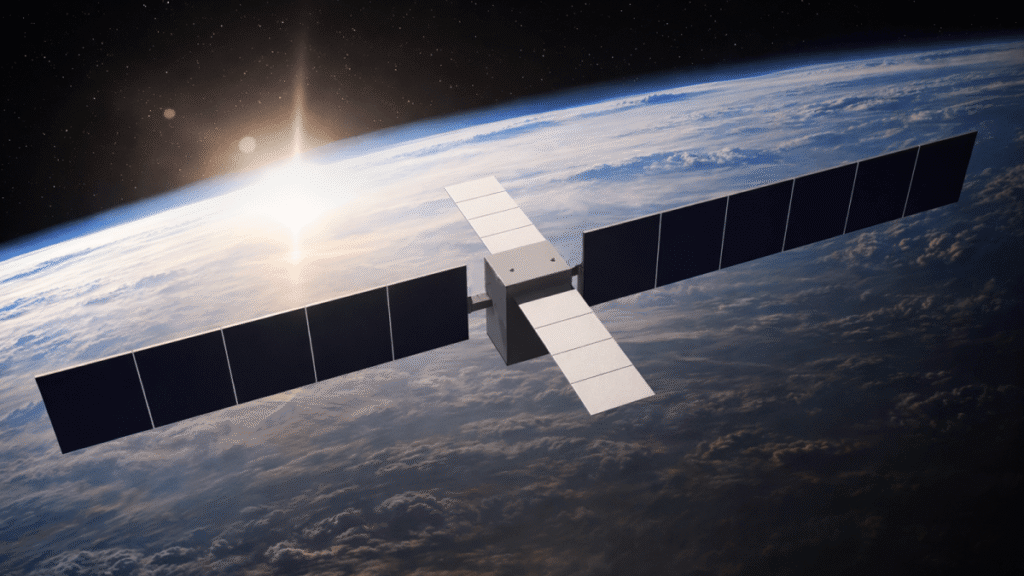
Table of Contents
The New Frontier of AI Compute
The current AI arms race is defined by a desperate scramble for power and land. On Earth, the deployment of massive data centers is increasingly throttled by aging power grids, restrictive environmental reviews, and the sheer physical scarcity of real estate capable of supporting gigawatt-scale loads. It is this terrestrial bottleneck that has created a window for a new, more ambitious breed of infrastructure: the orbital data center.
Enter Orbital, a new venture that recently emerged from a16z’s Speedrun accelerator with a $5 million seed round. The company aims to move AI inference—the process of running a trained model to generate an output—off the planet and into the vacuum of space. While the concept sounds like science fiction, the funding reflects a shift in venture capital’s appetite for capital-intensive, long-horizon aerospace projects.
The Founder’s Pivot
The catalyst for Orbital is Euwyn Poon, a founder with a proven track record in scaling complex physical networks, though not in aerospace. Poon previously founded Spin, the e-scooter company that he scaled to 250,000 vehicles across 100 cities before selling it to Ford in 2018. According to a16z partner Andrew Chen, Poon’s ability to manage the logistical nightmare of a city-wide scooter fleet is precisely the kind of operational expertise required to build a satellite constellation.
Poon’s path to space was not linear. After departing Ford, he entered the AI world by purchasing an Nvidia A100 and co-locating it in a Santa Clara facility to serve open-weight models. This hands-on experience with the fragility and demand of GPU compute convinced him that the next logical step for the industry was to decouple compute from the Earth’s surface.
Solving the ‘Launch Equation’
The primary barrier to space-based compute has always been the cost of the “last mile”—or rather, the first 100 miles. Current launch costs, even via the Falcon 9, make the economics of orbiting heavy GPUs nearly impossible to justify. Orbital’s entire business model is effectively a bet on SpaceX’s Starship.
“We will get to full scale when Starship comes online,” Poon stated, noting that the current state of the art is simply not economically feasible for a massive data center. Starship promises a magnitude of increase in payload capacity and a decrease in cost per kilogram that could finally make the business case for orbital inference close.
The Technical Roadmap
Orbital isn’t waiting for Starship to start testing. The company, headquartered in Los Angeles with a team drawn from SpaceX, Northrop Grumman, and Amazon LEO, is currently preparing a demo flight. The mission will involve flying an Nvidia Blackwell chip on a partner’s satellite to validate two critical engineering hurdles: radiation shielding and thermal management. In the vacuum of space, heat doesn’t dissipate via convection, making the cooling of high-TDP GPUs a primary engineering challenge.
By 2028, Orbital intends to launch its first data-processing spacecraft featuring Nvidia’s Space-1 Vera Rubin-class GPUs. Their long-term vision is staggering: a constellation of 10,000 satellites providing a distributed gigawatt of computing power, with each satellite rated for 100 kW. This puts them in direct competition with other emerging players like Starcloud and the data center ambitions of Jeff Bezos’ Blue Origin.
A Shift in Venture Philosophy
The investment in Orbital signals a broader trend in the capital markets. A decade ago, venture capital was dominated by “lean” software and mobile apps. Today, the massive demand for AI has made investors comfortable with ten-year timelines and multi-billion dollar capex requirements.
As Andrew Chen noted, starting such a venture in the current climate allows founders to tap into a level of excitement and capital availability that didn’t exist during the previous era of tech. For Orbital, the goal is clear: turn the void of space into the world’s most scalable server rack.