Cyber-Kinetic Warfare: Iran’s Retaliatory Strikes Target US Middle East Command Infrastructure
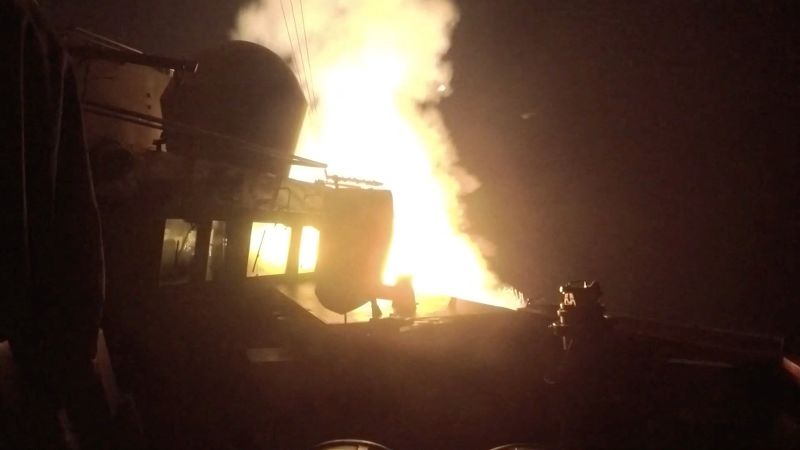
Table of Contents
The Escalation of Kinetic and Electronic Warfare
In a rapid escalation of hostilities across the Middle East, Iran’s Revolutionary Guard Corps (IRGC) has launched a second wave of retaliatory strikes targeting U.S. military installations in Jordan, Kuwait, and Bahrain. While the immediate focus has been on the physical impact of missiles and drones, the strategic core of this engagement is a high-stakes battle over regional surveillance and communication dominance.
Reports from the ground indicate a chaotic night for U.S. personnel. In Jordan, emergency warnings urged Americans to take cover as projectiles entered the airspace, while the Kuwaiti military confirmed the active interception of multiple incoming strikes. In Bahrain, the sounding of air-raid sirens signaled that the reach of the IRGC’s arsenal extended across the Gulf, attempting to saturate the defenses of U.S. Central Command (CENTCOM) assets.
Targeting the ‘Eyes and Ears’
Prior to this retaliation, the U.S. military executed a precision campaign targeting Iran’s own critical infrastructure. According to military briefings, these strikes specifically focused on surveillance capabilities, communication systems, and integrated air defense sites. By dismantling these nodes, the U.S. aimed to blind the IRGC’s ability to coordinate large-scale drone swarms and long-range missile launches.
This approach highlights a modern shift in warfare: the prioritization of ‘information superiority’ over traditional territorial gains. The targeting of surveillance hubs suggests that the U.S. is attempting to degrade Iran’s C4ISR (Command, Control, Communications, Computers, Intelligence, Surveillance, and Reconnaissance) architecture. When these systems are compromised, the efficacy of any subsequent retaliatory strike is diminished, as the attacker loses the ability to adjust targets in real-time based on intelligence.
The Digital Frontline and Signal Interference
While the explosions heard across key Iranian cities were physical, the battle is equally fought in the electromagnetic spectrum. The destruction of air defense sites is rarely just about the hardware; it is about the software and radar networks that link them. The loss of these communication systems forces the IRGC to rely on less secure, more fragmented channels, increasing the likelihood of intelligence leaks and operational errors.
Industry analysts note that this cycle of strikes serves as a live-fire test for next-generation electronic warfare (EW) tools. The ability of Kuwaiti and U.S. forces to intercept these strikes suggests a high level of integration between sensor networks and kinetic interceptors, likely utilizing AI-driven targeting to manage the volume of incoming threats.
Diplomatic Tension and Technical Deadlocks
President Trump has maintained a hardline stance, signaling that further strikes could resume as early as tomorrow if a diplomatic resolution is not reached. Citing sources from Fox News, the administration claims that top Iranian officials have already requested a halt to the current offensive, suggesting that the degradation of their communication and surveillance infrastructure may have reached a critical threshold.
If the U.S. has successfully neutralized key surveillance nodes, the IRGC’s ability to execute a third, more coordinated wave of attacks would be severely hampered. The current stalemate is not just a matter of political will, but of technical capacity. The question now is whether Iran can restore its digital command-and-control networks before the next window of engagement opens.