Global Forced Displacement Dips for First Time in Decade, but New Middle East Conflict Sparks Fresh Crisis
Table of Contents
A Rare Downturn in a Decades-Long Surge
For the first time in ten years, the relentless climb of global forced displacement has stuttered. According to the latest report from the United Nations High Commissioner for Refugees (UNHCR), the total number of forcibly displaced people worldwide has declined by roughly 4 percent in 2025, leaving approximately 117.8 million people—or one in every 70 individuals on Earth—uprooted from their homes.
This statistical dip is not the result of a sudden global peace, but rather a massive wave of returns. Over 14.7 million refugees and internally displaced persons (IDPs) returned to their countries of origin in 2025, a 50 percent increase over 2024 levels. This represents the largest recorded wave of returns in UNHCR history, with the vast majority of these movements concentrated in just six countries.
However, the UNHCR has issued a stark caveat: the conditions fueling these returns are often precarious. Many individuals are returning to regions still plagued by instability and latent violence, suggesting that the decline in displacement figures may be a reflection of desperation or forced repatriation rather than a sustainable resolution to the underlying conflicts.
The Lebanon-Iran Flashpoint
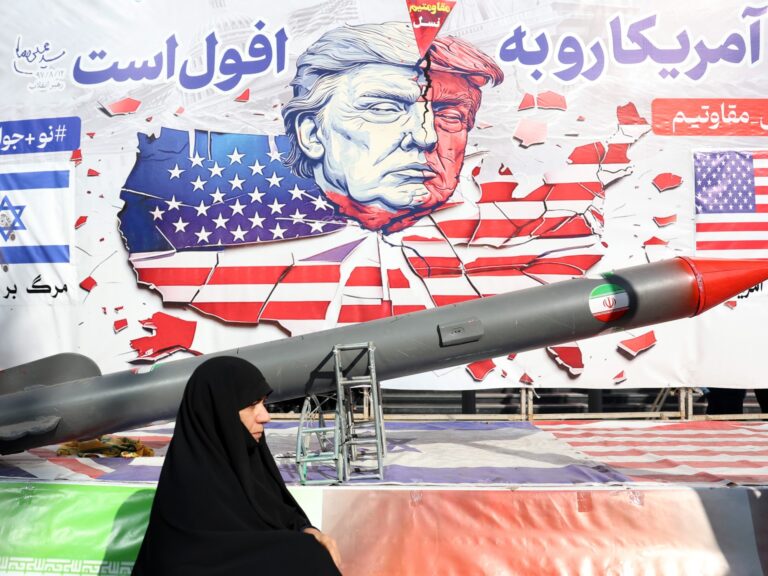
The overall decline in displacement has been heavily offset by a catastrophic new escalation in the Middle East. The reporting period is dominated by the fallout of the US-Israel war on Iran, which began in late March 2026. The conflict has triggered a rapid-onset humanitarian disaster in Lebanon, where Israeli military operations and forced displacement orders in the south have pushed more than one million people from their homes.
The crisis extends across borders, with an additional 3.2 million people internally displaced within Iran. This surge highlights a recurring pattern in global displacement: the speed at which geopolitical shifts can erase years of marginal progress. While some regions are seeing refugees return, others are seeing entire populations displaced in a matter of weeks due to high-intensity aerial bombardments and ground invasions.
The Geography of Displacement
The burden of hosting the world’s displaced remains staggeringly uneven. A mere seven countries now host 72 percent of all refugees, underscoring the reliance on neighboring states. Approximately 65 percent of all refugees live in countries bordering their place of origin, turning local regional stability into a critical factor for global humanitarian management.
Specific corridors of movement remain consistent: Afghans continue to make up the bulk of refugee populations in Iran and Pakistan, while Syrians remain the primary displaced group in Turkiye. In the Americas, Colombia continues to absorb the vast majority of Venezuelans fleeing economic and political collapse. Similarly, Germany remains a primary destination for those escaping conflicts in Ukraine, Syria, and Afghanistan.
Historical Context: From 1951 to the Present
The current scale of displacement is an exponential departure from the era when the UN Refugee Convention was first established in 1951. Designed as a post-World War II mechanism for Europe, the convention dealt with 2.1 million refugees at its inception. By 1980, that number had climbed past 10 million, doubling to 20 million by 1990 as wars in Afghanistan and Ethiopia intensified.
The 21st century accelerated this trend further. The US invasions of Afghanistan in 2001 and Iraq in 2003, combined with civil wars in Syria and South Sudan, pushed the total beyond 30 million by 2021. The subsequent Russian invasion of Ukraine in 2022 created one of the fastest-growing crises since WWII, displacing 5.7 million people in less than a year. More recently, the conflict between the Sudanese army and the Rapid Support Forces in 2023 added another 1.5 million to the count, while the bombardment of the Gaza Strip effectively displaced nearly the entire population of 2.3 million people.
As the UNHCR continues to monitor the volatility in Lebanon and Iran, the 2026 data suggests a world in a state of violent flux—where record-breaking returns coexist with the sudden emergence of new, million-person crises.