Munitions Experts Identify US-Made GBU-39 Bomb Fragments at Destroyed Iranian Water Reservoir
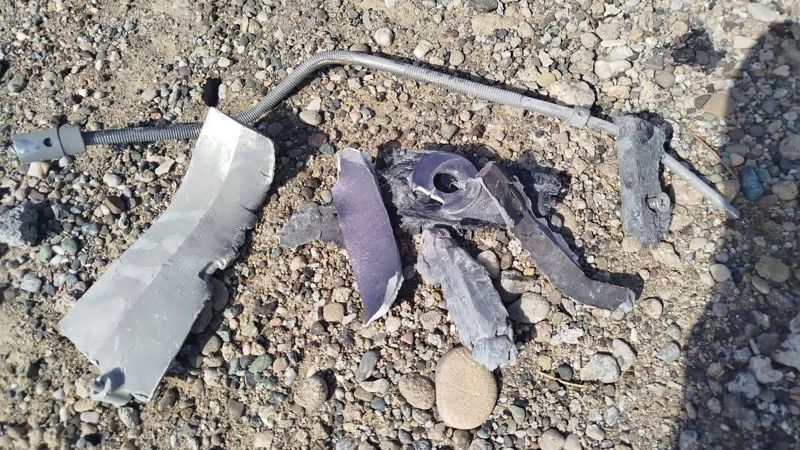
Table of Contents
Precision Strikes and Infrastructure Damage
Images released by Iran’s semi-official Mehr news agency appear to show the aftermath of a missile strike on a critical drinking water facility in southern Iran. While the Iranian government has been quick to label the strike a targeted attack on civilian infrastructure, munitions experts analyzing the debris suggest the use of highly sophisticated US technology: the GBU-39 Small Diameter Bomb (SDB).
The incident occurred in the Bamani district, where two concrete water-storage reservoirs—with a combined capacity of 2,500 cubic meters—were reportedly knocked out of service. According to Abdul Hamid Hamzehpour, CEO of the Hormozgan Water and Wastewater Company, the strike completely neutralized the facilities. The Tasnim news agency, which maintains close ties to the Islamic Revolutionary Guard Corps (IRGC), claims the reservoirs provided essential water services to approximately 20,000 residents.
Technical Analysis of the Munition
The identification of the weapon system hinges on fragments recovered from the site. Trevor Ball, a former senior explosive ordnance disposal team member with the US Army, and N.R. Jenzen-Jones, director of Armament Research Services, both identified the components as belonging to the GBU-39 series. The GBU-39 is a 250-pound class precision-guided bomb designed to minimize collateral damage while ensuring high accuracy through GPS guidance.
The technical precision of the weapon is a key point of contention. Satellite imagery analysis reveals the smaller of the two tanks, which held roughly half a million liters of water, suffered a direct hit that caved in its roof. Ball noted that given the remote location of the facility, the likelihood of a mechanical or guidance failure is negligible.
“It’s possible there was an error in targeting this building specifically, but a munition error is very unlikely,” Ball stated. “The munition precisely hit this building which is in a fairly remote area,” suggesting that the strike was a deliberate act rather than a stray missile.
Geopolitical Context and Legal Implications
The timing of the strike coincides with US military actions taken on Tuesday, launched in retaliation for the downing of a US helicopter. However, the targeting of water infrastructure raises significant legal and diplomatic questions. Under the Geneva Convention, water facilities are granted protected status to ensure the survival of civilian populations during armed conflicts.
This development follows a period of heightened tension and rhetoric. In March, President Donald Trump suggested on Truth Social that the US might target Iran’s water desalinization plants—a move that reportedly alarmed several Gulf allies who rely on regional stability. Whether this specific strike in Bamani was part of the broader retaliatory wave or a separate operation remains unconfirmed.
Official Response and Verification
US Central Command (CENTCOM) has remained cautious. Spokesperson Capt. Timothy Hawkins confirmed that the command is aware of the reports and is currently investigating the situation. However, Hawkins declined to provide further details regarding the specific targeting of the water facility or whether the US admits to the strike.
While the GBU-39 is produced in the United States, experts caution that other nations, including Israel and certain Gulf states, also maintain these munitions in their arsenals. However, the context of the ongoing direct confrontation between US and Iranian forces makes the US the primary suspect in the eyes of international observers.
Independent verification of the site was first established by a researcher known as @acceladealer on X, whose geolocation data confirmed the imagery originated from southern Iran, corroborating the claims made by the Mehr news agency.