Oracle’s AI Ambitions Spark Investor Panic Despite Strong Earnings Beat
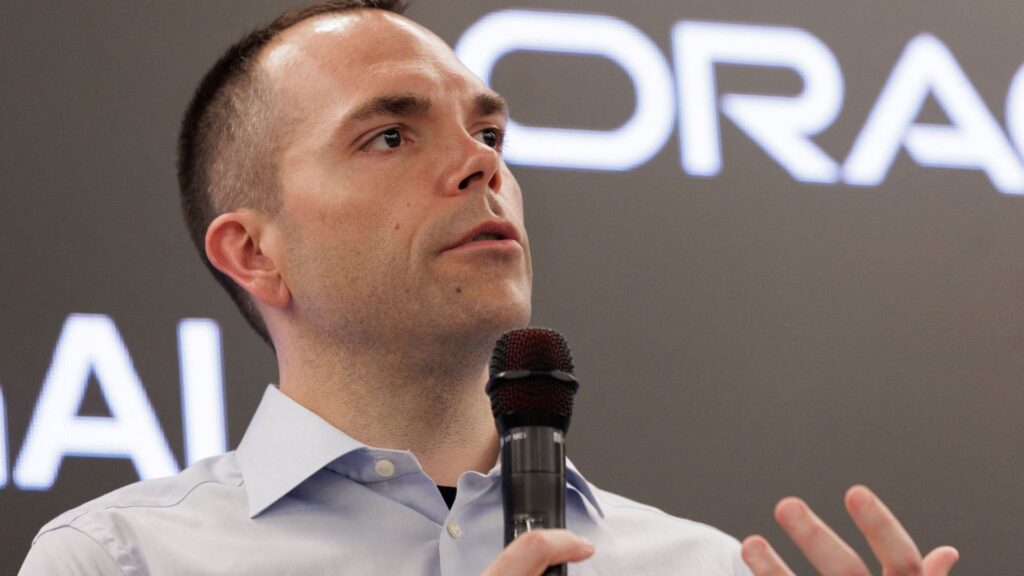
Table of Contents
The Cost of the AI Arms Race
Oracle is reporting the kind of numbers that usually send a stock soaring: double-digit revenue growth, a massive spike in cloud adoption, and a backlog of contracts that stretches into the hundreds of billions. Yet, the market’s reaction to Wednesday’s fiscal fourth-quarter results was visceral and negative. Oracle shares tumbled 10% in extended trading, not because the company failed to grow, but because the sheer scale of its ambition is beginning to frighten investors.
At the heart of the sell-off is a staggering financial gambit. Oracle intends to raise $40 billion through a combination of debt and equity financing, including a fresh $20 billion share sale. This follows a period where the company already secured $43 billion in debt and $5 billion in equity for fiscal 2026. For Wall Street, the question is no longer whether Oracle can compete in the AI era, but whether the eventual returns from these massive data centers can justify the unprecedented capital outlay.
Cloud Growth vs. Cash Burn
The operational data reveals a company in the midst of a violent transition from a legacy database provider to a cloud powerhouse. Revenue for the quarter ending May 31 climbed 21% year-over-year, with net income hitting $4.22 billion, or $1.45 per share. Most impressive was the cloud infrastructure revenue, which skyrocketed 93% to $5.8 billion. While this is a fraction of the revenue generated by giants like Amazon Web Services—which brought in $37.59 billion in the March quarter—Oracle’s growth trajectory suggests it is successfully carving out a niche in high-performance AI computing.
However, this growth has come at a steep price. Oracle reported a negative free cash flow of $23.7 billion for the fiscal year. Capital expenditures surged 162% to $55.7 billion as the company raced to build out the physical infrastructure required to host large language models. New CFO Hilary Maxson, recently poached from Schneider Electric, indicated that the net cash outlay for capital expenditures in fiscal 2027 will hover around $70 billion, though this figure may be slightly offset by customer prepayments.
The OpenAI Factor and the RPO Surge
Perhaps the most striking figure in the report is Oracle’s Remaining Performance Obligation (RPO), which ballooned by 363% to reach $638 billion. This represents revenue that is contracted but not yet recognized—essentially a roadmap of future growth.
The composition of this RPO is telling. Oracle noted that a significant portion of this increase stems from large-scale AI contracts where customers either prepay for GPUs or supply their own hardware to Oracle’s data centers. This “customer-funded” model is designed to lower the immediate financial burden of data center construction. According to analysts at Bank of America, more than 50% of this RPO is tied to a single entity: OpenAI.
Scaling Power at Record Speed
The physical scale of Oracle’s buildout is nearly unprecedented in the sector. CEO Clay Magouyrk told analysts during a conference call that the company aims to bring nearly one gigawatt of computing power online in the current quarter alone. To put that in perspective, that represents roughly the total capacity Oracle intended for the entirety of fiscal 2026.
The company is also diversifying its footprint, as evidenced by a $16 billion data center project in Michigan backed by Blackstone and Related Digital. While these moves position Oracle as a critical utility for the AI revolution, the immediate dilution of shares and the mounting debt load have left investors wondering if the company is overextending itself in a high-stakes bet on the longevity of the AI boom.