Google is Giving You a Manual Override for the News Feed
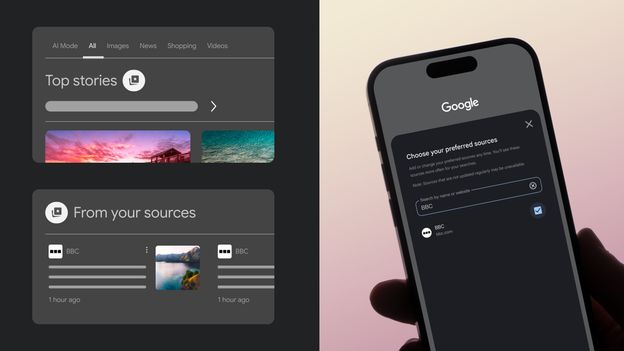
Table of Contents
Breaking the Algorithmic Black Box
For years, the experience of consuming news via Google Search has been a tug-of-war between user intent and an opaque algorithm. Between the rise of AI-generated summaries (SGE) and the increasingly crowded ‘Top Stories’ carousel, the ability to find a specific, trusted publication often requires scrolling past a wall of synthesized data and promoted content. Google is now attempting to mitigate this friction with a new ‘Preferred Sources’ tool.
The feature is essentially a manual override. Instead of relying entirely on Google’s perceived authority metrics—which often favor high-volume SEO sites—users can now explicitly tell the engine which publishers they trust. By marking a site as a preferred source, Google promises to prioritize that publication’s articles, videos, and updates when they are relevant to a search query.
Where Your Preferences Actually Appear
It is important to note that Preferred Sources are not a total filter; you won’t see only your favorite sites. Instead, Google is integrating these preferences into the existing search architecture. The most prominent change occurs within the ‘Top Stories’ section. Users will now see a specific ‘from your sources’ nested area within these results, both on desktop and mobile browsers.
This is a strategic shift. By creating a dedicated lane for user-selected publishers, Google is acknowledging that ‘authority’ is subjective. While a general algorithm might prioritize a massive conglomerate for a health query, a user might specifically trust the nuanced reporting of the BBC or the technical depth of Ars Technica. This tool allows that personal trust to supersede the global ranking signal.
The Logistics of Selection
Setting up Preferred Sources is designed to be low-friction, occurring either through a central settings menu or dynamically during a live search. For those who prefer a bulk setup, Google provides a selection screen where users can browse and tick boxes for their favorite domains.
More interestingly, Google has added a contextual trigger during the search process. When a user encounters the ‘Top Stories’ block, a starred card icon now appears. Clicking this allows the user to instantly promote a publisher appearing in that result to their preferred list. Once selected, the preference is tied to the user’s Google account and applies across all future searches, creating a persistent, personalized news layer across the web.
Combatting the ‘AI Noise’
The timing of this rollout is unlikely to be coincidental. As Google leans harder into AI Overviews, the traditional organic link is being pushed further down the page. This has led to a growing sentiment among power users that the ‘open web’ is being replaced by a ‘summarized web,’ where the original source is an afterthought.
By allowing users to pin specific publishers, Google is providing a safety valve for those who find AI summaries insufficient or distrustful. It is a nod to the ‘curation’ era of the internet, returning a sliver of control to the user in an age of automated discovery. For publications, this represents a new way to build direct loyalty—not just through a newsletter or an app, but by becoming a permanent fixture in the user’s primary gateway to information.