Apple Intelligence Shifts Focus Toward Family Safety and Granular AI Guardrails at WWDC26
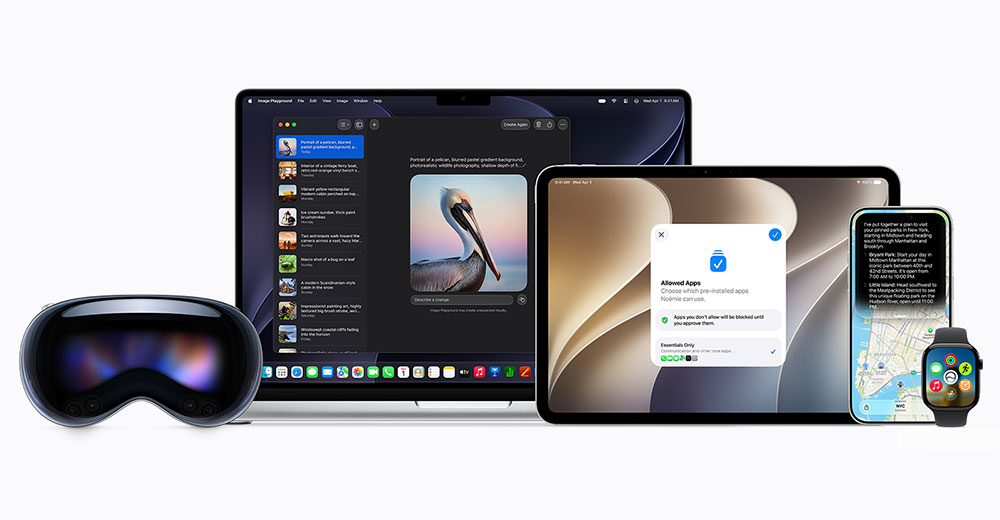
Table of Contents
Moving Beyond the Hype Cycle
After a year of aggressive rollout and teething problems with the first iteration of Apple Intelligence, Cupertino has pivoted its strategy. At WWDC26, the narrative shifted from sheer generative power to a more disciplined approach to safety and utility, specifically targeting the most vulnerable segment of its user base: children.
The centerpiece of the keynote wasn’t a new LLM benchmark, but rather a suite of “Family Intelligence” tools. Apple is attempting to solve a problem that has plagued the AI industry since the launch of ChatGPT: the tension between the helpfulness of an open-ended assistant and the unpredictability of generative content for minors. By integrating AI directly into the existing Screen Time framework, Apple is introducing a layer of semantic filtering that doesn’t just block keywords, but understands the intent and context of a child’s query.
The ‘Private Cloud Compute’ Shield for Minors
Technical deep dives during the event revealed that Apple is expanding its Private Cloud Compute (PCC) architecture to include specialized child-safety guardrails. Unlike standard AI filters that often trigger false positives or are easily bypassed by “jailbreak” prompts, Apple’s new system utilizes a tiered model approach. Queries from accounts designated as child accounts are routed through a more restrictive set of parameters that prioritize factual accuracy over creative exploration.
For developers, this means new APIs that allow apps to signal to the OS when a child is interacting with an AI-driven feature. This is a clear move to stave off regulatory pressure from the EU’s AI Act and the US’s increasing scrutiny of child safety online. By keeping the bulk of this processing on-device, Apple is maintaining its primary marketing pillar: privacy.
Siri’s Evolution into a Digital Guardian
Siri has undergone a fundamental change in how it handles family dynamics. Instead of acting as a passive tool, the updated Siri can now act as a bridge between parents and children. For example, if a child asks Siri a complex question about a sensitive topic, the system can now be configured to notify a parent via a “Safety Ping,” providing a summary of the query and a suggested way to handle the conversation.
This integration marks a departure from the previous “lock-down” mentality of parental controls. Rather than simply banning certain apps or topics, Apple is using AI to monitor the nature of the interaction. If the AI detects signs of cyberbullying or predatory grooming patterns in messages—even across third-party apps that utilize Apple’s shared frameworks—it can now trigger an immediate alert to the guardian’s device.
The Hardware Synergy
While the software stole the show, the efficiency of these AI safety layers is heavily dependent on the latest Neural Engine iterations. Sources close to the production cycle suggest that the heavy lifting of these real-time semantic filters is why Apple is pushing for the latest silicon in all compatible devices. The latency involved in routing requests to the cloud for safety checks would be too high for a seamless user experience, making the on-device NPU the critical path for these features.
Industry analysts suggest that this pivot is a strategic necessity. As Google and Microsoft continue to integrate AI into education, Apple is positioning the iPhone and iPad not just as consumption devices, but as the safest gateways to the internet for the next generation. The move transforms AI from a novelty feature into a core utility for digital parenting.