Apple’s AI Strategy: Why Playing the Long Game is Paying Off
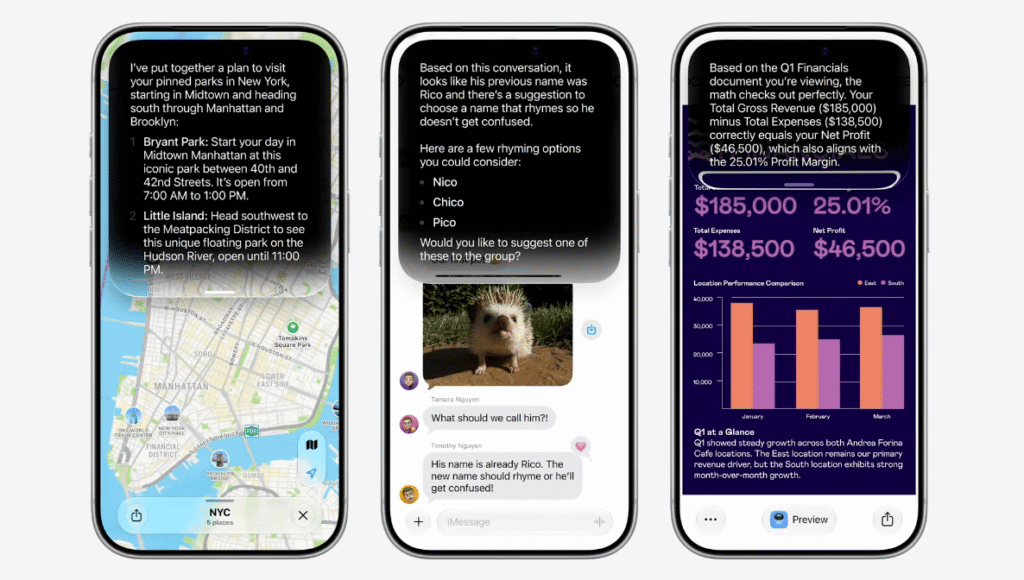
Table of Contents
The Myth of the AI Laggard
For the better part of two years, the narrative surrounding Apple has been one of absence. While Microsoft and Google engaged in a frantic, high-stakes arms race to ship Large Language Models (LLMs) and generative chatbots, Apple remained conspicuously quiet. Wall Street analysts spent months questioning whether the company had lost its innovative edge, with some suggesting that a failure to capitalize on AI could finally erode the iPhone’s dominant market position.
However, the recent unveiling of the new Siri AI suggests that Apple wasn’t missing; it was waiting. By embedding automated capabilities—bolstered by a strategic partnership with Google Gemini—directly into the spine of its operating system, Apple is attempting to shift the conversation from who has the most powerful model to who has the most useful integration.
Weaponizing the OS Level
The core of Apple’s play is a concept the company calls ‘onscreen awareness.’ Unlike standalone AI apps that require a user to copy-paste data or switch contexts, the new Siri can surface information buried deep within a user’s iMessage history or email threads and apply it to the task currently on the screen. This is the fundamental advantage of owning the hardware and the operating system: the ability to create a seamless layer of intelligence that doesn’t feel like an external plugin.
By integrating Gemini for near-instantaneous web retrieval while keeping personal data processing local, Apple is positioning itself as the ‘safe’ AI. This is a calculated move. During recent remarks, Craig Federighi, Apple’s senior vice president of software engineering, took a subtle swipe at the industry’s current trajectory, noting that some competitors seem to be pursuing “AI for the sake of AI” without regard for the actual user.
This rhetoric is designed to resonate with a growing segment of consumers who are increasingly ambivalent about generative AI. By branding itself as the intuitive, human-centric alternative, Apple isn’t just shipping features; it’s building a brand moat around AI ethics and usability.
The Financial Divergence
Perhaps the most telling part of Apple’s strategy is the balance sheet. The AI industry is currently defined by an unprecedented level of capital expenditure. While other tech giants are committing cumulative sums nearing $900 billion into GPU clusters and massive data centers, Apple’s planned capex for the year is roughly $14 billion.
Apple has essentially let its competitors fund the expensive R&D phase of the AI revolution. While Meta and OpenAI struggle to define a sustainable path to profitability for their models, Apple continues to profit from the very companies challenging it. Through the App Store’s commission structure, Apple has effectively taxed the AI industry, earning revenue from the third-party AI apps that paved the way for its own integrated features.
The Distribution War
The strategic implication for the broader app ecosystem is severe. For years, AI startups have relied on the App Store for distribution. Now that Apple is embedding similar functionalities at the OS level, those third-party apps face a classic “Sherlocked” scenario. When the operating system can perform a task natively and more efficiently, the incentive to download a third-party app vanishes.
The rollout will not be instantaneous; the new Siri capabilities are slated for a beta release later this year. This measured approach mirrors Apple’s historical pattern: let others define the category, refine the user experience, and then integrate it so deeply into the ecosystem that it becomes indispensable.
Whether this approach is ‘winning’ the AI race is almost irrelevant. Apple’s goal was never to build the world’s largest LLM, but to ensure that the iPhone remains the primary lens through which users interact with AI. In terms of financial risk and ecosystem lock-in, that may be the most successful strategy of all.