The Hollowed-Out Middle: How AI and Inflation Are Killing the Mid-Range Laptop
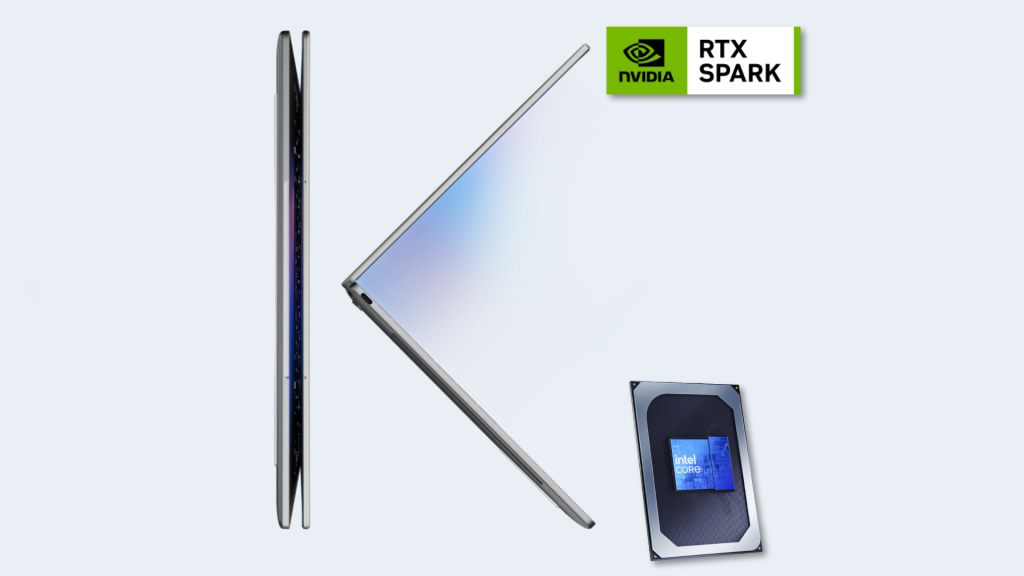
Table of Contents
A Market Split in Two
For years, the ‘mid-range’ laptop was the bedrock of the consumer electronics market. It was the $800 to $1,100 sweet spot: a machine with a capable processor, 16GB of RAM, and a build quality that felt professional without requiring a second mortgage. But as we move through 2026, that center is collapsing. The laptop market is increasingly resembling a K-shaped recovery, diverging into ultra-cheap, compromised entry-level devices and prohibitively expensive AI powerhouses.
The recent flurry of activity at Computex has laid bare this divide. Manufacturers are no longer fighting for the middle; they are sprinting toward two opposite poles. On one end, there is a desperate race to hit a $600 price point to compete with Apple’s disruptive MacBook Neo. On the other, there is a push toward the $2,000+ stratosphere, driven by the integration of specialized AI silicon like Nvidia’s new RTX Spark chips.
The Budget Trap and the 8GB Problem
Apple has managed to capture the low end of the market with the MacBook Neo. By repurposing refined mobile architecture into a budget-friendly Mac, Apple has created a device that feels performant at a $600 entry point. The secret isn’t just the silicon, but the efficiency of macOS in handling unified memory.
Windows OEMs, however, are struggling to find a viable answer. The revival of the Dell XPS 13 was intended to signal a return to flagship quality, but the reality is a $700 machine powered by Intel’s Core Series 3 ‘Wildcat Lake’—essentially the modern equivalent of a Celeron. More concerning is the hardware ceiling: the base model ships with only 8GB of LPDDR5 RAM, which is soldered to the board and cannot be upgraded.
In 2026, 8GB of RAM on Windows 11 is no longer a viable baseline. It is a bottleneck that transforms a modern PC into a frustrating exercise in tab-management. Furthermore, Microsoft’s own Copilot+ specifications effectively gatekeep the most advanced AI features from machines with less than 16GB of memory. By selling 8GB machines, Dell and other OEMs aren’t just competing on price; they are selling devices that are functionally obsolete upon arrival for any power user.
The Ghost Town of the $1,000 Laptop
If you move up from the budget tier, you hit a strange vacuum. The $1,000 price point, once the gold standard for a ‘serious’ consumer laptop, has largely vanished from the spec sheets of major reviewers and retailers. To get a machine that doesn’t feel like a compromise—something with a Core Ultra Series 2, AMD Ryzen, or Snapdragon X2 chip and 16GB to 32GB of RAM—the entry price has drifted toward $1,300.
This shift forces a significant portion of the consumer base toward financing or credit. When the baseline for a ‘competent’ laptop exceeds the thousand-dollar mark, the device ceases to be a tool and becomes a major capital investment. Even Google’s latest foray into hardware, the Android-based ‘Googlebook,’ is leaning heavily into ‘premium craftsmanship’ as a justification for higher price points, further eroding the accessibility of the mid-tier.
The Ascent of the AI Powerhouse
At the top of the pyramid, a new class of machine is emerging. Nvidia is entering the fray not just as a component supplier, but as a platform driver with the RTX Spark chip. Built on an Arm-based architecture, the Spark is designed specifically for local AI workloads and high-end gaming, pushing the price of these machines comfortably into the $2,000 range.
While these devices offer staggering performance, they cater to a narrow demographic: corporate clients, AI developers, and wealthy enthusiasts. For the average user—the student, the freelance writer, the office worker—there is no longer a clear path to a balanced machine. You are either buying a stripped-down budget device that will struggle with three Chrome tabs, or a workstation that costs as much as a used scooter.