Nvidia’s RTX Spark Signals a Shift Toward Local AI Execution
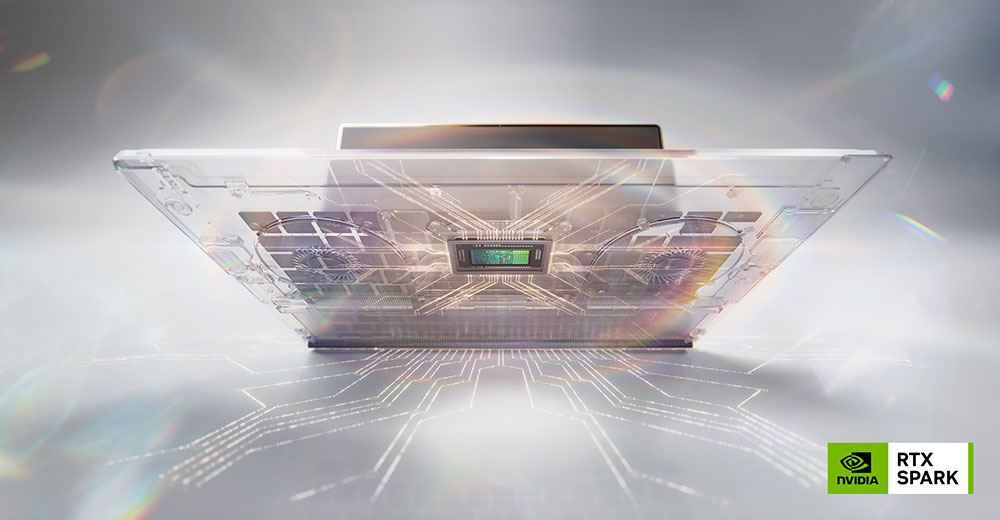
Table of Contents
Breaking the Cloud Dependency
For the last two years, the AI boom has been defined by massive data centers and subscription-based API calls. Whether you are using ChatGPT or Claude, the heavy lifting happens thousands of miles away. Nvidia is now attempting to pivot that gravity toward the desktop with RTX Spark, a strategic push to turn the consumer PC into a self-sufficient AI powerhouse.
RTX Spark isn’t just a single piece of software; it is an optimization layer designed to bridge the gap between raw GPU power and the efficiency required to run Large Language Models (LLMs) locally. By leveraging the Tensor Cores found in RTX 30- and 40-series cards, Spark aims to reduce the latency and privacy concerns associated with cloud-based AI, allowing users to run complex models without an internet connection.
The Battle for the ‘AI PC’
Nvidia is entering a crowded room. Intel and AMD have both spent the last twelve months marketing “AI PCs,” primarily leaning on the integration of Neural Processing Units (NPUs). However, Nvidia’s approach is fundamentally different. While NPUs are designed for low-power background tasks—like blurring a webcam background or managing battery life—Nvidia is betting that true AI productivity requires the brute force of a discrete GPU.
The technical challenge has always been VRAM (Video RAM). Most high-quality LLMs require more memory than the average consumer laptop provides. RTX Spark addresses this through advanced quantization techniques, essentially “compressing” models so they fit into smaller memory footprints without a catastrophic loss in intelligence. This allows a user with an RTX 4070 to run models that previously required professional-grade A100 hardware.
Privacy as a Product Feature
Beyond the benchmarks, there is a growing corporate appetite for “air-gapped” AI. Enterprises are increasingly hesitant to feed proprietary data into OpenAI’s training sets. By moving the execution to the local hardware via RTX Spark, Nvidia is positioning the RTX ecosystem as the only viable choice for security-conscious developers and creative professionals.
This move also secures Nvidia’s moat in the gaming sector. If a GPU is no longer just for rendering textures in modern gaming titles but is instead the primary engine for a user’s personal AI assistant, the incentive to upgrade to the latest architecture becomes an annual necessity rather than a biennial luxury.
Hardware Constraints and Reality
Despite the optimism, the hardware bottleneck remains. While Spark optimizes how models use memory, it cannot manufacture more physical VRAM. Users on older cards or those with 8GB of memory may find that “local AI” still feels restrictive compared to the infinite scale of the cloud. Furthermore, the power draw of running a GPU at 100% load for extended AI inference is significantly higher than the sip of power an NPU takes.
Nvidia’s gamble is that users will trade power efficiency for speed and privacy. As the ecosystem of local models grows—driven by projects like LLaMA and Mistral—RTX Spark provides the necessary infrastructure to make those models accessible to anyone with a gaming rig.


