Prada’s Lunar Contribution: Inside the High-Fashion Engineering of Axiom’s New Spacesuit Layer
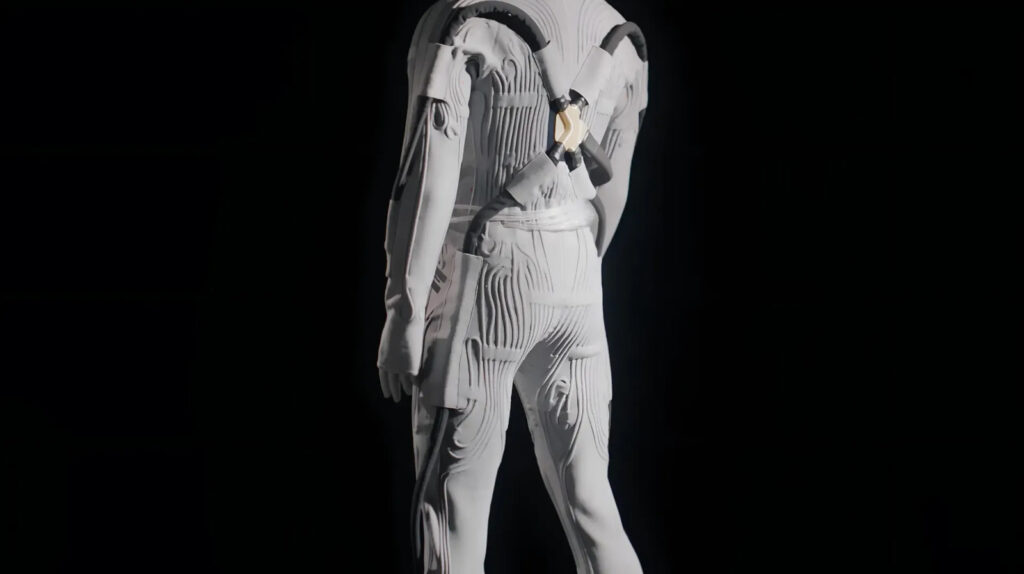
Table of Contents
Where Couture Meets Cryogenics
When NASA announced the Artemis III mission—the ambitious plan to return humans to the lunar surface—the technical requirements for survival were clear: protection against extreme radiation, abrasive moon dust, and temperature swings that would freeze or cook a human in minutes. However, the execution of those requirements has taken an unexpected turn toward Milan. Axiom Space, the primary contractor for the next-generation lunar suits, has officially unveiled the Liquid Cooling and Ventilation Garment (LCVG), a critical inner layer developed in a surprising partnership with luxury fashion house Prada.
To the casual observer, the pairing of a high-fashion label and a space exploration company seems like a marketing gimmick. But for the astronauts who will wear the Axiom Extravehicular Mobility Unit (AxEMU), the LCVG is less about aesthetics and more about thermal homeostasis. The garment serves as the primary interface between the human body and the rigid outer shell of the spacesuit, tasked with the grueling job of removing metabolic heat generated during lunar exploration.
The Engineering of the LCVG
The LCVG is not a simple jumpsuit; it is a complex network of fluid dynamics. According to Axiom, the garment utilizes a series of embedded tubes that circulate water across the body’s major muscle groups. This system absorbs heat from the skin and transports it away from the wearer, eventually expelling it into the vacuum of space. Without this active cooling, an astronaut performing a moonwalk would quickly overheat due to the insulation provided by the suit’s outer layers.
Beyond temperature control, the garment integrates a sophisticated ventilation system. Separate tubing delivers a constant stream of fresh oxygen to the astronaut’s face, ensuring that exhaled carbon dioxide is continuously cleared from the helmet. In a significant departure from previous NASA suit designs, Axiom has implemented a redundant cooling circuit. This backup loop ensures that if the primary cooling system fails during an Extravehicular Activity (EVA), the astronaut is not immediately placed in a life-threatening thermal crisis.
Why Prada?
The collaboration leverages Prada’s deep institutional knowledge of pattern making and textile chemistry. While Axiom provides the aerospace specifications, Prada brings a level of precision in fit and material durability that is rare in traditional industrial manufacturing. Lorenzo Bertelli, Prada’s CMO, noted that the partnership focuses on the intersection of “design, pattern making and advanced materials.”
In the vacuum of space, a poor fit is not just uncomfortable—it’s dangerous. A garment that bunches or chafes can lead to skin irritation or pressure points that, under the vacuum of space, could become critical failure points. Prada’s expertise in tailoring allows for a garment that maintains a snug, consistent fit across a variety of body types while remaining flexible enough to allow the wearer to bend and move on the lunar surface.
The Broader Shift in Space Hardware
This partnership signals a broader trend in the “New Space” economy, where NASA is increasingly relying on private consortia to develop hardware. By outsourcing the design of the AxEMU to Axiom and its partners, NASA is shifting from being the sole manufacturer to a regulatory and certifying body. This allows for faster iteration and the integration of non-traditional expertise—such as luxury textile engineering—into the mission’s critical path.
As Artemis III approaches, the LCVG represents the unseen but essential infrastructure of lunar survival. While the outer shell of the suit will capture the headlines and the photographs, the success of the mission will depend on the invisible work happening beneath the surface: the precise, Prada-stitched tubes keeping a human being alive in one of the most hostile environments known to science.