NASA Crew Retreats to SpaceX Dragon as Russian Service Module Leaks Trigger ‘Safe Haven’ Protocol
Table of Contents
A Sudden Shift to ‘Elevated Safety Posture’
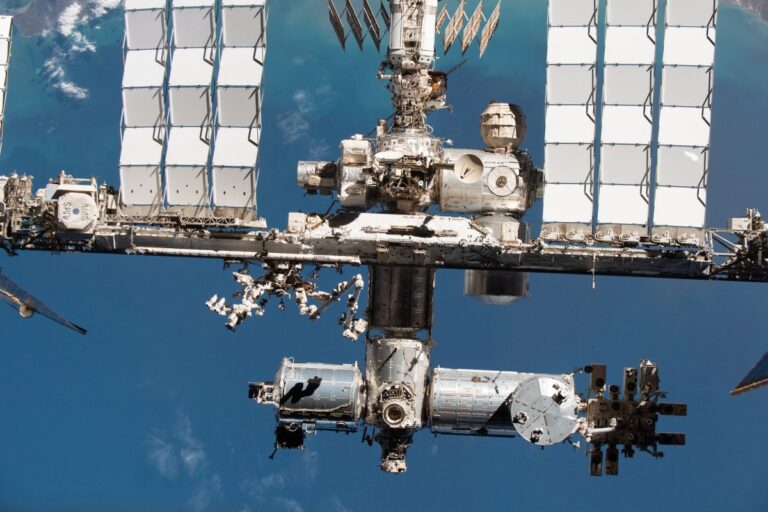
The fragile equilibrium of the International Space Station (ISS) was tested Friday when NASA ordered five astronauts to evacuate the main station modules and seek shelter inside a docked SpaceX Crew Dragon spacecraft. The move came as Russia’s space agency, Roscosmos, detected new leaks within its service module, triggering what NASA termed an “elevated safety posture.”
The emergency maneuver, while brief, underscores the persistent vulnerabilities of the aging orbital laboratory. NASA spokesperson Bethany Stevens confirmed via X that the decision to move the crew—including four members of the SpaceX Crew-12 mission and astronaut Chris Williams—was made out of an abundance of caution while Roscosmos attempted an “extensive repair operation.”
The Volatility of the Russian Segment
The Russian service module has been a recurring point of concern for mission control in Houston and Moscow. According to Stevens, these structural cracks have remained a point of close monitoring for NASA for some time. The urgency of Friday’s incident highlights the unpredictability of pressure losses in the station’s vacuum-exposed components.</n
The tension of the repair effort was evident in the rapid succession of updates provided by NASA. Roughly one hour after the crew was moved into the Dragon “safe haven,” the situation shifted again. Roscosmos paused the repair efforts, citing a need to collect more measurements and data before proceeding with the fix. With the immediate risk re-evaluated, NASA instructed the astronauts to end the safe haven procedures and return to their standard operations aboard the ISS.
A Divided Crew in an Aging Station
The incident occurred while ten people were aboard the station. The crew composition reflects the current logistical split of orbital transport: four members arrived in February via the SpaceX Crew-12 Dragon, while another three arrived last November aboard a Russian Soyuz. This reliance on both American and Russian lift capabilities continues despite growing geopolitical friction and the deteriorating physical state of the station’s hardware.
Using the Crew Dragon as a lifeboat is a standard safety protocol, but the necessity of its use for a service module leak emphasizes the critical role SpaceX plays in the current safety architecture of the ISS. The Dragon spacecraft serves not only as a taxi but as a pressurized sanctuary when the station’s primary hulls are compromised.
The Push for Commercial Successors
This latest leak arrives at a pivotal moment for the future of human presence in low Earth orbit. The ISS is visibly aging, and the frequency of hardware failures is fueling a push for a transition to privately operated stations. Under the leadership of administrator Jared Isaacman, NASA is accelerating plans to replace the government-run station with commercially produced modules by the end of the decade.</n
The transition to commercial platforms—such as those proposed by Axiom Space or Blue Origin—is no longer just a budgetary preference but a safety imperative. As the Russian segment continues to show its age, the urgency to decouple the American presence from the aging Soviet-era design philosophy of the Zvezda and Zarya modules becomes more apparent.
While the crew has returned to their planned operations, the “permanent resolution” Stevens mentioned remains elusive. For now, the astronauts remain in a precarious balance, relying on a mix of legacy Russian engineering and modern SpaceX innovation to keep them safe 250 miles above Earth.