Cairo Talks Stumble as Israel Expands Gaza Footprint Despite U.S.-Brokered Truce
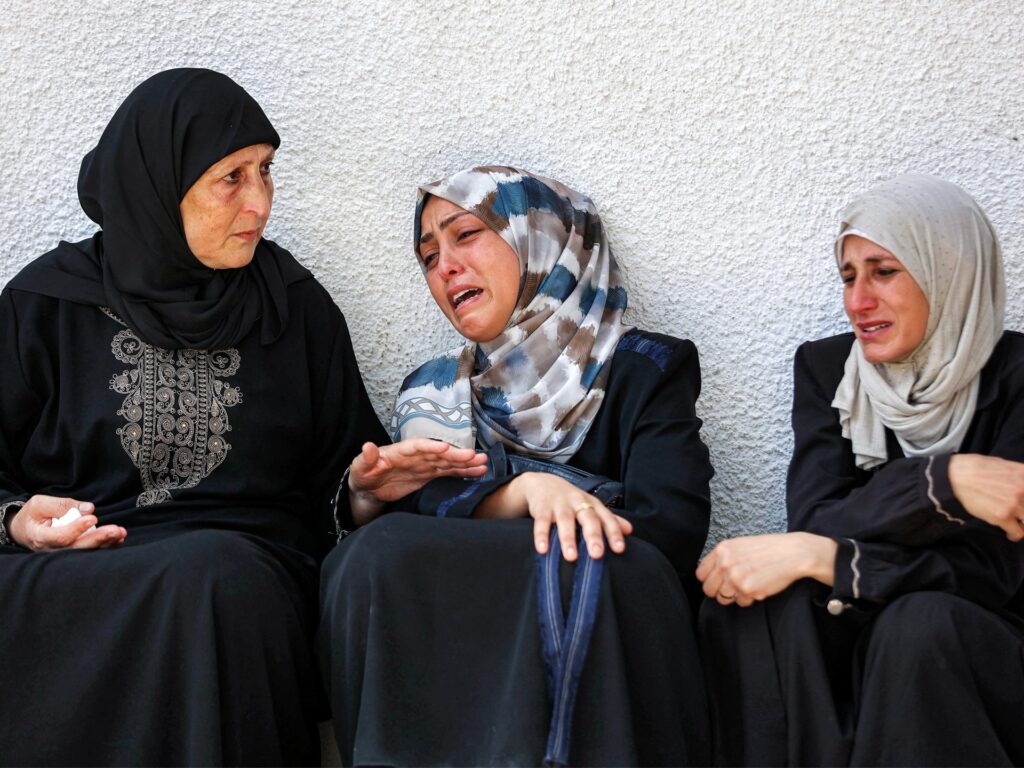
Table of Contents
Diplomacy Under Fire in Cairo
Egyptian mediators began hosting a critical new round of negotiations with Hamas and other Palestinian factions on Sunday, attempting to revive a collapsing ceasefire framework. However, the diplomatic effort arrives amid a sharp escalation on the ground, with the Israeli military reporting strikes that killed at least 13 people and injured dozens across the Gaza Strip since dawn.
The violence centered on the al-Mawasi area near Khan Younis, Gaza City, and Deir el-Balah. These strikes occur during a period that was theoretically governed by a United States-brokered ceasefire established in October 2025, which had largely paused major combat operations but failed to resolve the fundamental disputes over governance and territory.
The Stalled Transition to Phase Two
The current deadlock centers on the transition from the first phase of the truce—which saw the release of captives in exchange for Palestinian prisoners—to a far more complex second phase. This subsequent stage requires the disarmament of Hamas and a comprehensive withdrawal of Israeli forces from the enclave.
Sources close to the negotiations in Cairo, cited by Reuters, indicate that Hamas has conditioned any further progress on an immediate and total cessation of Israeli attacks. The group’s stance on disarmament remains a primary sticking point. Husam Badran, a member of Hamas’s political bureau, explicitly told Al Jazeera on Friday that the group would not surrender its weapons at this stage, stating that the military arsenal’s fate would only be decided after broader consultations with other Palestinian factions.
Expanding Territorial Control
While diplomats meet in Egypt, the operational reality on the ground suggests a shift in Israeli strategy toward permanent or expanded occupation. Current data indicates that the Israeli military now controls approximately 64 percent of the Gaza Strip. This represents a significant breach of the 53 percent control limit envisioned under the original ceasefire agreement.
This expansion is not accidental. On May 28, Prime Minister Benjamin Netanyahu explicitly instructed the military to increase its territorial control to 70 percent of the enclave. This directive has manifested in forced displacements and the systematic leveling of structures within these expanded zones, complicating any potential return to the previously agreed-upon boundaries.
The Human and Tactical Toll
The gap between the diplomatic rhetoric in Cairo and the reality in Gaza is underscored by the ongoing casualty rates. Since last October, roughly 947 Palestinians have been killed and over 2,900 wounded in continued Israeli strikes, which have targeted apartment buildings, cafes, and markets. In many instances, families have received displacement orders only minutes before their homes were destroyed.
On the Israeli side, the military reports that four soldiers have been killed during the same period. The broader conflict, which has spanned over two years, has left the territory in ruins. UN independent inquiries and various scholars have characterized the scale of destruction—which has killed at least 72,971 people and displaced 1.9 million—as amounting to genocide.
As the talks in Cairo continue over the next several days, the primary question remains whether a diplomatic solution can survive the contradictory reality of Israel’s expanding military footprint and Hamas’s refusal to disarm without a guaranteed exit of foreign forces.