Google Pivot: The ‘Googlebook’ Signals the End of the Chromebook Era
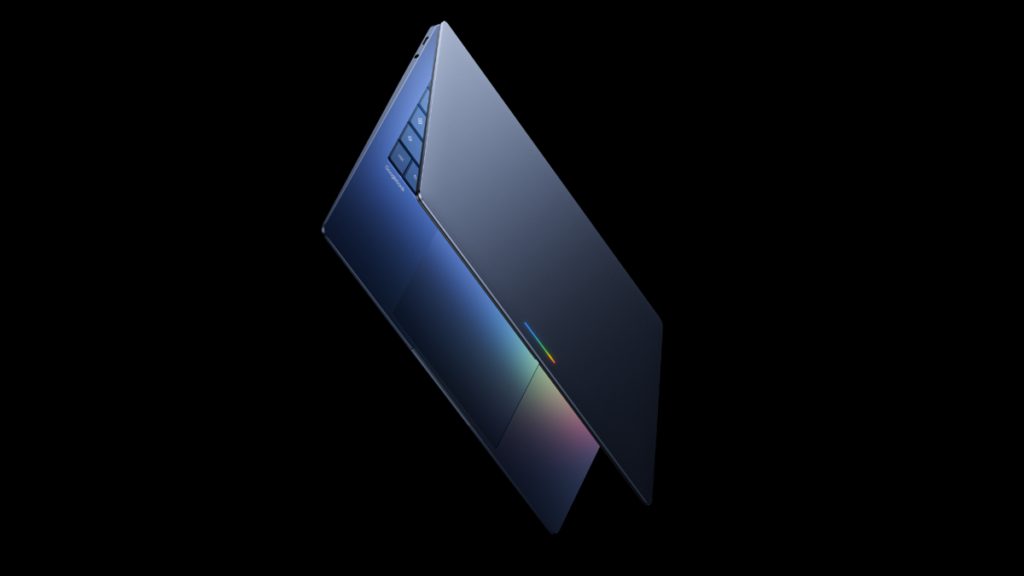
Table of Contents
A Fundamental Shift in Computing
Google is attempting to redefine the laptop again. At the Android Show: I/O Edition on Tuesday, the company unveiled the Googlebook, a new category of hardware that suggests Google is no longer satisfied with the cloud-first premise of the Chromebook. Instead, the company is betting on an “intelligence-first” architecture.
For over a decade, the Chromebook served as a lightweight portal to the web, prioritizing the browser over the local operating system. The Googlebook, however, is being positioned as a direct answer to the AI PC trend—specifically Microsoft’s Copilot+ PC initiative. According to Alex Kuscher, Google Senior Director, the shift is a response to computing moving “from an operating system to an intelligence system.”
While the first units aren’t slated for release until this fall, the conceptual leap is significant. The Googlebook isn’t just a Chromebook with a Gemini shortcut; it is described as the first laptop designed from the ground up for Gemini Intelligence.
The OS Mystery and Project Aluminum
The most provocative detail of the announcement is the operating system. While Googlebooks will run Android apps, Kuscher noted that the devices will utilize a “modern OS that’s designed for Intelligence,” explicitly distancing the hardware from the traditional ChromeOS experience.
Industry insiders have long speculated about Project Aluminum, a rumored initiative to merge the Android and ChromeOS kernels into a single, unified platform. The Googlebook appears to be the physical manifestation of that effort. By unifying the OS, Google can finally bridge the gap between mobile fluidity and desktop productivity, creating a device that doesn’t feel like a scaled-up tablet or a stripped-down PC.
Gemini-Native Hardware Features
Google is leaning heavily into the “agentic” capabilities of AI, moving beyond simple chatbots to tools that interact with the UI. Central to this is the Magic Pointer. Unlike a standard cursor, the Magic Pointer uses Gemini to analyze onscreen content in real-time. Google demonstrated use cases where wiggling the cursor over a date in an email automatically triggers a calendar invite, or dragging two disparate images—such as a room layout and a piece of furniture—to let the AI visualize a mockup of the interior design.
The hardware also introduces a Create your Widget tool, allowing users to build custom, functional interface elements using natural language prompts via Gemini. To signal this new era, the devices will feature a distinct “glowbar” lightstrip on the lid, a visual marker designed to differentiate them from the sea of silver and grey laptops currently dominating the market.
Ecosystem Synergy and Market Positioning
Integration with the Android ecosystem is a core pillar of the Googlebook strategy. Beyond running native Android apps, the laptops allow users to cast mobile apps directly to the screen without installation and utilize a “Quick Access” feature to search and manage phone files seamlessly.
The hardware will be produced by a consortium of Google’s primary partners, including Acer, Asus, Dell, HP, and Lenovo. While specific benchmarks were not shared, the “Featherweight Design, Heavyweight Power” marketing suggests these will be high-end ultraportables. This likely means a shift in pricing; while Chromebooks are often associated with the education budget market, the Googlebook is poised for the premium segment, likely starting above the $750 to $1,000 range of current high-end Chromebooks.
By pivoting toward a dedicated AI-PC line, Google is acknowledging that the browser is no longer the center of the user’s digital universe—the AI agent is.


