SMILE Launch Marks a High Point—and a Potential Ceiling—for ESA-China Space Ties
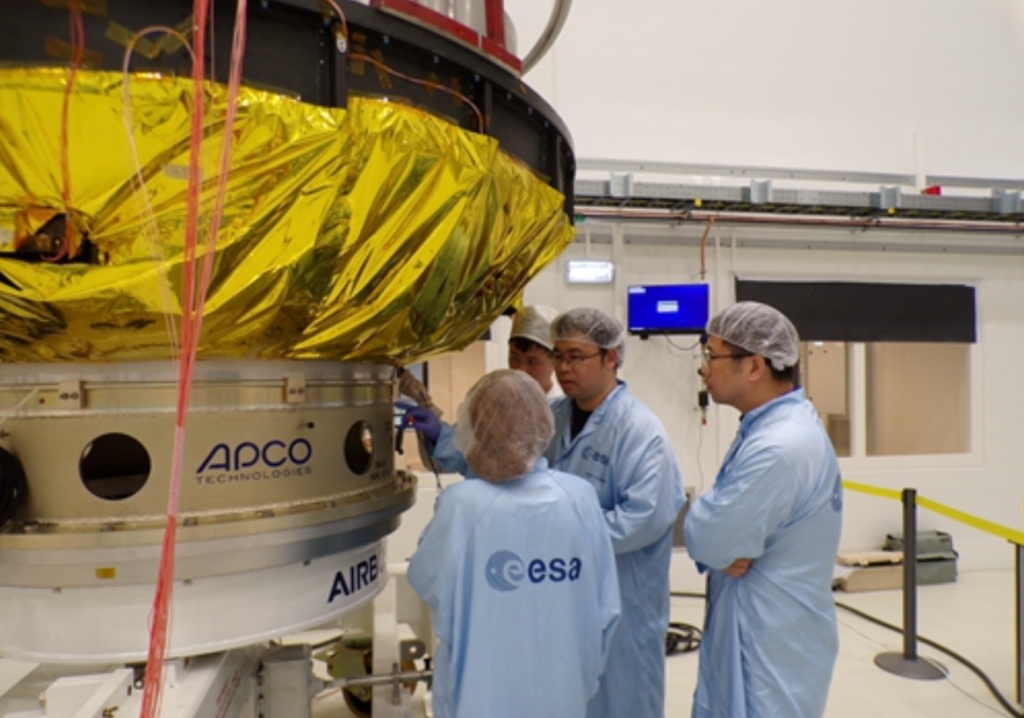
Table of Contents
A Rare Scientific Bridge
The launch of the Solar wind Magnetosphere Ionosphere Link Explorer (SMILE) on a Vega C rocket from French Guiana represents more than just a technical achievement in heliophysics. It is the culmination of a decade of rare, high-level coordination between the European Space Agency (ESA) and the Chinese Academy of Sciences (CAS). By deploying soft X-ray and UV imagers to study the Earth’s magnetosphere and its interaction with solar wind, SMILE provides a glimpse into what a truly globalized space science framework could look like.
The mission emerged from a bottom-up process—a joint call for proposals that saw 13 different scientific teams from both continents compete. According to ESA science director Carole Mundell, this mechanism proved highly effective in bridging the gap between the two agencies. However, while the launch is a cause for celebration, the atmosphere surrounding future cooperation is notably more cautious.
Parallel Ambitions, Separate Budgets
Despite the shared success of SMILE and the earlier Double Star missions of the early 2000s, senior officials from both ESA and CAS have stopped short of pledging a long-term roadmap for deeper integration. The friction isn’t necessarily scientific—both parties are obsessed with the same questions of habitability and space weather—but rather fiscal and political.
Mundell has been candid about the reality of securing funding. While there is a mutual desire to initiate new joint calls for proposals, the necessity of satisfying separate national and regional stakeholders makes formal commitments difficult. In the world of deep-space exploration, a “lovely idea” is secondary to a line item in a government budget.
The Race for the Outer Planets
As both entities pivot toward the outer solar system, their trajectories are beginning to mirror one another, though they remain distinct. ESA is currently leaning into its JUICE mission, which is already en route to Jupiter, and planning an ambitious astrobiology landing on Saturn’s moon, Enceladus. Simultaneously, ESA’s Plato and Ariel missions are preparing to hunt for Earth-like exoplanets and analyze their atmospheres.
China is moving at a similar, if not more aggressive, pace. The Chinese Academy of Sciences is preparing the ‘Earth 2.0’ observatory for a 2029 launch, targeting the Sun-Earth Lagrange point 2 to scan millions of stars. Even more striking is the timeline for Tianwen-4, China’s first mission to the outer planets, slated for around 2030. The current proposal involves a lander targeting Callisto, one of Jupiter’s moons.
Organic Coordination vs. Formal Partnership
The interaction between ESA and China is shifting from formal joint missions to what Mundell describes as “organic collaboration.” This means sharing data and design insights rather than co-managing spacecraft. For instance, ESA’s flybys of Callisto during the JUICE mission will provide critical data that China can leverage for the Tianwen-4 lander. This “help-each-other-out” approach allows for scientific progress without the political baggage of a formal treaty.
The Shadow of Strategic Autonomy
The limitations of this relationship became starkly evident in 2023 when ESA confirmed it would no longer pursue plans to send European astronauts to the Tiangong space station. The decision was framed as a combination of budgetary constraints and a lack of political intention, reflecting a broader European pivot toward “strategic autonomy” in the face of shifting global geopolitics.
While China continues to expand its footprint—with a modular space station and a looming Mars sample return mission (Tianwen-3) by 2028—the bridge to Europe appears to be narrowing. The SMILE mission may be remembered not as a doorway to a new era of partnership, but as the high-water mark of an era where science could momentarily outpace geopolitics.