Netanyahu Doubles Down on Israel’s Tech Resilience and ‘Digital Battle’ in Exclusive CNBC Interview
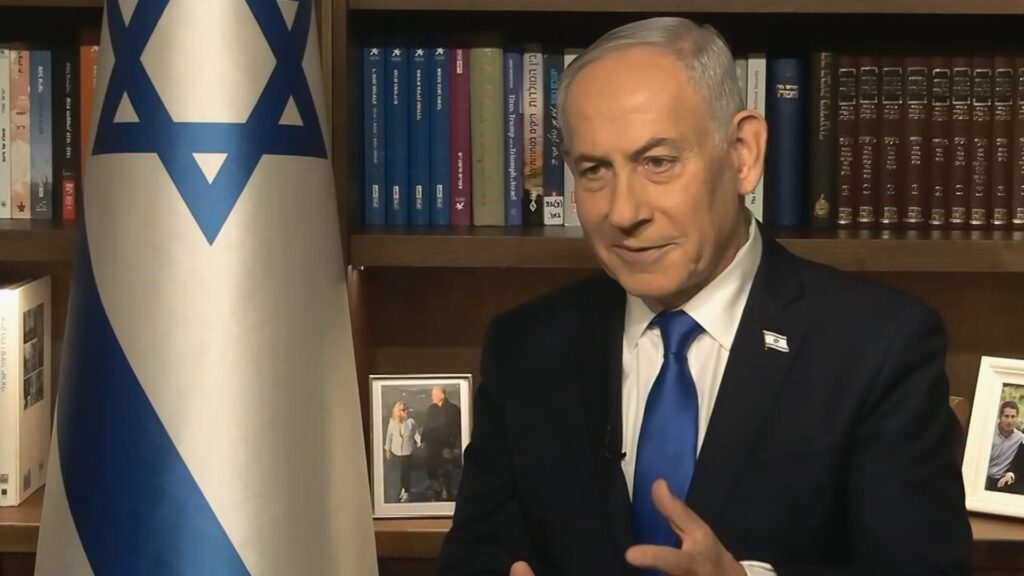
Table of Contents
Tech as a Strategic Fortress
In a wide-ranging conversation with CNBC’s Sara Eisen in Jerusalem, Israeli Prime Minister Benjamin Netanyahu pivoted from the geopolitical friction of the current conflict to present a narrative of economic and technological defiance. While the region remains volatile, Netanyahu is positioning Israel not just as a military power, but as an indispensable global tech hub that remains open for business despite ongoing hostilities.
The Prime Minister specifically highlighted the continued commitment of silicon giant Nvidia, noting that the company’s investment in Israel is a testament to the country’s technical superiority rather than political alignment. “Nvidia invested here, they didn’t do it because of our blue eyes,” Netanyahu remarked, suggesting that the underlying value of Israel’s R&D ecosystem outweighs the perceived risks of regional instability.
The ‘Digital Information Battle’
A significant portion of the discussion centered on the modern intersection of warfare and perception. Netanyahu explicitly framed the current conflict as a “digital information battle,” arguing that Israel is fighting against a tide of “fraudulent lies” propagated via social media and Western news outlets. This admission points to a growing realization within the Israeli government that the kinetic war on the ground is inextricably linked to the narrative war fought in algorithms and feeds.
Netanyahu suggested that Israel must evolve its strategy to better combat this digital attrition. “The question is, do you succumb to the lies? No, I protect my people,” he stated, emphasizing a need for more aggressive counter-messaging in the global digital sphere to prevent the erosion of international support.
Economic Divergence and the 2026 Outlook
Despite the pressures of a war that has stretched into its fourth month, Netanyahu offered a surprisingly bullish outlook on the Israeli economy. He pointed to the resilience of the Tel Aviv 35 index and the strength of the shekel as indicators that the market has already priced in the conflict. According to the central bank’s projections, Israel’s economy is expected to grow by 3.8% by 2026, outperforming several other major developed markets.
This economic optimism is heavily tethered to the country’s tech exports. Netanyahu pushed back against rumors of growing divestment, claiming instead that investment is surging. He framed the tech sector as a primary engine for recovery, stating that defense and technological exports are currently “going through the roof.” For Netanyahu, the high-tech sector serves as a critical hedge against the economic angst sparked by fluctuating oil prices and supply chain disruptions in the Strait of Hormuz.
The Geopolitical Tech Nexus
The interview also touched upon the strategic relationship between Netanyahu and Donald Trump, revealing a high-frequency communication line with the two leaders speaking “once every two days.” While acknowledging “tactical disagreements,” Netanyahu emphasized their shared goals regarding Iran. He praised the effectiveness of the “reverse blockade” of Iranian ports, describing it as a “stroke of genius” in terms of strategic pressure.
When asked about the potential for regime change in Iran, Netanyahu drew parallels to the fall of the Berlin Wall, suggesting that internal “cracks” are propagating beneath the surface of the Iranian leadership. While he admitted that the timing of such a collapse is unpredictable, he maintained that the regime has been “enormously weakened,” creating a vacuum that could eventually be filled by the Iranian people.
As Israel continues to navigate the complexities of a prolonged conflict, the Prime Minister’s focus on tech investment and digital dominance suggests a strategy where economic strength and cyber-influence are viewed as equally vital to national security as traditional military force.