Google Unveils ‘Googlebook’: A Fundamental Pivot From ChromeOS to AI-Native Hardware
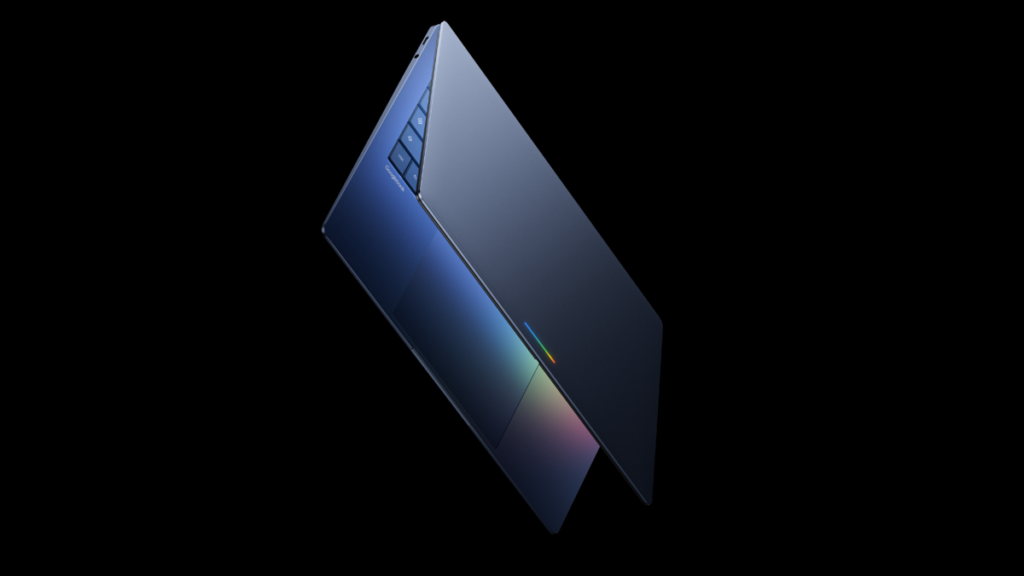
Table of Contents
The end of the ‘Cloud-First’ era
For over a decade, the Chromebook stood as the definitive symbol of the cloud-first computing paradigm: a lightweight shell for a web browser. But at Tuesday’s Android Show: I/O Edition, Google signaled that the cloud is no longer the primary driver of hardware design. The company unveiled the Googlebook, a new category of laptops built specifically to house ‘Gemini Intelligence.’
The move represents more than just a brand refresh; it is an architectural pivot. While Chromebooks were designed to deliver the web to the user, Googlebooks are designed to deliver an AI agent that understands the user’s entire digital environment. According to Alex Kuscher, Google Senior Director, the industry is shifting from an ‘operating system’ to an ‘intelligence system,’ necessitating a ground-up rethink of the laptop form factor.
A new OS and the ‘Project Aluminum’ mystery
Perhaps the most significant revelation is that Googlebooks will not run ChromeOS. While Google has stopped short of naming the new software, Kuscher described it as a ‘modern OS designed for Intelligence.’ For those following industry leaks, this strongly points toward Project Aluminum, the long-rumored convergence of Android and ChromeOS.
By merging the flexibility of Android apps with the productivity of a desktop environment, Google is attempting to solve the ‘app gap’ that has plagued ChromeOS for years. The Googlebook isn’t just running Android apps as a compatibility layer; it is integrating them into a native, AI-driven ecosystem where the OS itself acts as a coordinator between applications.
The ‘Magic Pointer’ and contextual AI
The centerpiece of this intelligence is the Magic Pointer. Unlike a standard cursor that simply selects text or clicks buttons, the Magic Pointer uses Gemini to interpret the visual context of the screen. Google demonstrated a system where wiggling the cursor activates the AI’s awareness; for example, hovering over a date in a Gmail thread allows the user to instantly schedule a calendar event without leaving the app, or dragging a photo of a piece of furniture onto a photo of a room to visualize a layout change in real-time.
Further deepening the AI integration is a ‘Create your Widget’ tool. Rather than choosing from a pre-set list of developer-made widgets, users can prompt Gemini to build custom functional modules tailored to their specific workflow, effectively allowing users to program their own UI elements via natural language.
Hardware partnerships and the ‘Glowbar’
While Google is steering the software and the vision, they are relying on their established hardware partners for the physical builds. The first wave of Googlebooks will be manufactured by Acer, Asus, Dell, HP, and Lenovo. Though detailed spec sheets remain under wraps, Google’s marketing focuses on a ‘Featherweight Design’ paired with ‘Heavyweight Power,’ suggesting a focus on the ultraportable, premium segment.
The most distinct visual identifier will be a ‘glowbar’ lightstrip integrated into the lids of the devices, likely serving as a visual indicator for Gemini’s active states—similar to how the wake-word triggers a glow on Google Home devices.
The challenge of the premium pivot
The Googlebook arrives at a volatile time for the PC market. Microsoft has already staked its claim with Copilot+ PCs, pushing NPU-heavy hardware to the forefront. Google’s strategy is to compete not just on specs, but on ecosystem synergy. The Googlebook will feature ‘Quick Access’ for phone files and the ability to cast Android apps from a mobile device to the laptop without installation, creating a seamless bridge between the pocket and the desk.
However, the pricing strategy remains the biggest question mark. Chromebooks won the education market by being cheap. By pivoting to ‘premium craftsmanship’ and AI-native hardware, Google is moving into the $750 to $1,200+ bracket. Whether consumers will pay a premium for a ‘Gemini-first’ experience—or if they will stick with the established versatility of Windows and macOS—will determine if the Googlebook becomes a new standard or a niche experiment.


